Northern Ireland unrest: Homes, vehicles torched after Belfast knife attack
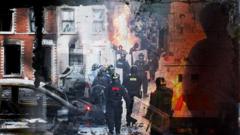
Violent scenes erupted in Northern Ireland following a knife attack, with homes and vehicles set ablaze and police officers injured. The unrest has drawn parallels to the region's troubled past.
Key Highlights
- Homes and vehicles were set on fire during unrest in Northern Ireland.
- The violence followed a knife attack in Belfast.
- Twelve police officers were injured amidst the disorder.
- Tensions in Northern Ireland evoke memories of 'The Troubles'.
- Authorities warned of potential further unrest.
Recent events in Northern Ireland have seen significant public disorder, including the torching of homes and vehicles, following a knife attack. The violence, particularly concentrated in Belfast, led to injuries among law enforcement officers and has raised concerns about a resurgence of sectarian tensions reminiscent of the region's past conflict, often referred to as 'The Troubles'.
The initial incident, a knife attack, appears to have triggered a series of retaliatory actions and wider rioting. Reports indicate that at least twelve police officers sustained injuries while attempting to control the escalating chaos. The use of a water cannon by police underscored the severity of the situation as they confronted rioters. Media coverage highlighted the disturbing nature of the unrest, with images and accounts of burning properties and damaged vehicles circulating widely.
Commentary and analysis from various news outlets have drawn a clear link between the current disturbances and the historical period of conflict in Northern Ireland. This comparison is particularly relevant given the deep-seated political and sectarian divisions that have historically plagued the region. The involvement of groups or individuals targeting migrants, as suggested by some reports, adds another layer of complexity to the situation, indicating that broader social and demographic issues may be fueling the unrest.
Authorities have issued warnings about the potential for further disorder, indicating that the situation remains volatile. The police have been actively engaged in managing and de-escalating the situation, but the underlying causes and the potential for recurrence remain a significant concern. The events have sparked discussions about community relations, immigration, and the lingering impact of past conflicts on present-day Northern Ireland.
The news has garnered attention not only within the UK but also internationally, due to the historical context of 'The Troubles' and the implications for regional stability. The involvement of migrants as potential targets or participants in the unrest also brings a broader international dimension to the story, touching upon issues of migration and integration in Western Europe. The response from law enforcement and government officials will be crucial in addressing the immediate crisis and working towards long-term solutions to prevent future outbreaks of violence.
The events serve as a stark reminder of the fragile peace in Northern Ireland and the complex socio-political landscape that continues to shape its communities. The response to these incidents, both from a law enforcement and a community relations perspective, will be critical in determining the path forward and ensuring the safety and security of all residents.
Frequently Asked Questions
What triggered the unrest in Northern Ireland?
The unrest was triggered by a knife attack, which subsequently led to widespread rioting, arson, and clashes with police.
How many police officers were injured?
According to reports, at least twelve police officers were injured during the disorder.
Why are these events compared to 'The Troubles'?
The comparison is made due to the deep-seated political and sectarian divisions in Northern Ireland, and the current violence evokes memories of the historical conflict known as 'The Troubles'.
Was there any specific targeting mentioned during the unrest?
Some reports suggest that the violence may have involved elements targeting migrants, adding another dimension to the complex situation.