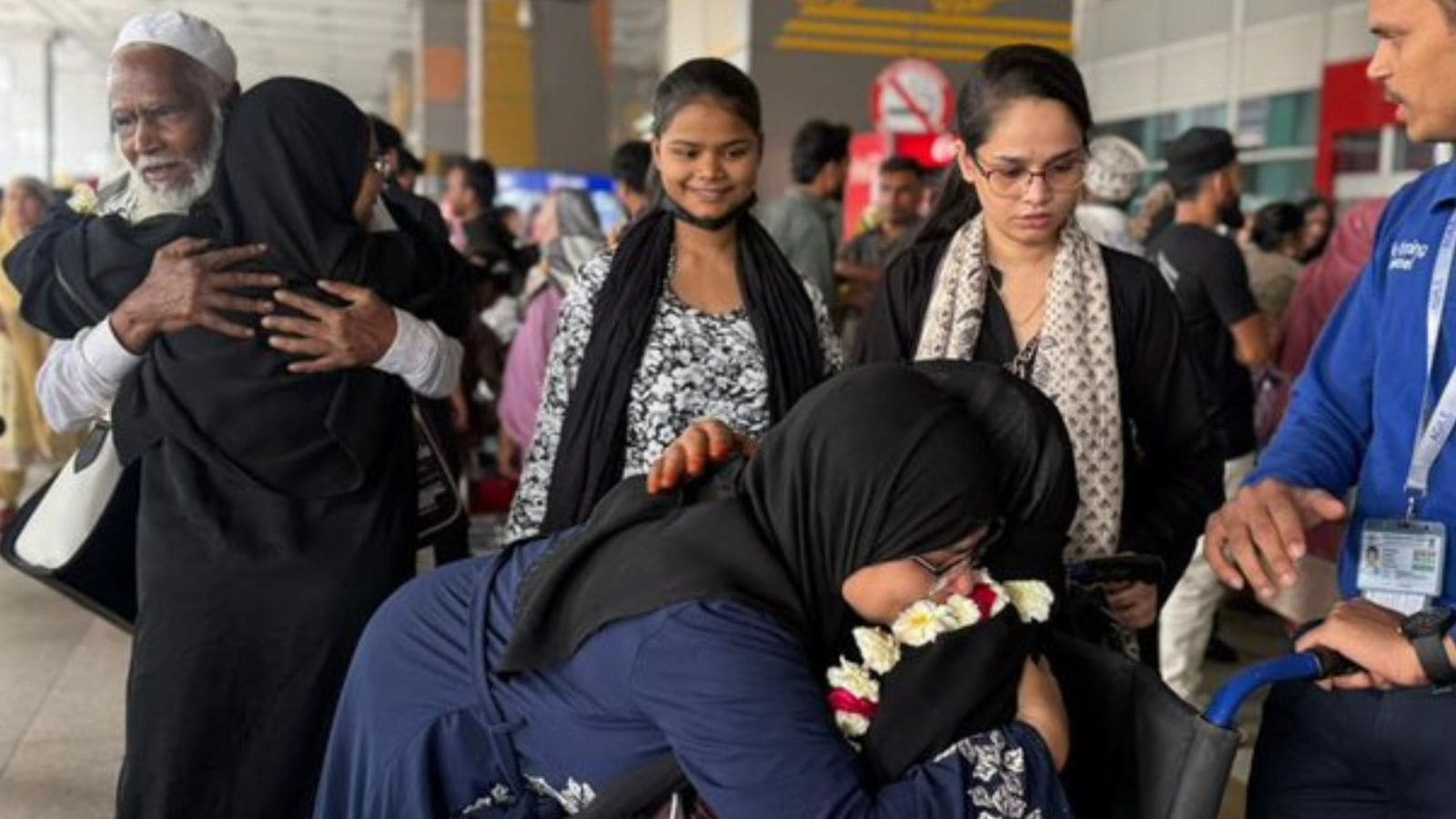
Indians Exit Iran to Armenia, Azerbaijan Amid West Asia Tensions
Amid escalating West Asia tensions, hundreds of Indian nationals, including students and pilgrims, have safely crossed from Iran into neighboring Armenia and Azerbaijan. The Ministry of External Affairs (MEA) is facilitating their return to India via commercial flights, with the Indian embassies in Tehran, Yerevan, and Baku providing necessary assistance. This evacuation effort is part of a broader government initiative to ensure the safety and well-being of Indian citizens in the region. Over 2,20,000 Indians have returned from Gulf countries since February 28.
Key Highlights
- Hundreds of Indians have crossed from Iran to Armenia and Azerbaijan.
- The MEA is coordinating assistance and visa support for these travelers.
- Indian students were relocated to safer cities within Iran as a precaution.
- Commercial flights from Armenia and Azerbaijan are facilitating the return to India.
- Over 2.2 lakh Indians have returned from Gulf countries since February 28.
Amidst escalating tensions in West Asia, India has been actively facilitating the exit of its nationals from Iran through neighboring countries, Armenia and Azerbaijan. The Ministry of External Affairs (MEA) confirmed that hundreds of Indian citizens, comprising students, pilgrims, and other professionals, have successfully crossed the land borders into Armenia and Azerbaijan, from where they are taking commercial flights back to India.
According to MEA spokesperson Randhir Jaiswal, approximately 550 Indian nationals crossed into Armenia, while around 90 entered Azerbaijan. These movements were facilitated by the Indian Embassy in Tehran, which provided visa support and assistance with immigration formalities. The Indian government has prioritized the safety and welfare of its citizens in the region, with diplomatic missions in Tehran, Yerevan, and Baku actively engaged in coordinating these evacuation efforts.
As a precautionary measure against the backdrop of the conflict, Indian students studying in Tehran have been relocated to safer cities outside the capital. The Indian Embassy in Tehran remains operational and is in constant communication with the Indian community, providing assistance and issuing advisories. In addition to land border crossings, the government is also facilitating the return of Indians from various Gulf countries. On March 16, 2026, alone, 45 flights were planned from destinations like the UAE, Saudi Arabia, Oman, and Qatar. Since February 28, when the regional conflict began, approximately 2,20,000 Indians have returned to India.
The situation in West Asia has been a matter of deep concern for India due to its large diaspora in the Gulf (over 9 million) and the region's strategic importance for energy security and trade. External Affairs Minister S. Jaishankar has been in communication with his Iranian counterpart to discuss maritime safety and energy security amidst the escalating tensions. The conflict has implications for India's connectivity projects, such as the India-Middle East-Europe Economic Corridor and investments in Chabahar Port.
While the reports corroborate the MEA's statements on the evacuation of Indian nationals, it's important to note that the Hindustan Times, the original source, has been flagged by some sources for potential bias and questionable sourcing. However, the core facts regarding the movement of Indians from Iran and the MEA's role in facilitating their return are supported by multiple credible news outlets, including The Tribune India and The Economic Times.
Details regarding the number of Indians returning from Iran and the MEA's coordination efforts are consistently reported across various news sources, lending credibility to the overall narrative. The number of Indians who traveled to Iran for pilgrimage was stated as 284, with some having returned and others expected to do so in the following days. The Indian government's proactive approach to ensuring the safety of its citizens abroad has been a recurring theme in its foreign policy responses to regional crises.
The evacuation process involved a complex series of land and air transits. For instance, a batch of over 70 students, predominantly from Jammu and Kashmir, arrived in Delhi via Armenia and Dubai, recounting their "panic" amidst the conflict. The journey was described as long and arduous, highlighting the challenging circumstances faced by those seeking to escape the conflict zone.
The Indian Embassies in Yerevan and Baku play a crucial role in this entire operation, providing consular services and facilitating the onward journey of the Indian nationals. The MEA has also established a special control room to monitor the situation and respond to queries from affected individuals and their families.
Overall, the news report accurately reflects the Indian government's efforts to assist its citizens amidst the escalating West Asia crisis. The information is corroborated by various sources, and the MEA's updates provide a clear picture of the ongoing evacuation and repatriation operations.
Frequently Asked Questions
Why are Indian nationals leaving Iran?
Indian nationals are leaving Iran due to escalating tensions and conflict in the West Asia region, which has led to safety concerns and disruptions.
Which neighboring countries are facilitating the exit of Indians from Iran?
Armenia and Azerbaijan are serving as transit points for Indian nationals to exit Iran, from where they can take commercial flights back to India.
What role is the Indian government playing in this situation?
The Indian government, through the Ministry of External Affairs (MEA) and its embassies in Iran, Armenia, and Azerbaijan, is actively facilitating the safe exit and return of Indian nationals by providing visa support, assisting with border crossings, and coordinating commercial flight arrangements.
How many Indian nationals have been affected by the West Asia crisis?
Hundreds of Indian nationals have crossed from Iran into Armenia and Azerbaijan. In total, around 2,20,000 Indians have returned from Gulf countries since February 28, and approximately 9,000 Indian nationals are in Iran, with many being assisted to leave.
What specific measures are being taken for students in Iran?
Indian students in Tehran have been relocated to safer cities within Iran as a precautionary measure. The Indian Embassy in Tehran is assisting them, along with other nationals, in their movement and return.