Space Startup Katalyst Launches Daring Mission to Rescue NASA's Swift Telescope
Space startup Katalyst Technologies successfully launched its robotic LINK spacecraft on July 3, 2026, to rescue NASA's aging Neil Gehrels Swift Observatory. The mission, backed by a $30 million NASA contract, aims to boost the telescope's orbit, extending its scientific life by a decade and setting a precedent for future satellite servicing.
Key Highlights
- Katalyst's LINK spacecraft launched to save NASA's Swift telescope.
- Swift Observatory faces re-entry due to orbital decay and solar activity.
- Mission launched on July 3, 2026, from Marshall Islands via Pegasus XL rocket.
- LINK will rendezvous, grapple, and boost Swift to a higher orbit.
- This is a first-of-its-kind robotic rescue of an unprepared satellite.
- The mission extends Swift's scientific life and demonstrates future servicing capabilities.
In a groundbreaking feat of orbital engineering and rapid development, space startup Katalyst Space Technologies successfully launched its robotic servicing spacecraft, named LINK, on Friday, July 3, 2026. The daring mission aims to rescue NASA's Neil Gehrels Swift Observatory, a venerable space telescope launched in 2004, from an impending atmospheric re-entry. The launch, which took place at 4:36 a.m. EDT (8:36 UTC) from Kwajalein Atoll in the Marshall Islands, marks a significant milestone in satellite servicing and orbital mechanics.
The Neil Gehrels Swift Observatory, renowned for its contributions to astrophysics by detecting and studying gamma-ray bursts, supermassive black holes, and stellar flare activity, has been a scientific workhorse for over two decades. However, its orbit has been steadily decaying from its original 600-kilometer (400 miles) altitude to a perilous 370 kilometers (224 miles) due to natural atmospheric drag, exacerbated by an unexpectedly powerful peak in the current solar cycle. Without intervention, Swift was projected to re-enter Earth's atmosphere by late 2026, bringing an end to its invaluable scientific observations.
Recognizing Swift's continued scientific utility and the opportunity to demonstrate advanced in-space servicing capabilities, NASA awarded a $30 million contract to Arizona-based Katalyst Space Technologies in September 2025. The ambitious timeline required Katalyst to design, build, test, and prepare the LINK spacecraft for launch in less than a year—an unprecedented pace for such a complex mission. The rapid development highlights a new era of agile space mission execution, moving away from traditional multi-year lead times.
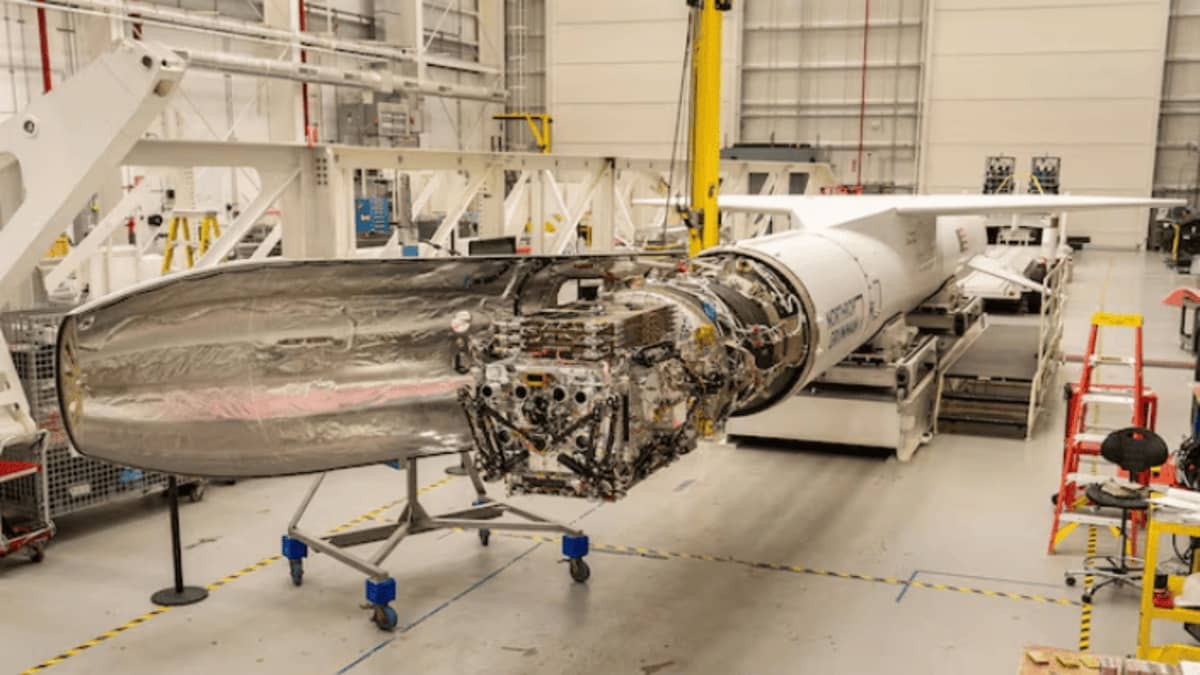
The LINK spacecraft, described as being about the size of a sofa and weighing 400 kilograms (882 pounds), is equipped with three robotic arms, a sophisticated suite of sensors, and xenon-fueled ion thrusters. Unlike the Hubble Space Telescope, which was designed for astronaut servicing, Swift lacks any built-in grappling fixtures or docking ports. Katalyst's innovative solution involves using laser Light Detection and Ranging (LIDAR) and robotic manipulators to latch onto existing flanges on Swift's spacecraft bus, originally intended for ground handling, without damaging its sensitive instruments.
For its journey into orbit, LINK was carried aloft by a Northrop Grumman Pegasus XL rocket. This unique air-launched system was deployed from the belly of a modified L-1011 Stargazer aircraft at an altitude of approximately 40,000 feet (about 12,000 meters) over the Ronald Reagan Space and Missile Test Range in the Pacific Ocean, near Kwajalein Atoll. The Pegasus XL rocket, making its final flight, successfully sent LINK into a low Earth orbit. The launch experienced brief delays on July 2nd and 3rd due to weather conditions and a software issue affecting the rocket's navigation system, but ultimately proceeded successfully.
Following its successful deployment, LINK will undergo several weeks of in-orbit system checkouts. By late July, it is expected to begin its slow approach and rendezvous with Swift. The plan involves a careful inspection of the telescope before attempting the delicate physical docking. Once Swift is secured, LINK's ion thrusters will engage in a gentle, six-week boost phase, gradually raising the observatory's altitude to over 550 kilometers (342 miles) – a stable orbit that could extend its operational life by another decade or more.
This mission represents a pivotal moment for NASA and the commercial space industry. It is the first time a private company has attempted to capture and service an uncrewed U.S. government satellite not originally designed for such operations. The success of the Swift Boost Mission could establish a new paradigm for on-orbit servicing, offering a cost-effective alternative to replacing aging but still functional spacecraft. Experts suggest that this technology could eventually be applied to other high-value assets, including the iconic Hubble Space Telescope, which is also gradually losing altitude and projected to re-enter Earth's atmosphere in the 2030s if unaddressed.
The mission holds global significance for space science and technology, demonstrating a critical capability for extending the lifespan of orbital assets and potentially reducing space debris. For India's audience, it underscores the advancing frontiers of space technology and the growing role of private enterprise in space, potentially inspiring future innovations and collaborations in the burgeoning global space sector.
Frequently Asked Questions
What is the primary goal of the Katalyst LINK mission?
The primary goal of the Katalyst LINK mission is to rendezvous with NASA's Neil Gehrels Swift Observatory, capture it using robotic arms, and boost it into a higher, more stable orbit to extend its operational life by approximately ten years.
Why does the NASA Swift Observatory need a rescue mission?
The Swift Observatory's orbit has been decaying due to natural atmospheric drag, intensified by recent intense solar activity. Without intervention, it was at risk of re-entering Earth's atmosphere and burning up by late 2026.
Who developed the LINK spacecraft and when was it launched?
The LINK spacecraft was developed by the space startup Katalyst Space Technologies under a $30 million contract from NASA. It was successfully launched on Friday, July 3, 2026.
What makes this mission significant for space exploration?
This mission is significant as it's the first time a commercial robotic spacecraft has attempted to capture and service an uncrewed government satellite that was not originally designed for such operations. It demonstrates a new capability for extending the life of valuable space assets and could pave the way for similar missions, potentially even for the Hubble Space Telescope.
How will the LINK spacecraft grapple with the Swift Observatory?
Since Swift was not designed for docking, LINK will use laser Light Detection and Ranging (LIDAR) along with a trio of parallel manipulators (robotic arms) to link up to existing flanges on Swift's spacecraft bus, which were originally meant for ground handling.