Thailand Votes: Three Parties Vie for Power in High-Stakes Election
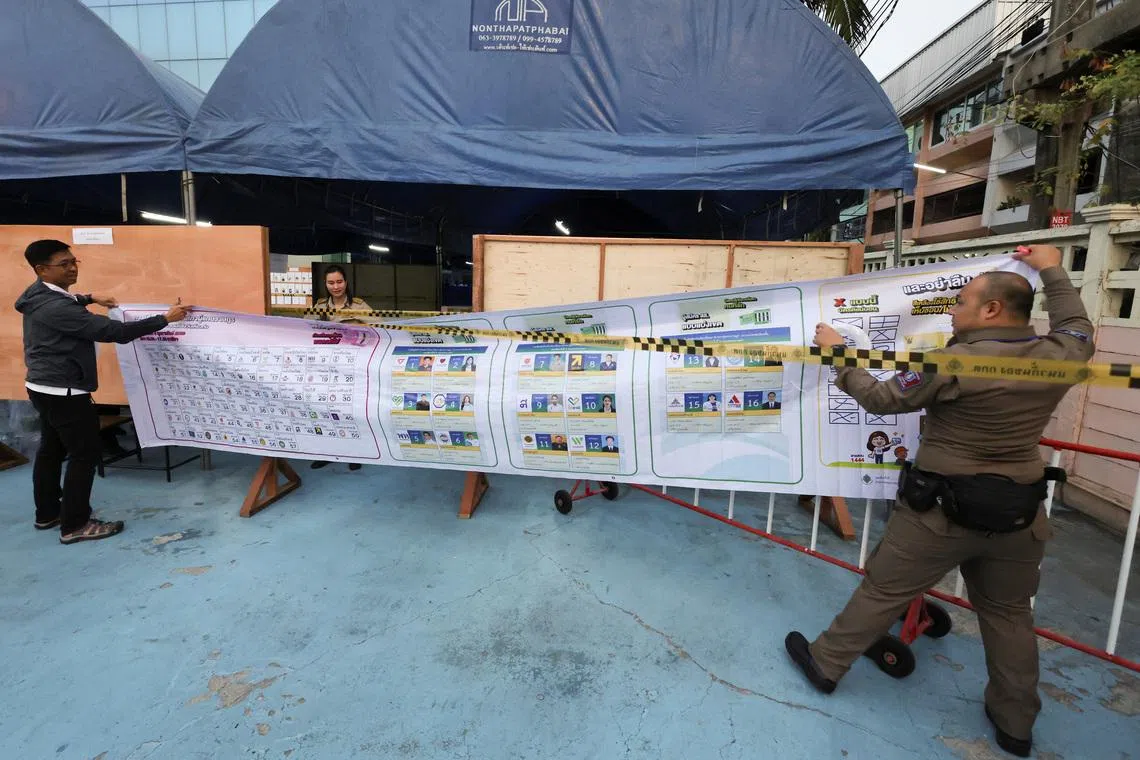
Thai voters are heading to the polls on February 8, 2026, in a crucial general election where three main parties—the People's Party, Pheu Thai Party, and Bhumjaithai Party—are vying for control of the government. The election is crucial for Thailand's political and economic future, with a referendum on constitutional reform also taking place.
Key Highlights
- Thailand holds a pivotal general election on February 8, 2026.
- Three major parties contest the election: People's, Pheu Thai, and Bhumjaithai.
- A referendum on constitutional reform is being held concurrently.
- The election follows a period of political instability and frequent government changes.
- Economic issues and national stability are key concerns for voters.
- No single party is expected to win an outright majority.
Thailand is holding a general election on February 8, 2026, marking a significant moment for the nation's political landscape. The election features a three-way contest primarily between the progressive People's Party, the populist Pheu Thai Party, and the incumbent Bhumjaithai Party, led by Prime Minister Anutin Charnvirakul. No single party is widely expected to secure an outright majority, suggesting that coalition-building will be crucial in forming the next government [3, 4].
The election comes after a period of considerable political turbulence, with Thailand having seen three changes in government and multiple prime ministers in less than three years following the 2023 general election [4, 8, 20, 26]. This instability has led to a public desire for stability and economic improvement [7, 8, 18]. The nation faces economic challenges, including slowing GDP growth projections for 2026, high household debt, and a struggling tourism sector [7, 13]. Key issues for voters include economic pessimism, ongoing border tensions with Cambodia, and a general decline in confidence in the national government [18].
The People's Party, led by 38-year-old Natthaphong Ruengpanyawut, is the successor to the Move Forward Party, which won the most votes and seats in the 2023 election but was blocked from power by the Senate and subsequently dissolved by the Constitutional Court in August 2024. The People's Party advocates for significant structural reforms to Thailand's political and economic systems, including rewriting the constitution, curbing monopolies, and dismantling an oligopolistic economy. The party has led in opinion polls, fueled by support from younger and urban voters, but faces challenges in forming coalitions and potential legal battles for its candidates [4, 9, 10, 11, 13, 26].
Pheu Thai Party, historically associated with the influential Shinawatra family, is campaigning on populist policies. One of its key promises is a scheme to give one million baht to nine people daily, aimed at stimulating the economy and bringing the informal sector into the tax system. The party seeks to reclaim its former political dominance, particularly in its traditional strongholds in the North and Northeast, and is relying on established political figures and families to consolidate support [5, 15, 28]. However, Pheu Thai has faced criticism and a legitimacy deficit after forming a coalition with parties linked to the 2014 coup and due to delays in delivering on campaign promises [12, 28].
Bhumjaithai Party, led by incumbent Prime Minister Anutin Charnvirakul, is positioned as a party offering stability and nationalism, with pledges including building border barriers and protecting the monarchy. Anutin benefits from his incumbency and a strong local network, and has been credited with rallying nationalist sentiment through his response to the Cambodia border dispute [26].
Alongside the general election, Thailand is also holding a national referendum on whether to redraft the country's 2017 constitution, which is a legacy of military rule. Pro-democracy groups advocate for rewriting the charter to enhance democracy and reduce the influence of unelected institutions like the military and judiciary [3, 9, 24].
The election has been characterized by political party fragility, with significant party switching occurring in the lead-up to the vote. This suggests a structural equilibrium where survival-oriented behavior, rather than ideological competition, dominates Thai politics [12]. The context also includes ongoing border tensions with Cambodia and concerns over transnational scam networks [3, 8].
For India, the political stability and economic trajectory of Thailand are important given the close economic and diplomatic ties between the two Southeast Asian nations. A stable Thai government could lead to stronger regional economic cooperation and potentially influence trade and investment flows within the broader Asian region.
Frequently Asked Questions
When is the Thai general election taking place?
The Thai general election is scheduled for Sunday, February 8, 2026.
Which are the main political parties contesting the election?
The three main parties vying for power are the People's Party, the Pheu Thai Party, and the Bhumjaithai Party.
What is the significance of the concurrent referendum?
A national referendum is being held alongside the election, asking voters whether Thailand should create a new constitution, a move advocated by reformist groups.
What are the key issues facing Thailand in this election?
Key issues include economic stability, high household debt, political stability after a period of frequent government changes, and border tensions with Cambodia.