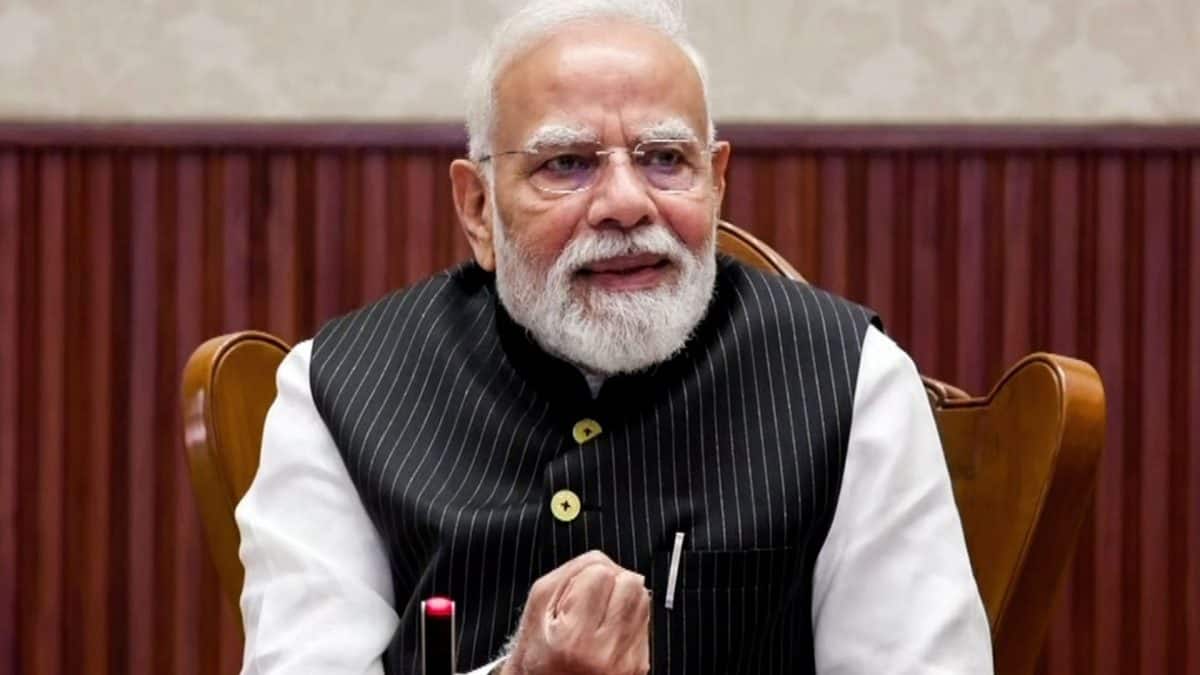
India, Venezuela Discuss Long-Term Energy Partnership with Acting President Rodríguez
Prime Minister Modi met with Venezuela's Acting President Delcy Rodríguez on June 4, 2026, in New Delhi to discuss a long-term energy partnership and broader economic cooperation. The talks focused on India diversifying its crude oil sources amid global supply disruptions and Venezuela seeking investment in its energy sector.
Key Highlights
- PM Modi met Venezuela's Acting President Delcy Rodríguez in New Delhi.
- Discussions focused on a long-term energy partnership and economic ties.
- India seeks to diversify crude oil imports amid global supply disruptions.
- Venezuela views India as a 'preferred energy partner' for stable demand.
- Talks included critical minerals, pharmaceuticals, agriculture, and automobiles.
- Delcy Rodríguez assumed acting presidency after Nicolás Maduro's abduction in January 2026.
Prime Minister Narendra Modi held extensive discussions with Venezuela's Acting President Delcy Rodríguez in New Delhi on June 4, 2026, where both nations agreed to establish a long-term energy partnership and strengthen broader economic cooperation. The meeting took place amidst India's strategic push to diversify its crude oil procurement, particularly in light of ongoing global energy supply disruptions, including those stemming from the West Asia conflict.
Delcy Rodríguez, who assumed the role of interim President of Venezuela in January 2026 following the reported abduction of President Nicolás Maduro by US forces, was on a five-day working visit to India to enhance bilateral ties. Her delegation included several key ministers, signaling the seriousness of Venezuela's intent to engage with India. During the discussions, the Venezuelan leader conveyed her country's perspective, identifying India as a "preferred energy partner" given the substantial size of the Indian economy and its projected stability as a long-term buyer in the energy market.
Rudrendra Tandon, Secretary (East) in the Ministry of External Affairs, highlighted that India is actively seeking new sources of crude oil and energy to bolster its energy security, with Venezuela representing a significant opportunity in these plans. The discussions explored expanding cooperation not only in crude oil but also across the entire energy value chain, encompassing both upstream (exploration and production) and downstream (refining) activities.
Beyond energy, the leaders also explored avenues for Indian companies to invest in various Venezuelan sectors, including mining, critical minerals, pharmaceuticals, agriculture, and automobiles. The Venezuelan delegation was expected to visit sites related to these sectors to gain insights into India's technological and industrial capabilities and identify collaboration opportunities. Reports also indicated that Acting President Rodríguez was scheduled to visit the Reliance Industries Limited's refinery in Jamnagar, Gujarat.
This high-level engagement marks a renewed commercial relationship between India and Venezuela. India had previously suspended crude oil purchases due to US sanctions, but with the easing of these restrictions earlier in the year, Indian refiners have resumed imports, making Venezuela a crucial supplier once again. In recent weeks leading up to the meeting, Venezuela reportedly became India's third-largest crude oil supplier.
The broader context of the meeting underscores a shifting geopolitical landscape in energy. India, as the world's third-largest oil importer, is keen to diversify its energy sources to mitigate risks associated with supply chain vulnerabilities, particularly in regions like the Middle East, where conflicts can cause disruptions and price volatility. For Venezuela, deepened cooperation with India offers a vital pathway to revitalize its oil industry, which has suffered from years of sanctions, underinvestment, and declining production.
Union Minister for Petroleum and Natural Gas Hardeep Singh Puri also met with Acting President Rodríguez, announcing that an Indian "technical team" would soon visit Venezuela to further explore potential energy partnerships. External Affairs Minister S. Jaishankar also held discussions with Rodríguez, reaffirming India's commitment to strengthening ties with the South American nation. Prime Minister Modi, in a post on X, emphasized the immense importance of India's partnership with Venezuela for the Global South, stating a commitment to work together for mutual benefit. The Venezuelan government's press release stated that the meeting aimed at strengthening the role of both nations in the geopolitical context of the Global South and boosting mutually beneficial macroeconomic agreements.
The discussions signify a strategic alignment where India secures a stable, long-term crude oil supply, and Venezuela gains a reliable market and potential investment to rebuild its vital energy sector. This engagement is crucial for both nations' economic security and global standing. The original headline's use of "President Rodriguez" without the "Acting" qualifier was an inaccuracy, as Delcy Rodríguez is serving as the interim leader following significant political changes in Venezuela.
Frequently Asked Questions
Who is Delcy Rodríguez and what is her current role in Venezuela?
Delcy Rodríguez is the Acting President (or Interim President) of Venezuela. She assumed this role in January 2026, following the reported abduction of the country's former President, Nicolás Maduro, by US forces. Prior to this, she served as Venezuela's Vice President since 2018.
When did Prime Minister Modi meet Delcy Rodríguez and what was the main agenda?
Prime Minister Narendra Modi met Delcy Rodríguez on June 4, 2026, in New Delhi. The primary agenda was to discuss forging a long-term energy partnership between India and Venezuela, alongside expanding cooperation in other sectors like critical minerals, pharmaceuticals, agriculture, and automobiles.
Why is India seeking a long-term energy partnership with Venezuela now?
India, as the world's third-largest oil importer, is aggressively seeking to diversify its crude oil sources to enhance energy security. This move is particularly crucial amidst ongoing global supply disruptions, including those from the West Asia conflict, which can impact availability and prices.
How significant is Venezuela as an energy partner for India?
Venezuela is a major oil-rich nation, and with the easing of US sanctions, it has re-emerged as an important crude oil supplier for India. In recent weeks leading up to the meeting, Venezuela reportedly became India's third-largest crude oil supplier, highlighting its growing significance in India's energy basket.
What is the broader geopolitical context of this meeting?
The meeting reflects both countries' efforts to strengthen their positions in the Global South. For India, it's about securing diverse energy supplies and fostering economic ties. For Venezuela, it's an opportunity to attract investment, rebuild its oil industry affected by past sanctions and underinvestment, and find stable markets for its crude.