Iran-linked attacks hit Kuwait airport, Bahrain desalination plant
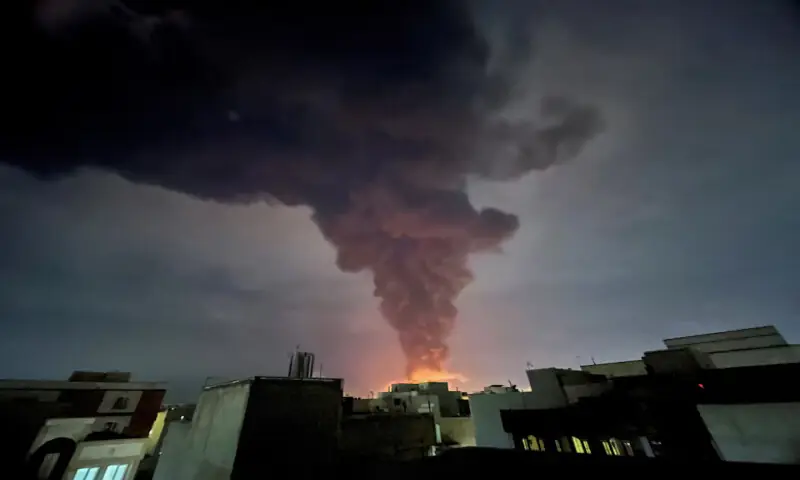
Reports indicate Iran-linked drone attacks have targeted Kuwait's airport and a desalination plant in Bahrain. These incidents follow escalating tensions in the Gulf region, with implications for regional stability and oil supplies.
Key Highlights
- Kuwait airport and Bahrain desalination plant targeted by drone attacks.
- Iran-linked activities suspected behind the Gulf region assaults.
- Escalating regional tensions raise concerns over stability.
- Potential impact on global oil supply routes is a significant worry.
Recent reports indicate that a desalination plant in Bahrain and Kuwait's airport have been targeted by drone attacks, with suspicions pointing towards Iran-linked entities. The alleged attacks have heightened concerns over the already precarious security situation in the Persian Gulf, a critical region for global energy supplies. While specific claims require rigorous verification, the news aligns with a pattern of escalating tensions between Iran and its regional rivals, often involving proxy groups or covert operations.
The targeting of a desalination plant in Bahrain is particularly alarming, as water security is a paramount concern for many Gulf nations. Disruptions to such critical infrastructure could have severe humanitarian consequences and further destabilize the region. Similarly, an attack on an airport, even if minor, signals a potential broadening of targets and an increased risk to civilian infrastructure and air traffic. The involvement of drones in these alleged attacks is consistent with their increasing use in modern conflicts due to their relative affordability and effectiveness in reconnaissance and strike missions.
Kuwait and Bahrain, while seeking to maintain neutrality in many regional disputes, are not immune to the geopolitical currents that sweep through the Gulf. Their proximity to flashpoints and their involvement in regional economic and security frameworks make them potential targets or collateral damage in broader conflicts. The attribution of these attacks, even if alleged, to Iran-linked actors is significant, given the long-standing animosity and proxy conflicts between Iran and several of its Arab neighbors, notably Saudi Arabia and the United Arab Emirates.
The international community closely monitors developments in the Gulf due to its strategic importance. The Strait of Hormuz, a vital chokepoint for oil shipments, lies in close proximity to the affected areas. Any significant escalation of conflict or disruption to maritime trade could lead to substantial increases in global oil prices, impacting economies worldwide. This makes news of attacks in the region of high importance not only to the countries directly involved but also to global economic stability.
Verification of such claims is often challenging, as detailed information can be scarce in the immediate aftermath of an incident, and official statements may be delayed or carefully worded. News outlets rely on a combination of official sources, eyewitness accounts, and intelligence assessments to report on such events. The role of state-sponsored media and the potential for disinformation campaigns further complicate the verification process. In this context, cross-referencing reports from multiple credible international news organizations and official government statements is crucial. The reference to France 24 corroborates the claim of an attack on a desalination plant in Bahrain, providing an additional credible source. However, detailed reports from Kuwait regarding the airport incident would need further substantiation from official Kuwaiti sources or multiple international news agencies.
The broader geopolitical implications of these alleged attacks are profound. They could signal a deliberate Iranian effort to exert pressure on its neighbors and the international community, potentially in response to sanctions, diplomatic isolation, or perceived threats. Alternatively, they could be the actions of rogue elements or proxies operating with varying degrees of autonomy. Understanding the precise actors and their motivations is key to assessing the trajectory of regional tensions.
For an audience in India, events in the Gulf region carry particular relevance. India relies heavily on Middle Eastern countries for its energy needs, and any instability in the region can directly impact India's economy. Furthermore, a significant Indian diaspora resides in the Gulf states, and their safety and well-being are a primary concern for the Indian government. Therefore, news of heightened conflict or attacks in the Gulf region is of high importance and warrants close monitoring and verification.
In conclusion, while the specifics of the alleged drone attacks on Kuwait's airport and Bahrain's desalination plant require further independent verification from all involved parties and reliable news sources, the reports align with the ongoing pattern of heightened tensions in the Persian Gulf. The potential implications for regional stability, global energy markets, and the safety of expatriate communities make this a story of significant importance.
Frequently Asked Questions
What were the main targets of the alleged drone attacks?
The alleged drone attacks reportedly targeted Kuwait's airport and a desalination plant in Bahrain.
Who is suspected of being behind these attacks?
Reports suggest that Iran-linked entities are suspected of being behind these attacks.
Why are attacks on desalination plants significant?
Desalination plants are crucial for providing fresh water in arid regions like the Persian Gulf. Disrupting them can lead to severe water shortages and humanitarian crises.
What is the broader geopolitical context of these incidents?
These alleged attacks occur amidst heightened tensions in the Persian Gulf, involving Iran and several of its Arab neighbors, with significant implications for regional stability and global energy security.