PM Modi Warns of 'Decade of Disasters,' Urges Swift Global Action
Prime Minister Modi, addressing the Indian diaspora in the Netherlands, warned that humanity faces a 'decade of disasters' due to ongoing crises like pandemics, wars, and energy shortages. He called for swift global action to prevent millions from falling back into poverty, emphasizing India's role in building resilient solutions.
Key Highlights
- PM Modi warned of a 'decade of disasters' in The Hague speech.
- Cited pandemic, wars, and energy crisis as major global challenges.
- Stressed urgent need for swift change to avert widespread poverty.
- Highlighted India's role in building resilient global supply chains.
- Called for austerity measures within India to combat economic fallout.
- Underlined India-Netherlands strategic partnership for global solutions.
Prime Minister Narendra Modi delivered a stark warning about the trajectory of global challenges during a community event in The Hague, Netherlands, on May 16, 2026, as part of his five-nation European tour. He underscored that humanity is currently confronting numerous major challenges and emphasized the urgent need for 'swift change' in prevailing conditions to prevent a significant reversal of decades of progress.
Modi characterized the current period as increasingly turning into a "decade of disasters" for the world. He identified a compounding series of crises that have beset the globe: first, the coronavirus pandemic, followed by the eruption of wars, and now, a pressing energy crisis. Specifically, he highlighted ongoing conflicts, particularly in the oil-rich West Asian region, exacerbated by recent attacks involving the United States and Israel, as a significant contributor to global instability.
The Indian Prime Minister cautioned that if these adverse conditions are not addressed swiftly, the achievements accumulated over many past decades could be undone. He expressed serious concern that a very large section of the world's population could once again be pushed into the "quagmire of poverty." This sentiment reflects a broader economic anxiety extending beyond India.
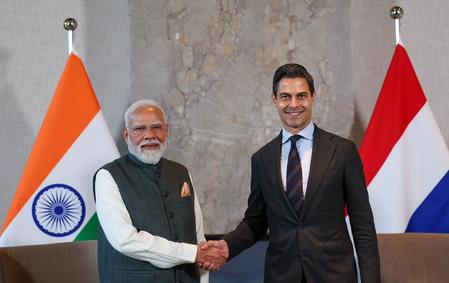
In this context of global uncertainties, Modi stressed the importance of resilient supply chains and highlighted the collaborative efforts between India and the Netherlands to build a trusted, transparent, and future-ready supply chain. This cooperation is part of the elevated ties between the two nations, which have been upgraded to a "Strategic Partnership." During his visit to the Netherlands, Modi engaged in delegation-level talks with Dutch Prime Minister Rob Jetten, reviewing the expanding scope of bilateral cooperation across various sectors including trade, defence, emerging technologies, water management, clean energy, and people-to-people ties. Both leaders reaffirmed their commitment to democratic values, a rules-based international order, and reforms in multilateral institutions, including the expansion of the UN Security Council.
Modi's warnings about the global economic situation and the potential for increased poverty also came after his earlier call for voluntary austerity measures within India. He had urged Indian citizens to consider measures such as working from home where possible, limiting overseas travel, and reducing luxury purchases like gold. These calls were framed as acts of "patriotism" aimed at conserving foreign exchange and fuel, encouraging greater use of public transport and carpooling. These appeals were followed by a significant event in India: state-owned oil companies raised petrol and diesel prices by ₹3 per litre for the first time in four years, a move anticipated to impact household expenses and production costs, leading to inflationary pressures.
The Prime Minister also linked the necessity for such domestic measures to the ongoing US and Israeli actions against Iran and the broader West Asia conflict, which have created turmoil in global oil markets and prompted concerns over crude oil supplies and shipping routes, particularly through the Strait of Hormuz. India, being heavily dependent on imported crude oil and natural gas from the Middle East, is closely monitoring the conflict's impact. Modi emphasized that in an interconnected world, no country can remain untouched by the adverse consequences of such conflicts.
Despite the grave global outlook, Modi also presented an optimistic vision of India's role, describing the country as a land of opportunities powered by both technology and human values. He highlighted India's rapid digital and technological infrastructure growth and its ambition to become a global manufacturing hub and a developed nation by 2047. He also referred to India hosting the world's largest and most successful AI summit and a successful G20 New Delhi Summit, underlining India's growing influence and leadership on the global stage.
Furthermore, during his recent interactions with BRICS foreign ministers, Modi emphasized India's commitment to strengthening multilateralism, promoting sustainable development, enhancing economic resilience, and building a more inclusive world order under India's 2026 BRICS chairmanship. This highlights India's proactive stance in seeking cooperative solutions to global challenges. The Prime Minister's consistent message across various international platforms is a call for global cooperation and swift, collective action to navigate the turbulent global landscape and safeguard humanity's progress.
Frequently Asked Questions
What were the main points of PM Modi's speech in the Netherlands?
During his speech in The Hague, PM Modi warned that humanity is facing multiple major challenges, describing the current period as a 'decade of disasters.' He highlighted the COVID-19 pandemic, ongoing wars (especially in West Asia), and the energy crisis as key drivers of global instability.
Why did PM Modi refer to the current period as a 'decade of disasters'?
PM Modi used the term 'decade of disasters' to encapsulate the cumulative impact of the coronavirus pandemic, subsequent wars (particularly the West Asia conflict), and the ongoing energy crisis. He cautioned that these combined challenges threaten to reverse decades of global progress and push many into poverty.
What solutions did PM Modi propose for these global challenges?
PM Modi called for 'swift change' in global conditions and emphasized the importance of resilient supply chains. He noted India's collaboration with the Netherlands to build trusted, transparent, and future-ready supply chains. He also highlighted India's broader efforts in strengthening multilateralism and promoting sustainable development.
How do these global challenges impact India specifically?
The global challenges, especially the West Asia conflict and the energy crisis, have direct implications for India, which is heavily reliant on imported crude oil. In response, PM Modi had previously urged Indian citizens to adopt austerity measures to conserve foreign exchange and fuel, preceding a recent hike in petrol and diesel prices in the country.
What is the significance of PM Modi's visit to the Netherlands in this context?
PM Modi's visit elevated India's relationship with the Netherlands to a 'Strategic Partnership,' focusing on cooperation across various sectors including trade, defence, and emerging technologies. This partnership is seen as crucial for building resilient global solutions and strengthening economic ties amidst current geopolitical and economic uncertainties.