Indian sailor killed in Iran's 'suicide' boat attack on US-owned tanker near Iraq
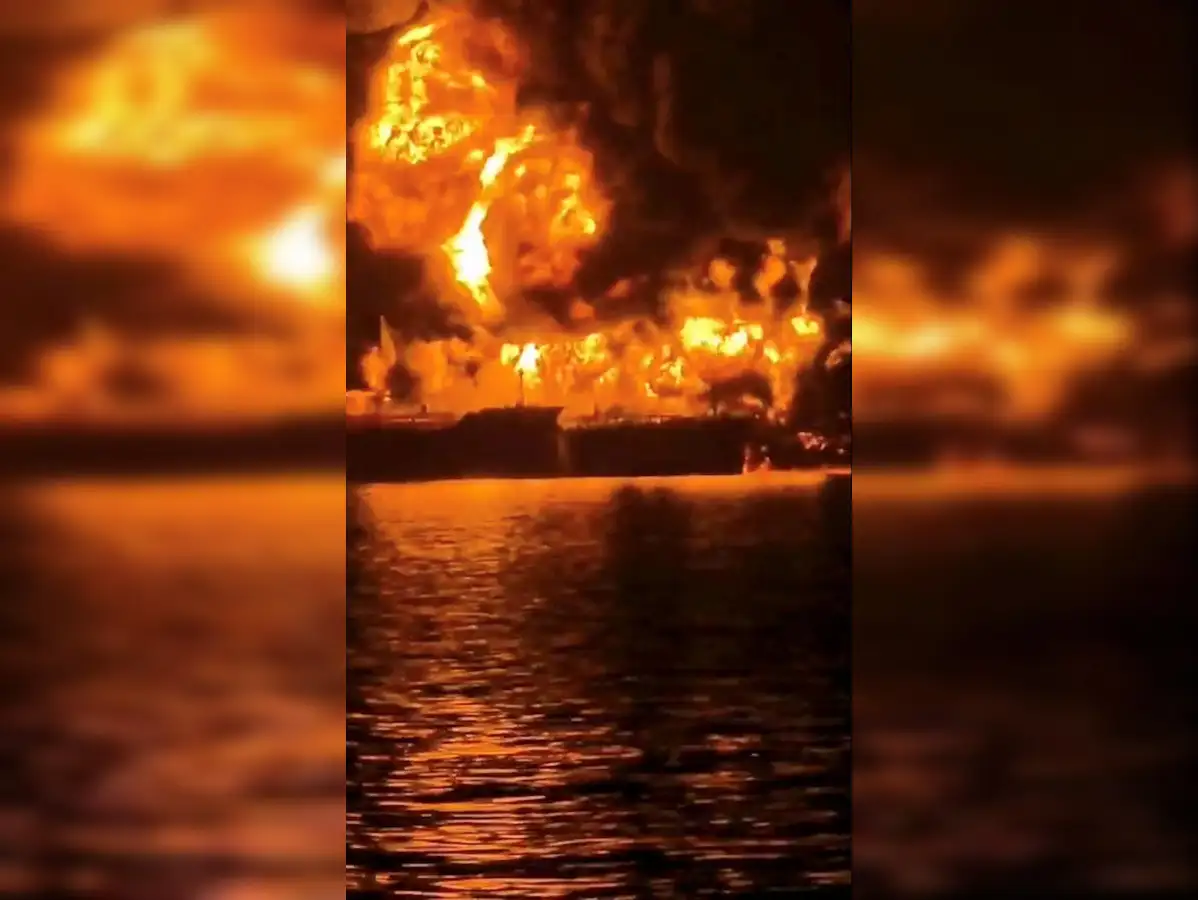
An Indian national was killed and 27 crew members were rescued after an Iranian "suicide" boat attacked a US-owned oil tanker, the Safesea Vishnu, near Iraq's Khor Al Zubair port. The incident escalates maritime threats in the Persian Gulf amid the ongoing US-Israeli conflict with Iran.
Key Highlights
- Iranian "suicide" boat targeted US-owned oil tanker Safesea Vishnu.
- One Indian crew member was killed in the attack near Iraq's Basra coast.
- The remaining 27 crew members were rescued and taken to Basra.
- The incident highlights rising maritime security concerns in the Persian Gulf.
- This attack is part of the broader US-Iran conflict escalating in the region.
An Indian national lost his life and 27 other crew members were rescued following an attack by an Iranian "suicide" boat on a US-owned oil tanker near Iraq's Khor Al Zubair port. The vessel, identified as Safesea Vishnu, was struck inside Iraqi territorial waters, escalating maritime security concerns in the strategically vital Persian Gulf. The incident occurred amidst the broader US-Israeli conflict with Iran, which has seen a rise in attacks on commercial shipping in the region. Sources close to the tanker's company expressed devastation at the loss of the Indian national and urged the Indian government to condemn the attack and ensure the safety of seafarers in the region. Given that Indians constitute a significant percentage of global seafarers, there are concerns that they may become collateral damage in escalating regional conflicts. The attack underscores the volatility of the West Asia region, with the Strait of Hormuz, a critical oil transit route, facing significant disruptions. The broader conflict has led to international responses, including the UN Security Council adopting a resolution condemning Iran's attacks on Gulf states and the International Energy Agency agreeing to release oil reserves to stabilize supply and curb soaring prices. India, while deeply concerned about the attacks in the Red Sea and its impact on global trade, has maintained a neutral stance in certain international military coalitions. The Indian Navy has been actively patrolling the region to ensure the safety of Indian shipping interests and seafarers. The escalating tensions have broader economic implications, with the disruption of shipping routes potentially leading to spikes in global energy prices. The incident serves as a stark reminder of the human cost of geopolitical conflicts and the vulnerability of international maritime trade. The Safesea Vishnu, a crude oil tanker built in 2007 and flying the Marshall Islands flag, was carrying Iraqi crude at the time of the attack. The incident has prompted Iraq's oil ministry to express deep concern over attacks on tankers in the Gulf, emphasizing the need for navigation in international maritime corridors to remain free from regional conflicts. This event follows a pattern of increasing attacks on commercial vessels in the Middle East, raising fears for global energy supplies and the security of major maritime oil routes. The UN Security Council resolution, while demanding a halt to Iranian attacks on Gulf states, did not mention the US or Israeli strikes on Iran, drawing abstentions from Russia and China. The situation highlights the complex geopolitical dynamics at play, with India navigating its diplomatic interests while seeking to protect its citizens and economic ties. The continued attacks threaten not only regional stability but also the global economy, which heavily relies on the free flow of oil and goods through crucial waterways like the Strait of Hormuz and the Red Sea. The Indian government has expressed deep concern over such attacks, particularly those affecting commercial shipping and resulting in the loss of precious lives, including Indian citizens. The escalating intensity and lethality of these attacks are a cause for significant worry.
Frequently Asked Questions
What happened to the US-owned oil tanker 'Safesea Vishnu'?
The US-owned oil tanker 'Safesea Vishnu' was attacked by an Iranian "suicide" boat near Iraq's Khor Al Zubair port, resulting in a fire and the death of one Indian crew member. The remaining 27 crew members were rescued.
Who was responsible for the attack on the 'Safesea Vishnu'?
Sources indicate that an Iranian "suicide" boat carried out the attack on the US-owned oil tanker 'Safesea Vishnu'.
What is the broader context of this incident?
The attack on the 'Safesea Vishnu' is part of the escalating US-Israeli conflict with Iran, which has led to a rise in attacks on commercial shipping in the Persian Gulf and the Strait of Hormuz, disrupting global trade and raising energy security concerns.