2026: A Landmark Year for Global Space Exploration and Competition | Quick Digest
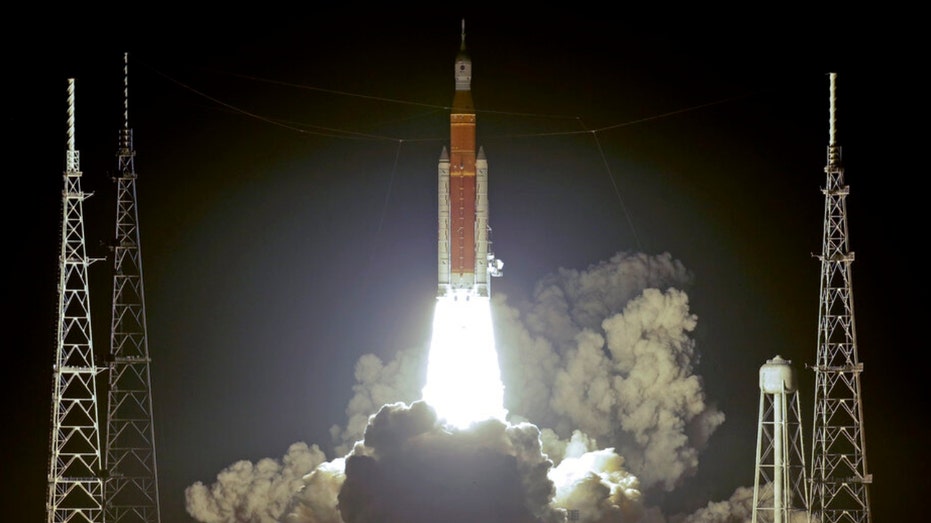
The year 2026 is poised to be transformative for space exploration, marked by crewed lunar flybys, multiple robotic moon missions, and the potential launch of a significant new space telescope. This era will highlight both international cooperation and escalating competition among global space powers. India is also set to make strides with its Gaganyaan-1 uncrewed test flight.
Artemis II will send astronauts around the Moon for the first time since 1972.
Multiple nations and private entities plan robotic lunar landings and explorations.
The Nancy Grace Roman Space Telescope is on track for a potential 2026 launch.
Global cooperation and competition characterize upcoming space endeavors.
India's Gaganyaan-1 uncrewed test flight is planned, advancing human spaceflight goals.
The year 2026 is anticipated to be a landmark period for space exploration, characterized by significant advancements in lunar missions, telescope launches, and a dynamic interplay of global cooperation and competition. A major highlight is NASA's Artemis II mission, scheduled for no earlier than February 6, 2026, which will be the first crewed lunar flyby since Apollo 17 in 1972, taking four astronauts on a 10-day journey around the Moon. This mission is a crucial step towards returning humans to the lunar surface. Concurrently, numerous robotic lunar missions are planned by various entities, including Intuitive Machines' IM-3, Astrobotic's Griffin Mission One, and Blue Origin's Blue Moon Pathfinder Mission 1. China also intends to launch its Chang'e 7 mission in late 2026, aiming to explore the Moon's south pole with an orbiter, lander, rover, and mini-flying probe.
In terms of deep space observation, the Nancy Grace Roman Space Telescope, a significant NASA infrared flagship observatory, is on track for a potential launch as early as Fall 2026, although its official launch commitment is May 2027. This telescope is designed to survey billions of galaxies and study exoplanet atmospheres. Furthermore, the year will underscore the dual nature of international space efforts: robust cooperation in missions like the ESA-JAXA BepiColombo to Mercury and the expansion of private space stations, alongside intense competition, particularly in lunar resource exploration and technological dominance. For India, 2026 is significant with the planned Gaganyaan-1 mission, its first uncrewed orbital test flight, which supports the nation's broader human space exploration ambitions. Overall, 2026 promises a blend of groundbreaking scientific endeavors, renewed lunar focus, and evolving geopolitical dynamics in space.
Read the full story on Quick Digest