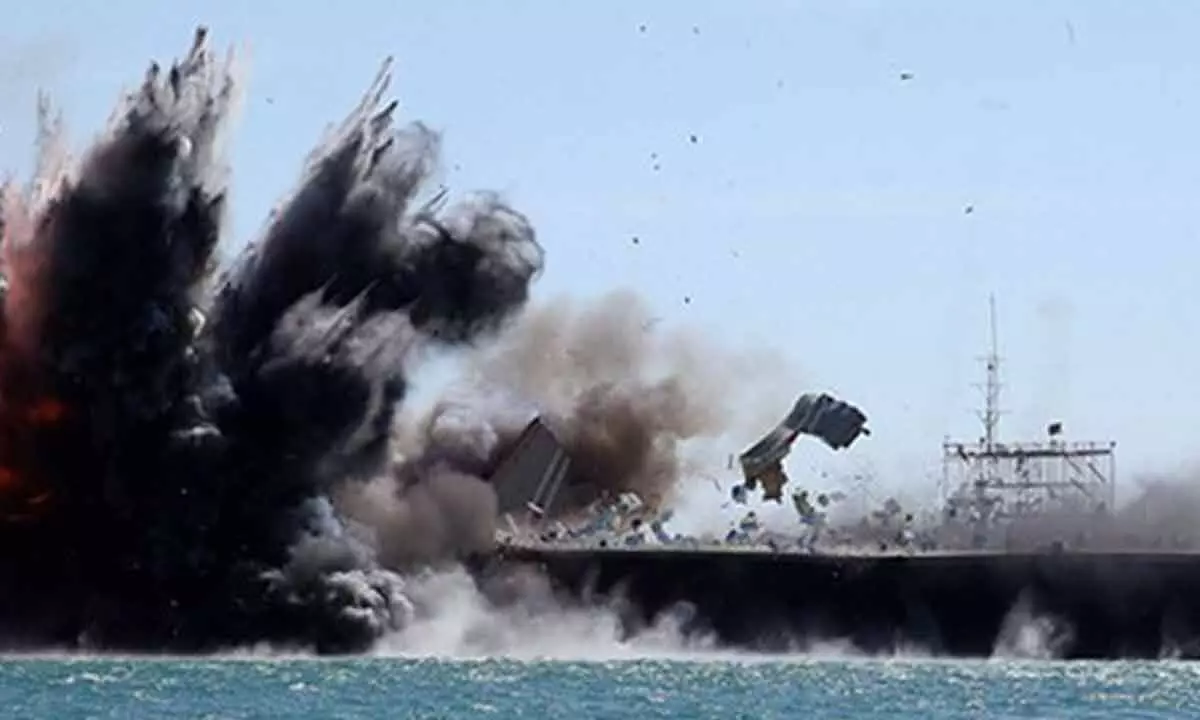
Iran Guards: Low US War Risk Amid Hormuz Peace Talks, Regional Tensions
An Iranian Revolutionary Guard Corps official stated a low possibility of renewed war with the U.S. amidst ongoing indirect negotiations aimed at de-escalating a wider regional conflict that began in February 2026. Talks focus on reopening the Strait of Hormuz and Iran's nuclear program, despite recent U.S. strikes and Israeli actions against Hezbollah.
Key Highlights
- IRGC official cites 'low' possibility of renewed war with the United States.
- Statement comes amidst ongoing indirect US-Iran ceasefire and peace negotiations.
- Talks aim to reopen the Strait of Hormuz and address Iran's nuclear program.
- Regional conflict initiated in February 2026 involving Iran, US, and Israel.
- Recent US strikes and Israeli attacks on Hezbollah highlight persistent tensions.
An official from Iran's Islamic Revolutionary Guard Corps (IRGC) announced on Wednesday, May 27, 2026, that the likelihood of renewed conflict with the United States is 'low'. Mohammad Akbarzadeh, the deputy political chief of the IRGC's naval force, attributed this to what he described as the 'enemy's weakness' but simultaneously affirmed Iran's readiness to defend itself against any potential attack. His comments were widely reported by several credible news agencies, including the semi-official Tasnim news agency, which has close ties to the IRGC.
This statement emerges within a complex and volatile geopolitical landscape in the Middle East, characterized by an ongoing regional conflict involving Iran, the United States, and Israel, which reportedly began in February 2026. This broader 'Iran war' has seen direct exchanges of fire and proxy confrontations, significantly impacting regional stability and global affairs.
The IRGC official's remarks come as indirect negotiations between the United States and Iran are actively underway, mediated by Pakistan. These crucial talks aim to solidify a ceasefire, address the reopening of the strategically vital Strait of Hormuz, and tackle the contentious issue of Iran's nuclear program. The Strait of Hormuz, a critical choke point for global oil supplies, has been subject to a U.S. blockade, turning around over a hundred commercial vessels. Its reopening is a key condition in the negotiations, with a draft deal reportedly envisaging Iran restoring commercial shipping to pre-war levels within a month in exchange for the U.S. lifting its naval blockade and withdrawing military forces from Iran's vicinity.
Despite the ongoing diplomatic efforts, tensions remain high. Iran recently accused the U.S. of violating the existing ceasefire by conducting strikes on targets near the Strait of Hormuz, which Washington described as defensive actions against Iranian boats attempting to lay mines. The IRGC has warned of retaliation for such strikes. Meanwhile, Israel continues to intensify its military operations, particularly against the Iranian-backed Hezbollah group in Lebanon, leading to significant casualties and displacement. Reports indicate over 30 people were killed in Israeli strikes in Lebanon on Tuesday alone, further escalating hostilities on this front of the wider Middle East conflict.
The negotiations are progressing, albeit with significant sticking points. While Iran's state TV reported obtaining a draft framework for a memorandum of understanding with the U.S., Iranian officials, including Ali Bagheri, Iran's deputy secretary of the supreme national security council, have cautioned that no agreement has been reached on all issues, particularly concerning the Strait of Hormuz and Iran's nuclear ambitions. Iran has reportedly demanded the immediate release of frozen assets and insists on managing ship traffic through the strait in cooperation with Oman, a stance that contradicts the U.S. position on freedom of navigation.
U.S. President Donald Trump has acknowledged that indirect talks are progressing 'nicely' but has also faced criticism for a potential agreement that might defer crucial issues like Iran's nuclear program for further negotiation. He has also stated that a deal 'isn't even fully negotiated yet' and stressed that Iran's highly enriched uranium must be 'immediately turned over' or destroyed. The war has had a substantial global impact, causing disruptions in oil prices and international shipping, and raising fears of a broader regional conflict. The diplomatic engagement, supported by China's call for a ceasefire and mediation, underscores the international community's effort to de-escalate the volatile situation.
In essence, while an IRGC official signals a reduced risk of full-scale war with the U.S., the region remains gripped by a complex, multi-front conflict with active hostilities and delicate negotiations attempting to forge a path towards a more stable peace.
Frequently Asked Questions
What is the current status of the conflict between Iran and the United States?
As of May 27, 2026, an Iranian Revolutionary Guard Corps (IRGC) official stated a 'low' possibility of renewed war with the U.S. This comes amid ongoing indirect negotiations, mediated by Pakistan, to de-escalate tensions and formalize a ceasefire established in February 2026.
What are the main issues being discussed in the US-Iran peace talks?
The primary issues in the ongoing negotiations include reopening the Strait of Hormuz, which has been subject to a U.S. naval blockade, and discussions around Iran's nuclear program. There are also efforts to ensure a lasting ceasefire across various fronts of the regional conflict.
How does the 'Iran-Israel war' fit into these developments?
The 'Iran-Israel war' refers to a broader regional conflict that began in February 2026, involving Iran, Israel, and their proxies. While the IRGC official's statement focuses on Iran-U.S. tensions, Israel is actively involved in escalating attacks against Iranian-backed Hezbollah in Lebanon and has carried out strikes in Gaza, which are intertwined with the wider regional instability.
What is the significance of the Strait of Hormuz in this conflict?
The Strait of Hormuz is a crucial global chokepoint for oil shipments, and its blockade by the U.S. has significantly impacted international trade and energy markets. Reopening the strait to commercial shipping is a key condition in the current US-Iran negotiations, with proposals for Iran to manage traffic in cooperation with Oman.
Are there still active hostilities in the region despite peace talks?
Yes, despite diplomatic efforts, active hostilities persist. The U.S. has conducted strikes on Iranian targets, which it termed defensive, while Iran accused the U.S. of violating the ceasefire. Additionally, Israel is intensifying its offensive against Hezbollah in Lebanon, indicating continued military engagements across the region.