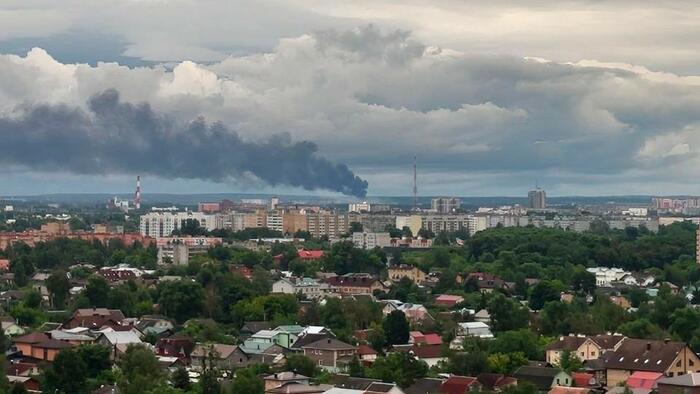
Russia Bans Diesel Exports Amid Drone Strikes, Global Market Impact
Russia has implemented a full ban on diesel exports until July 31, 2026, to address critical domestic fuel shortages caused by intensified Ukrainian drone attacks on its oil refineries. The move, announced by Deputy Prime Minister Alexander Novak, aims to stabilize Russia's internal market but is expected to significantly impact global diesel prices and supply chains.
Key Highlights
- Russia banned diesel exports effective July 8, 2026, until July 31.
- Systematic Ukrainian drone strikes on refineries caused domestic fuel shortages.
- The ban aims to stabilize Russia's internal fuel supply and prices.
- Global diesel prices surged following Russia's export restriction.
- Russia plans to import fuel, including gasoline potentially from India.
- Ukraine's attacks have severely impacted Russia's refining capacity.
Russia has instituted a comprehensive ban on diesel exports, effective from July 8, 2026, and slated to remain in force until July 31, 2026. This drastic measure comes in response to severe domestic fuel shortages and escalating prices, directly attributed to a sustained campaign of Ukrainian drone strikes targeting Russian oil refineries. Deputy Prime Minister Alexander Novak announced the ban during a televised government meeting chaired by President Vladimir Putin, emphasizing the necessity to bolster domestic supplies and alleviate public concern over the complex fuel situation.
The crisis within Russia's fuel market has been brewing for some time, with Ukrainian drones successfully hitting numerous key energy infrastructure sites deep within Russian territory. Attacks have reportedly targeted major refineries, including those in Omsk, NORSI (Lukoil's fourth-largest), the Moscow oil refinery, Syzran, and Kuibyshev, among others. These systematic assaults have significantly crippled Russia's oil refining capacity, with some estimates suggesting a reduction of nearly one-quarter of the total. Consequently, many Russian regions are experiencing hours-long queues at petrol stations, rationing, and widespread disruptions to fuel supply, a sight not seen since President Putin came to power in 2000.
President Putin himself acknowledged in late June 2026 that Ukrainian attacks were indeed causing problems for domestic fuel supplies, though he downplayed the severity as 'not critical' at the time. However, the full export ban indicates the escalating nature of the crisis. Previously, Russia had implemented a partial ban affecting non-producers, but the new decree extends restrictions to all producers, effectively halting all diesel exports with exemptions only for pre-existing government agreements, such as with Mongolia.
This development has sent ripples across the global energy market. Russia is the world's second-largest exporter of diesel, behind the United States, with major customers including Turkey and Brazil. The ban has already caused global benchmark diesel prices to surge, with European diesel margins rising to a record $60.17 per barrel immediately after the announcement. Analysts warn that lower Russian exports will force these nations, and potentially Europe, to compete for barrels from the U.S., the Middle East, and India, further straining an already tense global market, compounded by geopolitical uncertainties in regions like the Strait of Hormuz.
For India, this news carries particular significance. India is a major importer of crude oil, and Russia has emerged as its largest supplier, with Russia's share in India's oil imports crossing 40% in May 2026. Interestingly, India has also become a significant refiner of crude oil and has reportedly started exporting gasoline back to Russia, helping Moscow mitigate its fuel shortages. This unique dynamic underscores the complex and opportunistic nature of international energy trade in the current geopolitical climate, highlighting India's growing role as a refining hub capable of influencing global fuel supply chains. The fact that Russia, a major oil producer, is now looking to import refined products, even from countries like India that were previously major importers of its crude, demonstrates the severity of the damage inflicted by the Ukrainian drone campaign.
The temporary nature of the ban until July 31 suggests that Russia hopes to quickly stabilize its internal market, possibly through increased refining capacity or other mitigation efforts, alongside planned fuel imports. However, the ongoing effectiveness of Ukrainian drone strikes and the long-term implications for Russia's energy infrastructure remain critical factors in the stability of both Russian domestic supply and the broader global energy landscape.
Frequently Asked Questions
Why did Russia ban diesel exports?
Russia banned diesel exports to stabilize its domestic fuel market and ensure sufficient supply after systematic Ukrainian drone attacks severely damaged its oil refineries, leading to widespread shortages and price spikes.
When did the diesel export ban take effect and for how long?
The diesel export ban took effect on Wednesday, July 8, 2026, and is slated to remain in place until July 31, 2026.
What is the global impact of Russia's diesel export ban?
The ban has caused global benchmark diesel prices to surge, as Russia is the world's second-largest exporter of the fuel. It will force major buyers like Turkey and Brazil to seek supplies elsewhere, potentially from the U.S., Middle East, or India, further tightening an already sensitive global energy market.
How have Ukrainian drone strikes affected Russia's fuel infrastructure?
Ukrainian drone strikes have significantly damaged numerous Russian oil refineries, disrupting their operations and reducing Russia's overall oil refining capacity by a considerable margin. This has directly led to domestic fuel shortages and the need for the export ban.
What is India's role in this unfolding energy situation?
India has become a major importer of Russian crude oil and is now, interestingly, also reportedly exporting refined gasoline back to Russia to help alleviate Moscow's domestic fuel crisis, showcasing a complex and evolving energy relationship.