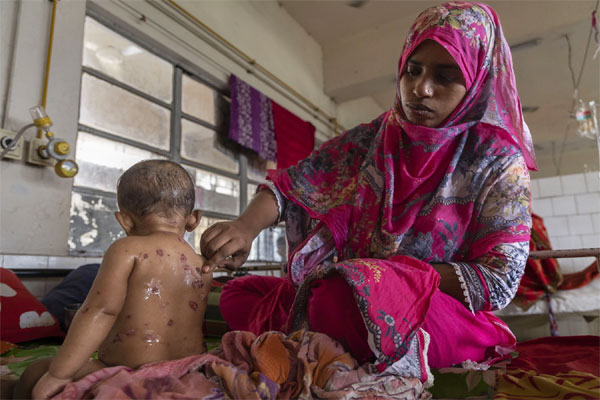
Bangladesh Battles Deadly Measles Outbreak, Over 500 Child Deaths Recorded
Bangladesh is currently facing one of its worst measles outbreaks in decades, with suspected and confirmed deaths topping 500 children since mid-March 2026. The rapidly spreading disease has overwhelmed hospitals, prompting emergency vaccination campaigns amidst concerns over declining immunization coverage.
Key Highlights
- Over 500 suspected and confirmed measles deaths recorded in Bangladesh since March 15, 2026.
- Outbreak attributed to declining vaccination coverage and disrupted campaigns from 2024-2025.
- Hospitals in affected areas, including Dhaka, are heavily strained and overcrowded.
- Government, UNICEF, and WHO have launched emergency vaccination drives targeting millions of children.
- Measles cases are widespread, affecting 58 out of 64 districts nationwide.
- Infants and unvaccinated children are particularly vulnerable to severe complications and death.
Bangladesh is grappling with a severe and rapidly escalating measles outbreak, confirmed to have caused over 500 suspected and confirmed deaths among children since mid-March 2026. The marketscreener.com article accurately reflects the gravity of the situation, citing a Reuters report from May 23, 2026, which stated that at least 86 children had died from confirmed measles infections this year, with another 426 deaths showing symptoms consistent with the disease, bringing the total to 512 fatalities.
This dire situation marks one of the country's worst measles outbreaks in decades, with health officials reporting 62,507 suspected cases and 8,494 laboratory-confirmed infections nationwide between March 15 and May 23, 2026. Hospitals, particularly in densely populated urban areas like Dhaka, have become overwhelmed with patients, leading to severe strain on already fragile healthcare services and a scramble for intensive care beds.
The rapid spread of the disease is largely attributed to significant gaps in immunization coverage. A nationwide measles-rubella campaign planned for 2024 was unfortunately not executed due to the country's political situation, health workers' strikes, and insufficient funding. Furthermore, Bangladesh experienced a severe shortage of measles vaccines with stockouts throughout 2024 and 2025, leading to considerable immunity gaps in the population, particularly among young children who were left unprotected.
Measles, a highly contagious viral disease, spreads easily through respiratory droplets from coughs and sneezes. It can cause severe complications such as pneumonia, encephalitis (brain swelling), severe diarrhea, blindness, and can be fatal, especially for unvaccinated or malnourished young children. Approximately 70% of measles patients admitted to major hospitals in Dhaka and Rajshahi in early 2026 were infants below nine months of age, before the scheduled first vaccine dose, highlighting the extreme vulnerability of this age group. Overall, a substantial proportion of cases occurred among children who were either unvaccinated or had received only one dose of the measles-containing vaccine, indicating considerable immunity gaps.
In response to the escalating crisis, the Bangladeshi government, with crucial support from international partners including UNICEF, the World Health Organization (WHO), and Gavi, the Vaccine Alliance, has initiated emergency vaccination campaigns. A nationwide measles-rubella (MR) vaccination campaign was approved on March 30, 2026, and commenced on April 5, expanding nationwide from April 20, 2026, targeting children aged 6 to 59 months. As of May 23, 2026, over 18 million children have reportedly been reached with at least one dose of the vaccine.
The outbreak has affected 58 out of 64 districts across all eight divisions of Bangladesh, indicating widespread national transmission. Areas like Dhaka, Rajshahi, Chattogram, and Khulna have reported the highest cumulative burden of suspected cases. This widespread transmission and the high number of susceptible children have led the WHO to assess the risk at the national level as high.
For an audience in India, this news is of significant concern due to the geographical proximity and porous borders between Bangladesh and India. Infectious diseases, especially highly contagious ones like measles, do not respect national boundaries. Outbreaks in one country can pose a direct threat to the public health security of neighboring nations, necessitating strong regional cooperation in disease surveillance and immunization efforts. India itself continues to work towards measles elimination and is vigilant against imported cases. The situation in Bangladesh underscores the critical importance of maintaining high vaccination coverage and robust public health systems across the South Asian region to prevent similar crises.
The current crisis highlights the devastating consequences of disruptions to routine immunization and the vital role of sustained vaccination campaigns in protecting public health. While vaccination efforts are now in full swing, health officials warn that the full impact of these campaigns will take months to be felt. The ongoing measles outbreak in Bangladesh serves as a stark reminder of the global fragility of immunization gains and the continuous need for investment in public health infrastructure and vaccine access to safeguard the most vulnerable populations.
Frequently Asked Questions
What is the current scale of the measles outbreak in Bangladesh?
As of May 23, 2026, Bangladesh has recorded over 500 suspected and confirmed measles deaths, with 86 confirmed fatalities and 426 deaths showing consistent symptoms, since March 15, 2026. Over 62,507 suspected and 8,494 laboratory-confirmed cases have been identified nationwide.
Why is this measles outbreak considered one of the worst in decades?
The outbreak is considered severe due to its rapid spread across 58 out of 64 districts, the high number of child deaths, and the overwhelming strain it has placed on healthcare facilities. It follows significant immunity gaps created by a cancelled nationwide vaccination campaign in 2024 and widespread vaccine shortages in 2024-2025.
What is being done to control the outbreak in Bangladesh?
The Bangladeshi government, supported by UNICEF, WHO, and Gavi, has launched an emergency nationwide measles-rubella (MR) vaccination campaign. This campaign began in April 2026, targeting children aged 6 to 59 months, and has so far reached over 18 million children.
Which population groups are most affected by the measles outbreak?
The outbreak disproportionately affects young children, especially those under five years of age, and unvaccinated or partially immunized individuals. Infants below nine months, who are too young for routine vaccination, are particularly vulnerable and account for a significant percentage of cases.
What are the potential implications of this outbreak for neighboring countries like India?
Measles is highly contagious and can easily spread across borders, posing a risk to neighboring countries like India. The outbreak underscores the critical need for strong regional cooperation in disease surveillance and maintaining high vaccination coverage in all nations to prevent widespread transmission and protect public health.