EU and Mercosur Sign Landmark Trade Deal After 25 Years | Quick Digest
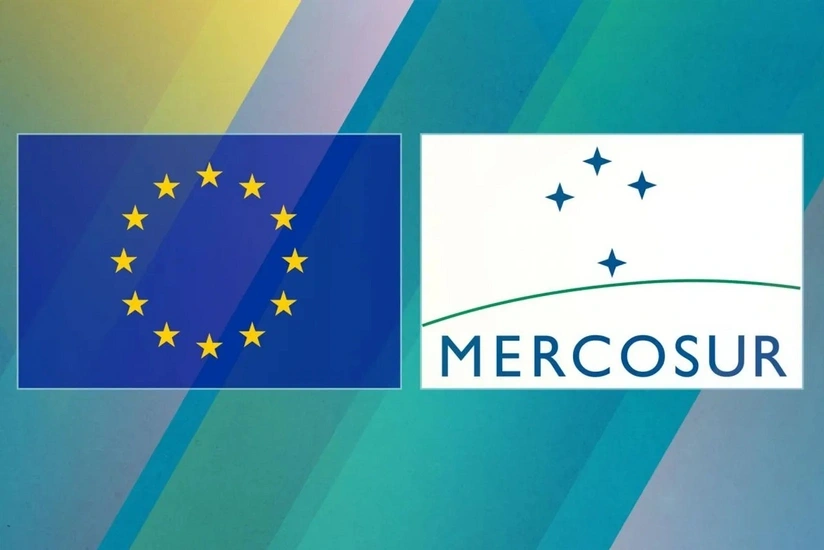
The European Union and Mercosur officially signed a comprehensive trade agreement on January 17, 2026, concluding over two decades of negotiations. This historic pact aims to create one of the world's largest free trade zones, encompassing a market of over 700 million consumers. The deal now proceeds to the complex ratification phase by respective legislative bodies.
EU and Mercosur blocs formally signed a trade deal on January 17, 2026.
Negotiations spanned more than 25 years, marking a significant milestone.
The agreement establishes one of the world's largest free trade areas, covering 700 million people.
It aims to cut tariffs on over 90% of goods, boosting bilateral trade.
The deal requires ratification by the European Parliament and national legislatures.
Despite signing, opposition from farmers and some EU states remains.
The European Union and the South American trade bloc Mercosur formally signed a landmark free trade agreement on January 17, 2026, in Asunción, Paraguay, culminating over 25 years of negotiations. This agreement is set to establish one of the world's largest integrated trading zones, connecting a combined market of over 700 million people and accounting for a significant portion of global GDP.
The deal encompasses a Partnership Agreement (EMPA) and an Interim Trade Agreement (iTA), designed to progressively eliminate tariffs on more than 90% of bilateral trade in goods and services. Proponents highlight its geopolitical importance, arguing it will diversify trade relationships, reduce reliance on countries like China and the United States, and bolster a rules-based multilateral trading system amidst rising protectionism.
However, the signing ceremony is not the final step. The agreement still faces a complex ratification process. It requires approval from the European Parliament, where a vote is expected in the coming months, potentially in February or March 2026. Furthermore, the broader Partnership Agreement (EMPA) will need to be individually ratified by the national parliaments of all 27 EU member states, a process that could take years, similar to previous complex EU trade deals. Mercosur member states (Argentina, Brazil, Paraguay, Uruguay, and potentially Bolivia later) also need to ratify the accord.
Opposition to the deal persists, primarily from agricultural sectors in some EU countries, notably France, Ireland, Austria, Hungary, and Poland, which fear a surge of cheaper South American imports. Environmental and indigenous rights groups have also raised concerns. Despite these challenges, European Commission President Ursula von der Leyen emphasized the agreement's strategic weight, asserting a choice for "fair trade over tariffs" and a "productive long-term partnership over isolation." The Economic Times reported the event on the day of the signing, aligning with other major news outlets.
Read the full story on Quick Digest