India's Wholesale Inflation Rises to 9.68% in May Amid West Asia Conflict
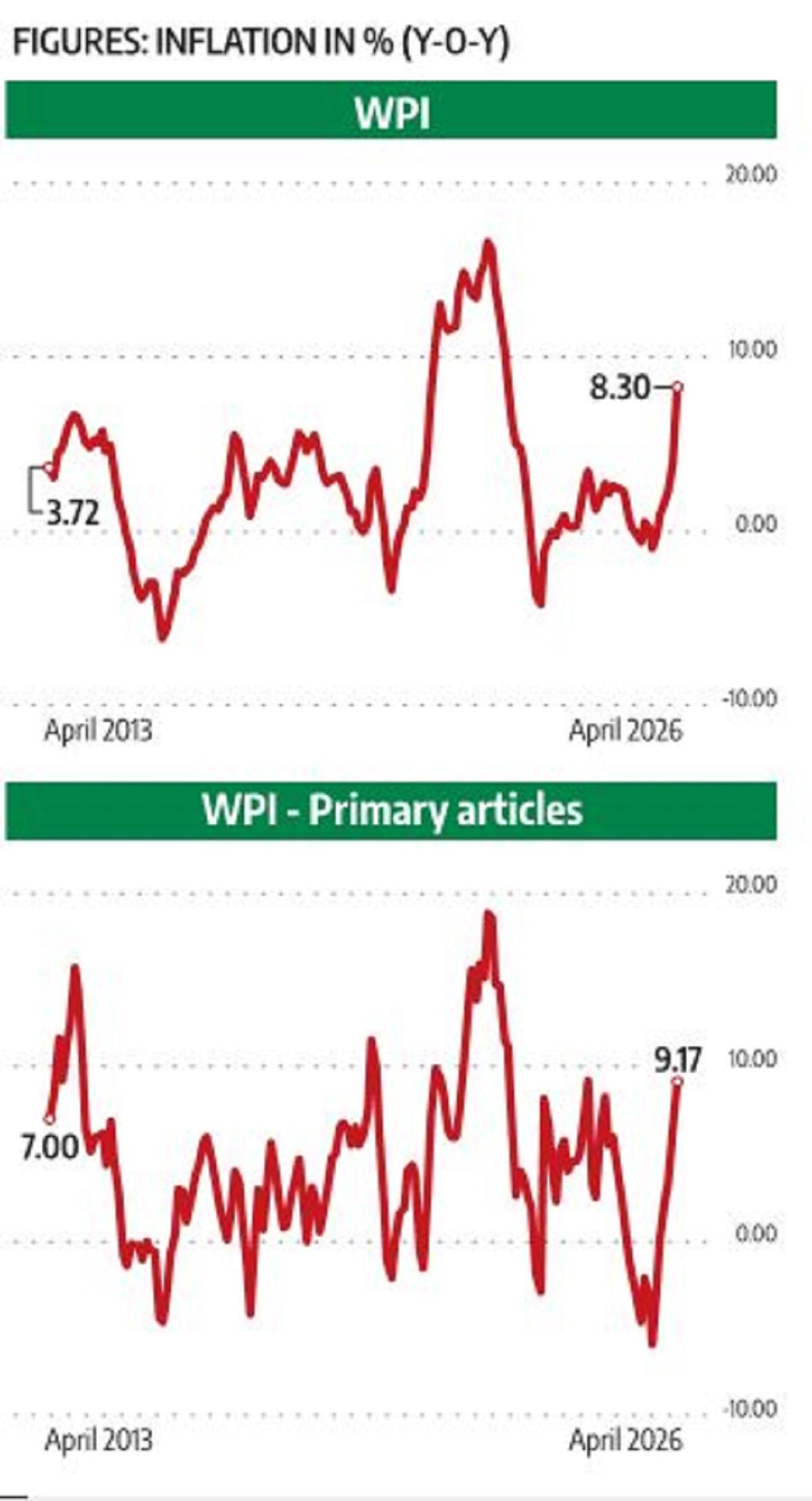
India's wholesale inflation surged to 9.68% in May 2026 under a newly revamped series, driven primarily by escalating fuel and food prices. Geopolitical tensions in West Asia, particularly the US-Iran conflict and disruptions in the Strait of Hormuz, significantly pushed up crude oil costs, impacting India's import bill and domestic prices. This is the first data release under the WPI series with a new 2022-23 base year.
Key Highlights
- Wholesale inflation in India reached 9.68% in May 2026.
- New WPI series with 2022-23 base year replaces 2011-12 series.
- Fuel and power inflation jumped over 30% due to global oil prices.
- West Asia conflict and Strait of Hormuz disruption are key drivers.
- Food inflation also saw an uptick, contributing to overall price rise.
- Government introduced Producer Price Indices alongside revised WPI.
India's wholesale price index (WPI)-based inflation accelerated sharply to 9.68% in May 2026, marking a significant rise from 8.26% in April. This latest data represents the first release under a comprehensive new series, with the base year for the WPI revised from 2011-12 to 2022-23. The government's move to revamp the WPI series, which expands commodity coverage to 957 items from 697 and introduces methodological improvements, aims to align India's inflation measurement framework with international best practices and recommendations from the International Monetary Fund (IMF). Alongside the revised WPI, India also launched new Producer Price Indices (PPIs), including Output Producer Price Index (OPPI), Trial Input Producer Price Index (IPPI), and Service Producer Price Indices for various sectors. The existing WPI series will continue to be published for five years alongside the PPIs to facilitate a smooth transition for users.
The primary driver behind the surge in wholesale inflation in May 2026 was the sharp increase in fuel and power prices, which soared by 30.33% year-on-year, up from 24.89% in April. Within this category, crude petroleum and natural gas prices witnessed an alarming rise of 61.51% in May. This escalation is largely attributed to the ongoing geopolitical tensions in West Asia, specifically the US-Iran conflict, which has significantly impacted global crude oil prices and disrupted supply chains, particularly through the vital Strait of Hormuz. The Strait of Hormuz is a crucial artery for global oil transport, and any instability in the region directly affects India, which is highly dependent on oil imports, importing nearly 80-85% of its crude oil requirements. The conflict's impact was evident as state-run oil marketing companies in India reportedly raised retail fuel prices four times in May.
Beyond fuel, other commodity groups also contributed to the inflationary pressures. Inflation in primary articles, which include food items, rose to 4.99% in May from 3.78% in April. Specifically, the WPI Food Index recorded inflation of 4.49% in May, up from 3.11% in April. Manufactured products, which hold the highest weight in the WPI basket, also saw an increase, with inflation climbing to 7.48% in May from 6.68% in April. This broad-based increase across major groups indicates that elevated input costs are permeating through various sectors of the economy.
The high wholesale inflation comes amid concerns that it could feed into retail inflation, which also accelerated to a 16-month high of 3.93% in May, up from 3.48% in April. The Reserve Bank of India (RBI), which primarily uses the Consumer Price Index (CPI) for monetary policy decisions, has a mandate to keep retail inflation at 4% with a 2% tolerance band. Earlier in June, the RBI raised its inflation forecast for the current fiscal year (FY27) to 5.1% from 4.6%, citing mounting price pressures from higher food costs and the escalating West Asia conflict. While the sharp surge in wholesale prices is not immediately expected to impact interest rates, economists suggest the central bank will closely monitor for any second-round effects of higher fuel prices before considering policy tightening. There is some expectation of relief in June's WPI inflation data, particularly if the recent framework agreement between the US and Iran to end their conflict and halt the blockade of the Strait of Hormuz leads to a cooling in global energy and commodity prices. However, the current high wholesale inflation underscores the significant economic challenges India faces from global geopolitical events and their impact on essential commodities.
Frequently Asked Questions
What is India's wholesale inflation rate for May 2026?
India's wholesale inflation rate, as measured by the Wholesale Price Index (WPI), surged to 9.68% in May 2026.
What does the 'revamped series' for India's WPI mean?
The 'revamped series' refers to the new Wholesale Price Index (WPI) framework launched by the Indian government, which updates the base year from 2011-12 to 2022-23. This new series expands the commodity basket and incorporates improved methodologies to better reflect the economy.
What caused the high wholesale inflation in May 2026?
The high wholesale inflation in May 2026 was primarily driven by a sharp increase in fuel and power prices (over 30% inflation), as well as rising food prices. Geopolitical tensions in West Asia, particularly the US-Iran conflict and its impact on crude oil prices and shipping through the Strait of Hormuz, were major contributors.
How does the West Asia conflict impact India's economy?
The West Asia conflict significantly impacts India's economy by driving up global crude oil prices and disrupting supply chains, especially through the Strait of Hormuz. As a major oil importer, India faces higher import bills, increased domestic fuel prices, and broader inflationary pressures across various sectors.
What is the difference between WPI and PPI?
WPI (Wholesale Price Index) measures inflation at the producer or wholesale level. PPI (Producer Price Index) is a more comprehensive measure of inflation faced by businesses, tracking changes in selling prices received by domestic producers for their output. India has introduced PPIs alongside the revamped WPI to align with international statistical standards.