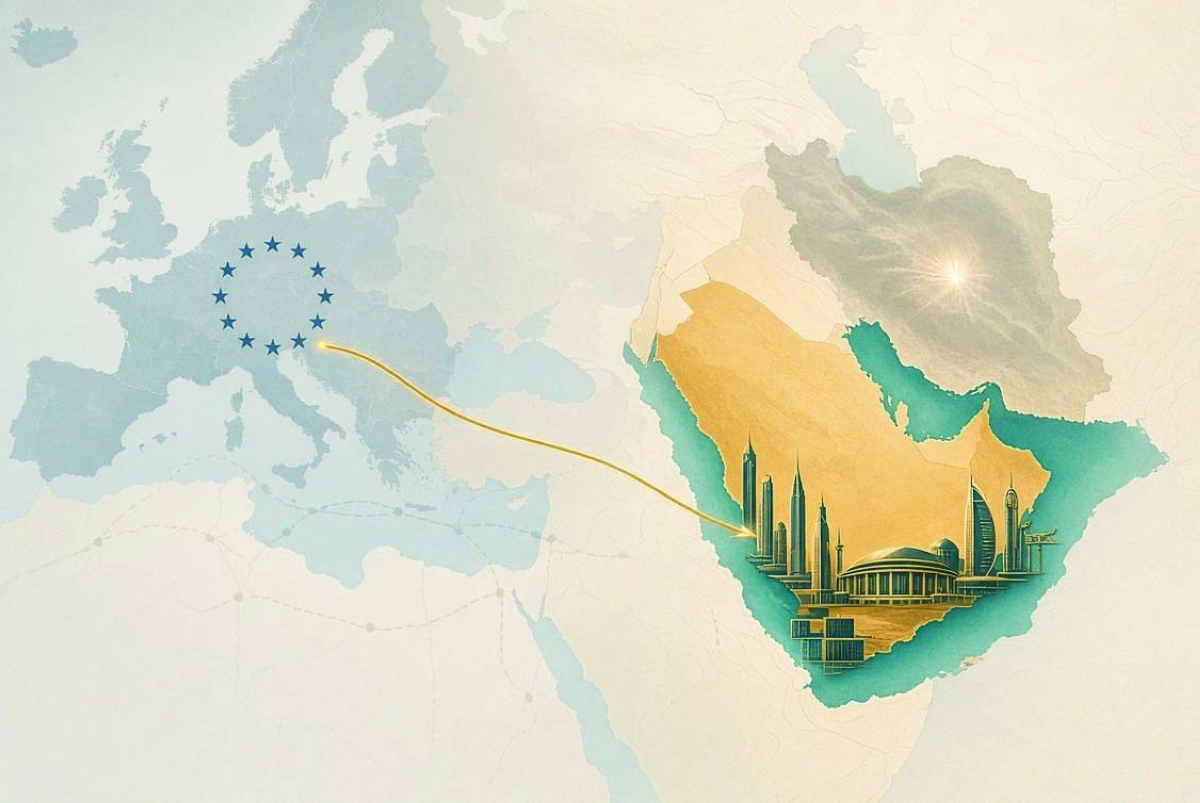
Oman's strategic importance grows for India amid Hormuz shipping disruptions
The Strait of Hormuz disruptions have amplified Oman's significance for India, particularly concerning energy security and trade. Oman's unique geographical position allows for continued access to trade routes even during disruptions in the Strait, making it a vital gateway for India. The recent India-Oman Comprehensive Economic Partnership Agreement (CEPA) further solidifies this relationship, enhancing economic ties and providing alternative supply chain routes.
Key Highlights
- Hormuz Strait disruptions elevate Oman's strategic importance for India.
- Oman offers crucial trade and energy access beyond the Strait of Hormuz.
- CEPA agreement deepens India-Oman economic and strategic cooperation.
- India's energy security is increasingly reliant on stable Omani trade routes.
- Oman serves as a gateway to GCC and East African markets for India.
- Defense and maritime cooperation between India and Oman are expanding.
The geopolitical tensions and subsequent disruptions in the Strait of Hormuz have significantly amplified the strategic importance of Oman for India, particularly in the crucial areas of energy security and trade. The Strait of Hormuz, a vital maritime chokepoint through which approximately 20% of global daily oil consumption and a quarter of global seaborne oil trade passes, has become a focal point of concern due to recent escalations between Iran and other global powers. Any interruption in this narrow waterway has cascading effects on energy supplies, freight costs, and global trade flows, impacting major economies, including India.
Oman's strategic geographical location presents a distinct advantage. Unlike many other Gulf countries, a substantial portion of Oman's coastline faces the Arabian Sea and the Gulf of Oman, directly outside the Strait of Hormuz. This allows major Omani ports, such as Salalah and Duqm, to remain accessible for shipping traffic even when the Strait experiences disruptions. This makes Oman an indispensable and reliable partner for India's energy security, serving as a crucial trade and energy gateway that can bypass the immediate risks associated with the Strait. The article highlights that while India's trade with other major Gulf economies has seen a decline due to regional instability, imports from Oman have surged, particularly crude oil and urea, underscoring Oman's resilience as a supplier.
The recent implementation of the India-Oman Comprehensive Economic Partnership Agreement (CEPA) on June 1, 2026, further solidifies and deepens the bilateral relationship. This agreement not only focuses on reducing tariffs and boosting commerce but also carries significant strategic weight. CEPA provides duty-free access for a vast majority of Indian exports to Oman, making it one of the most comprehensive market access outcomes for India in the Gulf region. This pact is crucial for India's mission to expand trade with the Persian Gulf, East Africa, and other Middle Eastern markets, fostering economic diversification and creating new opportunities for Indian businesses.
Beyond trade, defense and security cooperation between India and Oman have seen considerable strengthening. Oman is a key strategic partner for India in the Gulf region, and the two nations have a robust defense cooperation mechanism, with a particular emphasis on maritime security. Oman is the only Gulf country with which all three services of the Indian military conduct joint exercises. The access granted to Indian warships at Oman's Duqm port is particularly significant, enhancing India's naval activity in the Indian Ocean and supporting its regional deployments. This growing defense synergy is vital for ensuring the security of vital shipping lanes in the Indian Ocean and the Arabian Sea.
The disruptions in the Strait of Hormuz have starkly exposed India's energy security vulnerabilities. India, as the world's third-largest oil importer, heavily relies on hydrocarbons from the Middle East and Russia. Before the recent escalations, a significant portion of India's crude oil, LNG, and LPG imports passed through the Strait. The crisis has led to a substantial surge in India's crude basket prices, underscoring the fragility of its energy supply chains. In this context, Oman's role as a stable and accessible energy supplier becomes even more critical.
Furthermore, Oman serves as a strategic gateway to the wider GCC and East African markets through its advanced logistics and port infrastructure. This positioning is invaluable for India's ambitions to diversify its trade routes and expand its economic footprint in these regions. The relationship between India and Oman is not new; it is built on centuries of historical, cultural, and maritime ties, which have been transformed into a strategic partnership. The CEPA and ongoing defense cooperation represent the evolution of this enduring relationship into a modern, multi-faceted strategic alliance that is increasingly vital for India's economic prosperity and national security, especially in the face of regional instability and chokepoint risks.
The article from Gulf News provides an accurate assessment of the situation, highlighting the growing importance of Oman to India due to the disruptions in the Strait of Hormuz. The factual claims regarding trade figures, the CEPA, and Oman's geographical advantage are supported by other credible sources. The news category is primarily International Relations, Geopolitics, and Economy, with a specific focus on India and the Middle East. The issue is global in scope due to the importance of the Strait of Hormuz, but the article specifically details its impact on India.
Frequently Asked Questions
Why is the Strait of Hormuz so important for global trade?
The Strait of Hormuz is a vital maritime chokepoint, handling approximately 20% of global daily oil consumption and about a quarter of global seaborne oil trade. Its strategic location makes it critical for the flow of energy supplies and other goods between the Persian Gulf and the wider world.
How do disruptions in the Strait of Hormuz affect India?
India is a major importer of oil and gas, with a significant portion of its energy supplies transiting through the Strait of Hormuz. Disruptions lead to increased energy prices, higher shipping costs, and potential threats to energy security, impacting India's economy and stability.
What is the significance of Oman to India, especially concerning the Strait of Hormuz?
Oman's strategic location outside the Strait of Hormuz provides it with ports that remain accessible even during disruptions. This makes Oman a crucial gateway for India to maintain its trade and energy supply lines, offering an alternative route and enhancing its energy security. Oman also serves as a gateway to the wider GCC and East African markets.
What is the India-Oman Comprehensive Economic Partnership Agreement (CEPA)?
The CEPA is a trade agreement between India and Oman that came into effect in June 2026. It aims to reduce tariffs and boost bilateral trade by providing duty-free access for most Indian exports to Oman. Beyond trade, it strengthens economic and strategic cooperation between the two nations.