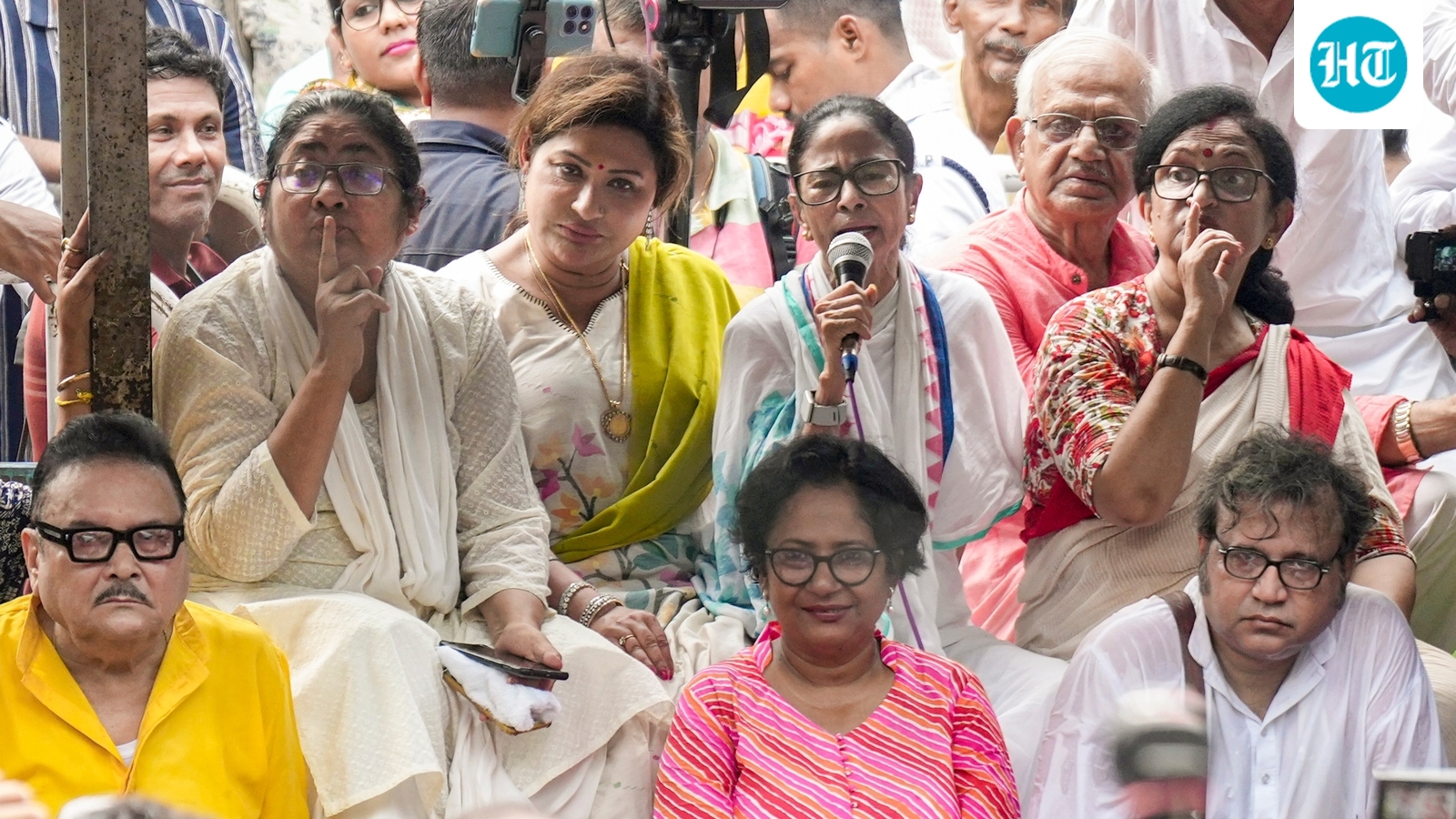
TMC Faces Major Crisis: Rebels Form New Party, Congress Merger Denied
The Trinamool Congress (TMC) is embroiled in an unprecedented internal crisis following its 2026 West Bengal Assembly election defeat. Key figures, including MP Saayoni Ghosh and 19 others, have rebelled and merged with the Nationalist Citizens Party of India (NCPI), supporting the NDA. Concurrently, a significant faction of TMC MLAs also revolted, while speculation about a TMC-Congress merger was officially dismissed by both parties.
Key Highlights
- TMC suffered a major defeat in the 2026 West Bengal Assembly elections.
- 20 rebel TMC MPs, including Saayoni Ghosh, merged with NCPI and support NDA.
- A separate faction of over 60 TMC MLAs also revolted against party leadership.
- Speculation about a TMC-Congress merger was officially denied by both parties.
- The Anti-Defection Law enables mergers with two-thirds legislative party support.
- Internal dissent and leadership challenges profoundly impacted the Trinamool Congress.
The Trinamool Congress (TMC), a prominent political force in West Bengal, has been plunged into an unprecedented internal crisis following its significant defeat in the 2026 West Bengal Assembly elections. This period of turmoil, which began in May 2026 and continues to unfold as of August 2026, has seen a major split within its legislative and parliamentary wings, leadership challenges, and organizational restructuring.
The crisis began after the TMC, which had governed West Bengal for 15 years, was comprehensively defeated by the Bharatiya Janata Party (BJP) in the 2026 Assembly elections. The BJP secured a landslide victory with 207 seats in the 294-member Assembly, while the TMC was reduced to a mere 80 seats, a dramatic fall from its 215 seats in the 2021 elections. This electoral setback immediately triggered widespread dissent and rebellion within the party ranks.
One of the most significant developments was the rebellion of a large faction of Trinamool Congress Members of Legislative Assembly (MLAs). More than two-thirds of the TMC's MLAs—initially 58 out of 80, later claiming support from 64-65 legislators—broke away from the official party line. This rebel group, led by expelled MLA Ritabrata Banerjee, secured recognition from the West Bengal Assembly Speaker as the principal opposition bloc in the Assembly. This faction explicitly stated its intent to function as the 'real' Trinamool Congress and firmly rejected any notion of merging with the Congress party or the Nationalist Citizens Party of India (NCPI). In a dramatic escalation, the Ritabrata Banerjee-led faction even took control of the TMC's state headquarters in Kolkata in July 2026, replacing signage and installing a banner naming a new chairman, thereby challenging Mamata Banerjee's leadership and the authority of Abhishek Banerjee.
Parallel to the MLA rebellion, the TMC also faced a substantial defection in its parliamentary wing. Around 20 Members of Parliament (MPs) from the Trinamool Congress rebelled against the party chairperson Mamata Banerjee and general secretary Abhishek Banerjee. This group included prominent figures such as Saayoni Ghosh, Yusuf Pathan, Kakoli Ghosh Dastidar (who emerged as a leader of the bloc), Mala Roy, June Maliah, Dev Adhikari (Deepak Adhikari), Satabdi Roy, and Prasun Banerjee, among others. To circumvent the stringent provisions of India's Anti-Defection Law (Tenth Schedule of the Constitution), these 20 MPs made a strategic move. The law stipulates that a merger-related exemption from disqualification applies only when at least two-thirds (2/3rd) of the members of a legislature party agree to the merger with another political party. Since the TMC had 28 MPs in the Lok Sabha, 20 MPs constituted more than the required two-thirds majority.
Consequently, on June 14, 2026, these 20 rebel MPs, including Saayoni Ghosh, formally submitted a letter to Lok Sabha Speaker Om Birla, declaring their split from the Trinamool Congress and their merger with the Nationalist Citizens Party of India (NCPI). The NCPI subsequently pledged its support to the BJP-led National Democratic Alliance (NDA) at the Centre, a significant boost for the ruling alliance.
Saayoni Ghosh, a well-known Indian actress and politician, had been a prominent face and vocal supporter of Mamata Banerjee, serving as the Jadavpur MP and President of the Trinamool Youth Congress from 2021 to June 2026. Her decision to join the rebel camp and merge with the NCPI marked a significant blow to Mamata Banerjee. While one unverified social media post from June 14, 2026, claimed she joined Congress, multiple credible sources, including her Wikipedia entry, confirm her affiliation with the Nationalist Citizens Party of India since 2026.
Amidst this internal turmoil, there was a considerable 'Congress merger buzz' regarding a potential merger between the Trinamool Congress and the Indian National Congress. This speculation intensified following high-profile meetings between TMC supremo Mamata Banerjee and former Congress president Sonia Gandhi, and later between TMC national general secretary Abhishek Banerjee and Congress leader Rahul Gandhi in June 2026, after an INDIA bloc meeting. However, both the TMC and Congress leaderships swiftly and unequivocally dismissed these reports as "baseless rumours." They clarified that the discussions focused on fostering opposition unity and strategizing to collectively challenge the Bharatiya Janata Party on national issues, rather than exploring a merger. Furthermore, prominent Congress leaders in West Bengal expressed strong opposition to any such merger.
The underlying reasons for the widespread rebellion within the TMC were cited as widespread corruption allegations within the party and resentment against the alleged 'arrogant' leadership style of Abhishek Banerjee, Mamata Banerjee's nephew and the party's national general secretary.
As of August 23, 2026, the situation within the TMC remains fluid. Both the rebel MP faction (merged with NCPI) and the rebel MLA faction (claiming to be the 'real' TMC) are awaiting official status and recognition from the respective legislative bodies. Notably, three Muslim MPs who are part of the NCPI faction—Abu Taher Khan, Khalilur Rahaman, and Yusuf Pathan—have, however, distanced themselves from openly joining NDA meetings. They cited concerns about potential "voter backlash" in their Muslim-majority constituencies and 'pressure' from the BJP-led state government, highlighting the complex political calculations at play. The ongoing disintegration reflects a severe challenge to Mamata Banerjee's authority and the future trajectory of the Trinamool Congress in West Bengal politics.
In conclusion, the article's claims about a 'Congress merger buzz' and 'Saayoni, other loyals ditch Mamata' were accurate reflections of the significant political developments and rumors circulating in June 2026. While the merger buzz was officially denied, the defection and merger of Saayoni Ghosh and other MPs, alongside the large-scale MLA rebellion, represent a profound internal crisis for the Trinamool Congress.
Frequently Asked Questions
What triggered the current crisis within the Trinamool Congress (TMC)?
The crisis within the TMC was primarily triggered by the party's significant defeat in the 2026 West Bengal Assembly elections, where it was reduced to 80 seats from 215, while the BJP secured a landslide victory. This electoral setback exposed and exacerbated deep internal dissent and leadership challenges.
Who is Saayoni Ghosh and what is her current political affiliation?
Saayoni Ghosh is an Indian actress and politician who previously served as a Trinamool Congress MP from Jadavpur and President of the Trinamool Youth Congress. Following the TMC's electoral defeat, she rebelled along with 19 other MPs and formally merged with the Nationalist Citizens Party of India (NCPI) on June 14, 2026, to support the NDA.
Was there a possibility of the TMC merging with the Congress party?
Despite widespread 'merger buzz' in June 2026, fueled by meetings between Mamata Banerjee and Sonia Gandhi, and Abhishek Banerjee and Rahul Gandhi, both the Trinamool Congress and Congress officially dismissed these reports as 'baseless rumours.' Discussions focused on opposition unity against the BJP, not a merger.
How did the Anti-Defection Law play a role in the TMC rebellion?
The Anti-Defection Law (Tenth Schedule) allows legislators to merge with another party without disqualification if at least two-thirds of the members of their original legislative party agree. This provision was crucial for the 20 rebel TMC MPs, who constituted more than two-thirds of the party's Lok Sabha strength, enabling their merger with the NCPI.
What is the current status of the rebel factions within the TMC?
As of August 23, 2026, the 20 rebel TMC MPs who merged with the Nationalist Citizens Party of India (NCPI) are awaiting official status from the Lok Sabha Speaker. Separately, a faction of over 60 rebel MLAs, led by Ritabrata Banerjee, has formed the principal opposition bloc in the West Bengal Assembly and is also awaiting clarity on their official recognition.