Aravallis Battle Illegal Mining Amidst Shifting Legal Protections | Quick Digest
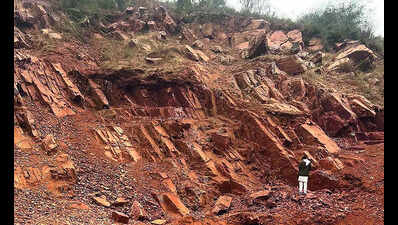
India's ancient Aravalli hills face relentless illegal mining, causing severe ecological damage. Recent Supreme Court rulings on defining the range have sparked controversy, with environmental groups warning of extensive unprotected areas.
Illegal mining continues to ravage the Aravalli hills in states like Haryana and Rajasthan.
Supreme Court's new Aravalli definition (100m elevation) was recently stayed after concerns.
Environmentalists warn 31.8% of the range is at risk, refuting Centre's lower estimate.
Mining and encroachment contribute to deteriorating air quality and depleting groundwater.
A new expert committee is tasked with redefining the Aravallis and assessing ecological risks.
Enforcement agencies are intensifying efforts against illegal mining activities.
The Aravalli hills, one of India's oldest mountain ranges, are under severe threat from persistent illegal mining, waste dumping, and encroachment, as highlighted by a recent article in The Hindu. Residents and environmentalists report that the sound of machinery continues to rattle the hills, indicating ongoing extraction of stone and sand, particularly in regions like Haryana's Nuh belt.
This environmental degradation contributes significantly to deteriorating air quality and plummeting groundwater levels in the region. Official data reveals thousands of illegal mining cases in Rajasthan's Aravalli districts alone over recent years, underscoring the widespread nature of the problem. Despite enforcement actions, illegal activities often continue discreetly, prompting intensified drives by authorities like the Haryana Enforcement Bureau.
The legal framework safeguarding the Aravallis has recently seen significant developments. The Supreme Court had, on November 20, 2025, accepted a committee's definition of the Aravalli hills based on a 100-meter elevation threshold for mining regulation. However, this decision sparked considerable worry among conservationists, who argued that such a narrow definition could strip legal protection from a substantial portion of the range, with some estimates suggesting over 90% of the Aravalli system would be excluded.
In a crucial turn, the Supreme Court, on December 29, 2025, stayed its own November ruling and constituted a new high-powered expert committee. This committee is tasked with undertaking a comprehensive reassessment and clarification of the Aravalli definition, evaluating ecological risks, and analyzing environmental impacts to ensure ecological integrity. The move was welcomed as an act of judicial self-correction, acknowledging concerns raised by scientists and affected communities.
Environmental groups, such as the 'We Are Aravalli' collective, conducted independent analyses, asserting that 31.8% of the Aravalli range is at ecological risk under the contested classification, a figure starkly contrasting the Centre's claim of 0.19%. They warn that removing protection from lower hills and ridges could accelerate desertification from the Thar Desert and worsen air pollution in the Delhi-National Capital Region. The ongoing struggle for the Aravallis highlights a critical balance between development needs and environmental conservation in India.
Read the full story on Quick Digest