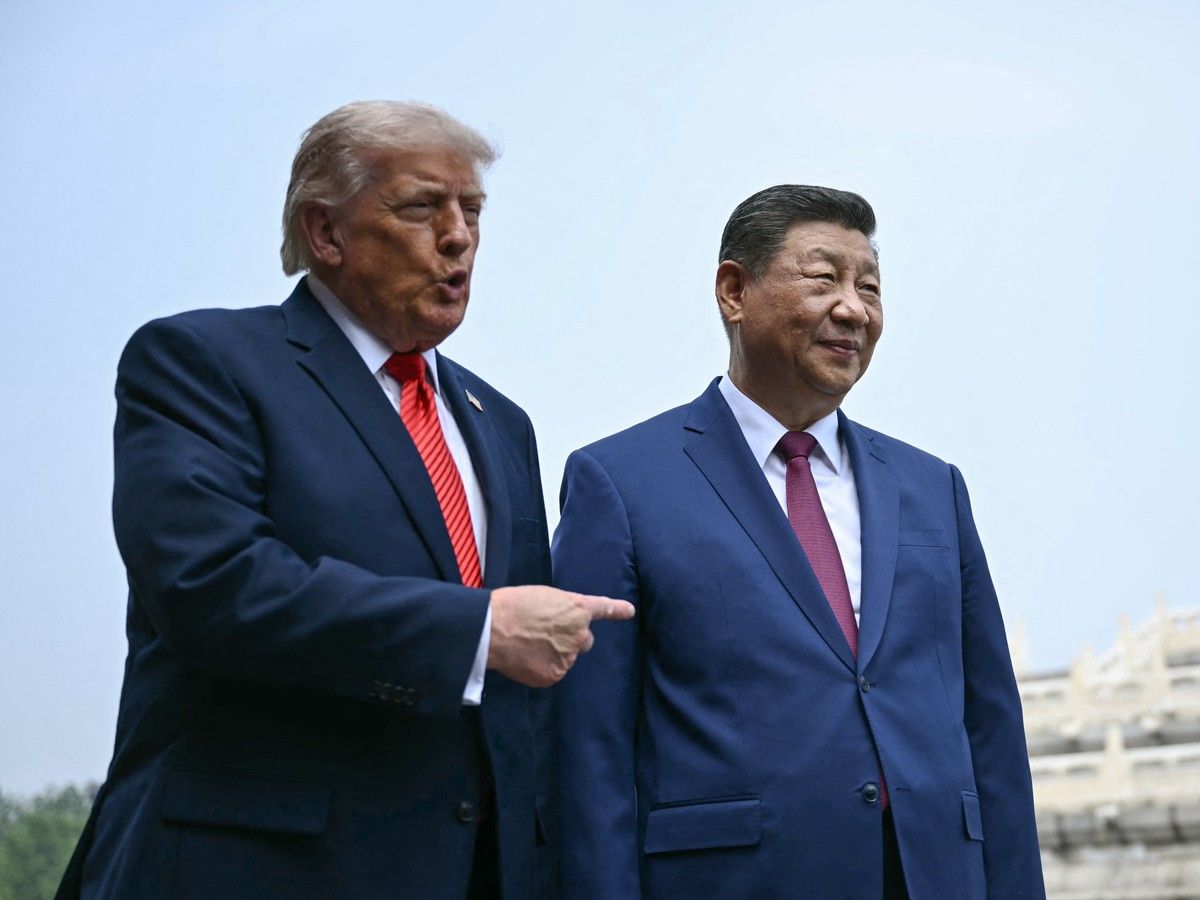
Trump Invites Xi to US for September Visit Amid Iran Tensions
During a state visit to Beijing in May 2026, US President Donald Trump announced that Chinese President Xi Jinping is expected to visit the United States around September 24 for a reciprocal visit. This announcement comes amidst ongoing US-Israel strikes in Iran, a key topic of discussion during their high-stakes summit.
Key Highlights
- Trump invited Xi Jinping for a reciprocal US visit around September 24, 2026.
- The invitation was extended during Trump's May 2026 state visit to Beijing.
- US-Iran tensions, including ongoing strikes, formed a backdrop to the discussions.
- Leaders discussed bilateral ties, trade, and global stability during their summit.
- The meeting aimed to stabilize US-China relations and address economic priorities.
US President Donald Trump announced during his state visit to China in May 2026 that Chinese President Xi Jinping is anticipated to visit the United States around September 24 of the same year. Trump characterized the planned trip as a 'reciprocal' visit, signaling a continuation of high-level diplomatic exchanges between the two global powers. This significant development emerged from a two-day summit in Beijing between the two leaders, where discussions spanned critical bilateral and international issues.
The announcement of Xi's prospective visit was made as Trump was concluding his state visit to China, during which he engaged in extensive talks with his Chinese counterpart. The leaders' agenda included fostering greater cooperation, particularly in economic and trade relations, and addressing areas of mutual concern. Trump expressed gratitude for the 'magnificent welcome' he received in China and lauded Xi as a 'great leader' and 'friend', underscoring the diplomatic overtures aimed at strengthening ties despite underlying complexities.
A notable backdrop to these discussions was the ongoing situation involving US-Israel strikes on Iran, referred to by some sources as an 'Iran war'. This context highlighted the intricate geopolitical landscape influencing the interactions between the US and China. The conflict in the Middle East was indeed a significant issue hanging over the Trump-Xi summit, with reports suggesting it overshadowed some of the planning for the Beijing talks and shifted focus toward key economic priorities.
At the summit, Chinese President Xi Jinping reportedly cautioned Trump on the sensitive issue of Taiwan, warning that missteps could potentially lead to 'conflict' between Beijing and Washington. Xi stressed that proper handling of the Taiwan issue was crucial for the overall stability of US-China relations. Despite these warnings, both leaders expressed a desire for continued engagement and a stable partnership, indicating a strategic effort to manage rather than escalate existing tensions.
The concept of a 'reciprocal visit' emphasizes the diplomatic etiquette and ongoing dialogue between the leaders of the world's two largest economies. Previous meetings between Trump and Xi, such as one in South Korea in October (likely referring to an earlier presidency or a misdated source within the search results, as the current context is May 2026), have often resulted in pauses in trade escalations or agreements on frameworks for further negotiations. The current invitation for a September visit aims to build on these interactions, potentially leading to further discussions on trade, technology, and geopolitical stability.
Experts suggest that while the current summit might not yield immediate breakthroughs on all fronts, it serves to stabilize the relationship and prevent additional economic disruptions. Both sides are likely to focus on securing gains that can be presented as positive outcomes to their domestic audiences. The ongoing US-Iran situation, however, underscores the volatility of global affairs that frequently interweave with the US-China dynamic, making strategic cooperation and de-escalation efforts all the more critical for international stability.
The Hindustan Times article, within which the specific headline was found, appears to be a live blog or continuously updated news page. This suggests that the headline reflects a real-time update on May 15, 2026, capturing a significant statement by Donald Trump regarding Xi's upcoming visit, juxtaposed with the concurrent critical developments in the Middle East. The use of 'LIVE' in the headline accurately reflects the dynamic nature of breaking news reporting.
Frequently Asked Questions
When is Chinese President Xi Jinping expected to visit the US?
Chinese President Xi Jinping is expected to visit the United States around September 24, 2026, following an invitation from US President Donald Trump during his state visit to China in May 2026.
What does a 'reciprocal' visit mean in this context?
A 'reciprocal' visit signifies that the US visit by President Xi is in return for President Trump's recent state visit to China, upholding diplomatic tradition and indicating continued high-level engagement between the two nations.
What is the status of US-Iran relations mentioned in the news?
The news reports mention ongoing US-Israel strikes on Iran and an 'Iran war' as a significant backdrop to the Trump-Xi summit, indicating a period of heightened military tensions and active conflict in the Middle East.
What were the main topics of discussion during the Trump-Xi summit in Beijing?
The main topics of discussion during the Trump-Xi summit in Beijing included strengthening bilateral relations, trade, economic cooperation, and addressing international and regional issues such as the ongoing Middle East conflict and the sensitive issue of Taiwan.
Why is this news important for an Indian audience?
This news is important for an Indian audience as developments in US-China relations and tensions in the Middle East (US-Iran conflict) have significant implications for global trade, energy prices, regional stability, and India's own foreign policy and economic interests.