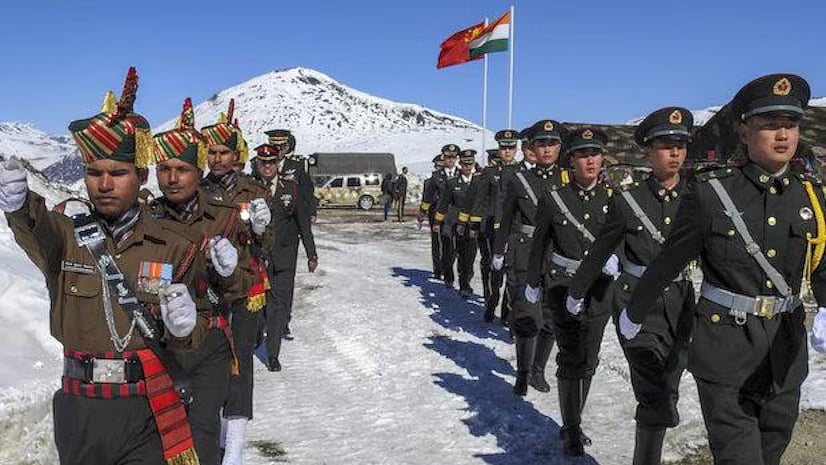
India: Border Peace Essential for China Ties Amid Tensions
India has reiterated that peace along its disputed border with China is critical for overall bilateral relations, following reports of renewed military tensions in Arunachal Pradesh. This statement comes ahead of the BRICS summit where Chinese President Xi Jinping is expected to attend. India emphasized that border affairs directly reflect on the broader ties.
Key Highlights
- India reaffirms border peace is crucial for bilateral ties with China.
- Reports indicate renewed military tensions in Arunachal Pradesh's Taksing area.
- Indian foreign ministry spokesperson Randhir Jaiswal made the statement.
- The comments precede a BRICS summit in New Delhi, with Xi Jinping expected.
- China acknowledged 'generally stable' border situation, committing to communication.
- Tensions persist despite efforts to mend ties since 2020 Galwan clashes.
India has firmly stated that maintaining peace and tranquility along its disputed border with China is absolutely critical for the overall development and normalization of bilateral relations. This declaration was made by Indian foreign ministry spokesperson Randhir Jaiswal during a regular media briefing on Tuesday, August 12, 2026, where he emphasized that India considers issues related to the border areas 'most serious'. Jaiswal's remarks underscored India's consistent position that the 'state of the border affairs will reflect on the state of our larger bilateral ties'.
These comments from New Delhi arrive amidst fresh reports of renewed military tensions between Indian and Chinese troops in a remote region of the Himalayas, specifically near Taksing village in Arunachal Pradesh's Upper Subansiri district. The Indian news website ThePrint reported that Indian and Chinese army patrols had a face-off in late July in this area. Furthermore, there were allegations, including from a local welfare body, of Chinese personnel expanding their presence and pitching tents in early August, although an Indian defense spokesperson reportedly dismissed these specific claims of new tensions. China, for its part, responded to Reuters' queries by stating that the situation along the border was 'generally stable at the moment' and that both countries had agreed to 'maintain communications through diplomatic and military channels and (to) jointly safeguard peace and tranquility in the border areas'.
The timing of India's reiterated stance is particularly significant as it precedes a crucial BRICS summit scheduled to be held in New Delhi from September 12 to 13, which Chinese President Xi Jinping is expected to attend. This marks the second such public comment from India within a week, highlighting New Delhi's consistent focus on the border situation as a prerequisite for any substantial improvement in the broader India-China relationship.
The relationship between the two Asian giants, who share a long and largely unmarked 3,488 km (2,167-mile) disputed frontier, has been under strain since deadly clashes occurred in the Galwan Valley in the western Himalayas in June 2020. These clashes resulted in the deaths of 20 Indian soldiers and four Chinese troops, severely damaging bilateral ties. Following the 2020 incident, both sides amassed tens of thousands of soldiers and equipment along the frontier. While diplomatic and military talks have led to some disengagement in certain areas, particularly after Prime Minister Narendra Modi and President Xi Jinping held discussions in 2024 and agreed to end the standoff, the underlying tensions and lack of full de-escalation remain a concern.
India has consistently maintained that its relations with China cannot return to normalcy in the absence of complete peace and tranquility in the border regions. External Affairs Minister S Jaishankar has repeatedly articulated this position, stressing that if China disturbs the peace and tranquility in border areas, it will inevitably impact the bilateral relationship. India also firmly rejects China's territorial claims over Arunachal Pradesh, which Beijing calls Zangnan and considers part of southern Tibet. India asserts that Arunachal Pradesh is an 'integral and inalienable part of its territory' and has pushed back against China's objections to New Delhi formally identifying locations in the state by their standard Indian names.
Recent diplomatic engagements include the 36th meeting of the Working Mechanism for Consultation and Coordination on Border Affairs, held last week in New Delhi, where both sides agreed to continue using existing diplomatic and military channels to address outstanding issues and avoid misunderstandings. Despite these ongoing efforts and the agreement to maintain dialogue, India's recent statements serve as a clear signal that deeper engagement with Beijing will remain constrained unless stability is demonstrably restored and maintained along the contested frontier. The strategic importance of the India-China relationship, coupled with the persistent border friction, makes this a critical geopolitical issue for India and the wider region.
Frequently Asked Questions
What is India's current stance on its border with China?
India maintains that peace and tranquility along the disputed border with China are absolutely critical and a prerequisite for the overall development and normalization of bilateral relations. Any disturbance on the border will directly impact the broader ties between the two nations.
What recent military tensions have been reported between India and China?
Reports from Indian news outlets, specifically ThePrint, indicate that Indian and Chinese army patrols had a face-off in late July 2026 near Taksing, a remote border village in Arunachal Pradesh. There were also allegations of increased Chinese presence and tent pitching in early August, though Indian defense sources reportedly dismissed some of these new tension reports.
How do these tensions affect the upcoming BRICS summit?
India's reiterated stance on border peace comes just weeks before the BRICS summit, scheduled for September 12-13, 2026, in New Delhi, where Chinese President Xi Jinping is expected to attend. The statements highlight India's firm position that border stability is essential for any deeper engagement, setting a crucial tone for the high-level meeting.
What is the historical context of India-China border disputes?
The India-China border dispute has been a long-standing issue, with significant escalation in June 2020 when deadly clashes in the Galwan Valley resulted in casualties on both sides. Since then, both countries have engaged in diplomatic and military talks to de-escalate, but a full resolution remains elusive, and periodic face-offs continue to occur along the Line of Actual Control (LAC).
What is China's official response to the reports of tensions?
While not directly denying incidents, China's foreign ministry has stated that the situation along the India-China border is 'generally stable at the moment.' China also affirmed that both sides have agreed to maintain communications through diplomatic and military channels to jointly safeguard peace and tranquility in the border areas.