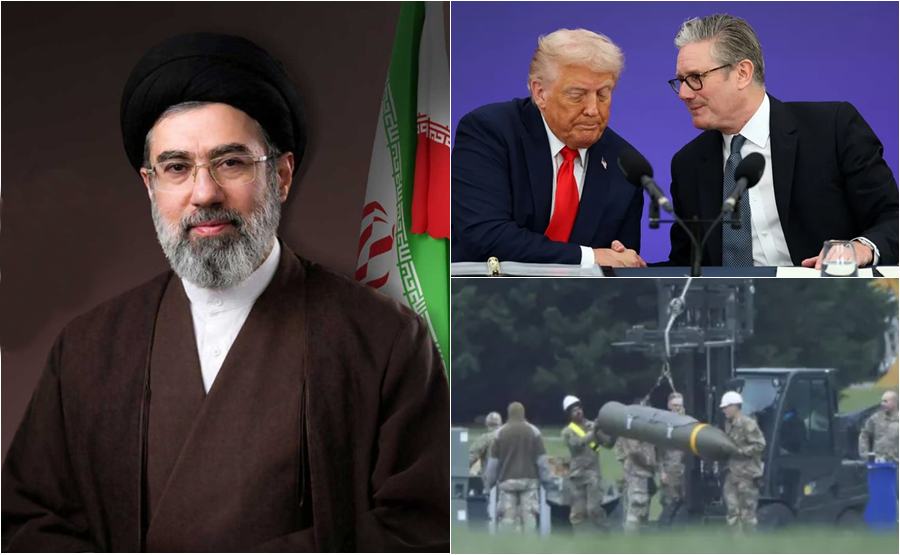
UK Authorizes US Use of Bases for Strikes on Iran Missile Sites
The UK government has authorized the US to use its military bases for strikes against Iranian missile sites threatening ships in the Strait of Hormuz. This decision follows a shift in Prime Minister Keir Starmer's stance after Iran conducted strikes on British allies, moving from initial rejection to approval for defensive operations.
Key Highlights
- UK grants US access to military bases for strikes on Iran.
- Decision follows Iran's attacks on regional allies.
- Strait of Hormuz shipping lanes are a key concern.
- UK bases to be used for defensive operations against missile sites.
- Prime Minister Starmer's stance evolved after initial hesitation.
- US utilizing Diego Garcia and RAF Fairford bases.
The British government has officially granted authorization for the United States to utilize military bases within the United Kingdom to conduct strikes against Iranian missile sites that are posing a threat to shipping in the Strait of Hormuz. This significant policy shift, confirmed by Downing Street on Friday, March 20, 2026, emerged after emergency talks among British ministers addressing the escalating conflict and Iran's actions to disrupt vital international shipping lanes. The decision signifies a clear endorsement of the U.S. military response, with the UK government framing the move as part of collective defense. A Downing Street statement indicated that the agreement for the U.S. to use UK bases in the region's collective self-defense specifically includes U.S. defensive operations aimed at degrading the missile sites and capabilities being used to attack ships in the Strait of Hormuz. This development marks a notable change in stance for Prime Minister Keir Starmer, who had initially resisted a similar request from the U.S. Starmer had previously emphasized the need for assurances that any military action would be legally justified and had stressed that Britain would not be drawn directly into a broader war with Iran. However, Starmer modified his position following Iran's conduct of strikes on British allies across the Middle East. Consequently, the United States can now utilize RAF Fairford and Diego Garcia, a joint U.S.-UK base in the Indian Ocean, for these operations. The decision to allow U.S. forces access to these bases aims to degrade missile sites and capabilities threatening maritime traffic in the Strait of Hormuz, a waterway critical for global energy supplies. The U.S. military has been actively engaged in striking Iranian missile sites as part of Operation Epic Fury, employing advanced weaponry like the GBU-72 Advanced 5K Penetrator to target hardened underground facilities. Iran's Foreign Minister, Abbas Araqchi, voiced strong opposition to the UK's decision, stating that it endangered British lives by permitting aggression against Iran, and asserting Iran's right to self-defense. The UK government, while allowing these defensive operations, has reiterated its call for urgent de-escalation and a swift resolution to the conflict, emphasizing that Britain will not be drawn into a wider war. Public opinion in Britain, according to a YouGov survey, indicates significant skepticism, with 59% opposing the U.S.-Israeli attacks. Former U.S. President Donald Trump has been critical of Britain's initial response, suggesting a lack of swift action. The situation underscores the delicate geopolitical balance in the Middle East, with concerns over regional stability, global economic impacts, and the safety of British citizens and allies in the region. The UK's involvement, even in a defensive capacity, highlights the interconnectedness of the conflict and its potential to draw in international actors. The government's rationale emphasizes protecting British interests and lives, especially after Iran's strikes on British allies and direct threats to British nationals and assets. The decision is based on international law and collective self-defense principles, with a summary of legal advice to be published. The UK's engagement, while framed as defensive, indicates a deepening role in the escalating regional hostilities.
Frequently Asked Questions
Why has the UK authorized the US to use its bases to strike Iran?
The UK government authorized the US to use its bases for strikes on Iranian missile sites after Iran conducted strikes on British allies across the Middle East. This decision is framed as a defensive measure to degrade Iran's capabilities threatening ships in the Strait of Hormuz and to protect British lives and interests.
Which UK military bases will be used by the US for these strikes?
The United States will be able to use RAF Fairford and Diego Garcia, a joint U.S.-UK base in the Indian Ocean, for these operations.
What was Prime Minister Keir Starmer's initial stance on the US request?
Prime Minister Keir Starmer initially rejected the US request to use British bases for strikes on Iran, stating that he needed to be satisfied that any military action was legal. He also emphasized that Britain would not be drawn into a wider war.
What is the significance of the Strait of Hormuz in this conflict?
The Strait of Hormuz is a critical chokepoint for global oil shipments. Iran's actions threatening shipping in this waterway are a major concern, prompting defensive measures by the US and its allies.