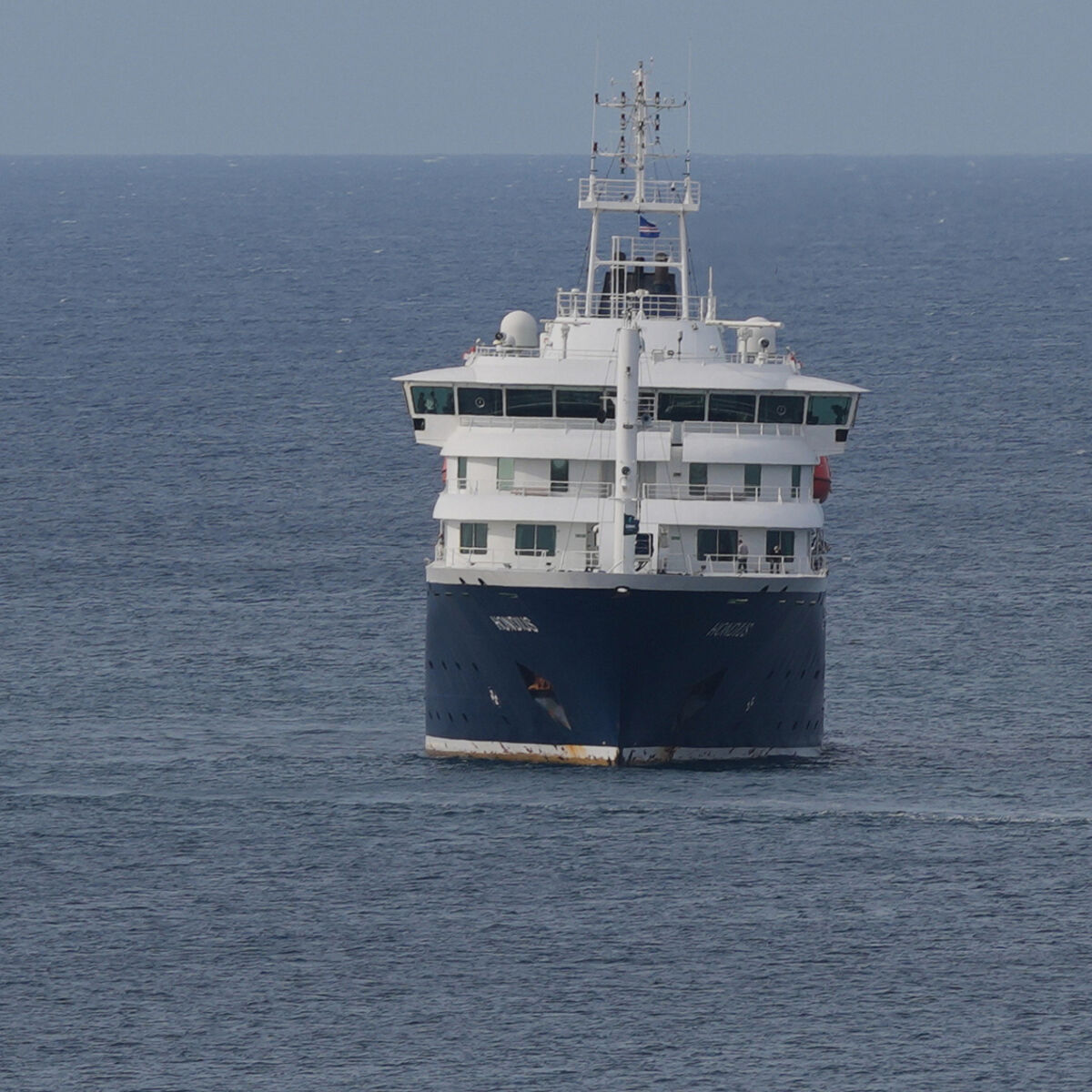
Hantavirus Outbreak on MV Hondius: 2 Indian Crew Aboard, Status Unknown
A deadly hantavirus outbreak on the MV Hondius cruise ship, which departed Argentina on April 1, has led to multiple infections and three deaths. Two Indian crew members are among the 149 people aboard, with their current health status remaining undisclosed as international efforts focus on containment and repatriation. The World Health Organization (WHO) assesses the global risk as low, despite human-to-human transmission of the Andes strain.
Key Highlights
- MV Hondius cruise ship hit by hantavirus outbreak in April 2026.
- Two Indian crew members among 149 people onboard, status unknown.
- Three deaths and 5-8 confirmed/suspected hantavirus cases reported.
- Andes strain of hantavirus, capable of human-to-human transmission.
- International health agencies coordinating repatriation and contact tracing.
- WHO deems global risk low, emphasizing close contact for transmission.
An unprecedented hantavirus outbreak has gripped the MV Hondius, a Dutch-flagged expedition cruise ship, leading to a complex international health emergency. The vessel, which embarked from Ushuaia, Argentina, on April 1, 2026, for a voyage across the South Atlantic, has reported a cluster of severe respiratory illnesses, including multiple infections and three fatalities. Among the 149 passengers and crew from 23 nationalities onboard, two Indian crew members have been confirmed, with their health status largely undisclosed, raising concerns for audiences in India.
The initial signs of the outbreak emerged on April 6, 2026, when a 70-year-old Dutch male passenger developed mild symptoms, including fever and fatigue. His condition rapidly deteriorated, progressing to respiratory distress, and he tragically passed away onboard on April 11. The cause of death was initially not determined, and passengers were reassured that it was due to natural causes and not infectious. However, public health concerns escalated significantly when his wife, who had accompanied his repatriation efforts from Saint Helena on April 24, also fell ill and subsequently died in a Johannesburg hospital on April 26, where she tested positive for hantavirus. This marked a critical turning point, leading to heightened scrutiny and the eventual official reporting of the outbreak to the World Health Organization (WHO) by the UK on May 2, 2026.
As of early May 2026, the outbreak involved at least seven to eight cases, with five confirmed by laboratory tests and three others suspected. These cases were characterized by severe symptoms such as fever, gastrointestinal issues, rapid progression to pneumonia, acute respiratory distress syndrome, and shock. Three deaths have been explicitly linked to the outbreak, including the Dutch couple and a German national. One patient remains critically ill in intensive care in South Africa, while others showed milder symptoms or have since been medically evacuated for specialized treatment in various European countries, including the Netherlands and Switzerland.
The identified strain of the virus is the Andes hantavirus, which is particularly concerning because, unlike most hantaviruses, it is known to be capable of human-to-human transmission, albeit rarely and primarily through close and prolonged contact. This mode of transmission typically involves exchanges of bodily fluids, such as via respiratory droplets in confined spaces or close familial contact, rather than through airborne spread like COVID-19. The origin of the outbreak is believed to be linked to initial exposure to infected rodents in Argentina, a region where the Andes virus is endemic, before the passengers boarded the ship.
The international response to the outbreak has been extensive, involving health authorities from multiple countries and the WHO. The MV Hondius, carrying 147 individuals, was initially stranded off the coast of Cabo Verde due to concerns from local authorities regarding their limited health system capacity. Eventually, Spain agreed to allow the ship to dock in Tenerife, Canary Islands, for controlled disembarkation and repatriation of the remaining passengers, provided they are asymptomatic. Contact tracing efforts are underway across at least four continents to monitor individuals who disembarked earlier in the voyage, particularly those who left at Saint Helena on April 24, many without prior contact tracing. Countries like the US (Georgia, California, Arizona), South Africa, and the UK have initiated monitoring of their returning citizens.
For India, the presence of two Indian crew members on the MV Hondius has been a significant point of interest. India Today TV contacted Oceanwide Expeditions, the ship's operator, but as of May 7-8, 2026, no specific details about the Indian crew members' roles, health status, or contact with infected individuals were provided, leading to their status being reported as unknown. While no confirmed hantavirus cases linked to the MV Hondius have been reported in India, continuous monitoring through international agencies remains crucial. Experts emphasize that the risk of widespread infection in India is low due to the localized nature of hantavirus outbreaks and the requirement for extremely close contact for human-to-human transmission.
The WHO has assessed the overall risk to the global population from this event as low, stating unequivocally that this is not comparable to the COVID-19 pandemic. Despite the severity of Hantavirus Pulmonary Syndrome (HCPS), which can have a fatality rate as high as 40-50% in the Americas, the rarity of human-to-human transmission and the specific conditions required for its spread limit its broader public health threat. The outbreak, however, serves as a stark reminder of the challenges in managing cross-border health threats and the ongoing need for robust international cooperation and surveillance.
Frequently Asked Questions
What is hantavirus and how is it spreading on the MV Hondius cruise ship?
Hantavirus is a group of viruses primarily found in rodents. The outbreak on the MV Hondius involves the Andes strain, which is unusual because it can transmit from person-to-person through close, prolonged contact, unlike most hantaviruses. It is suspected that some passengers were exposed to infected rodents in Argentina before boarding the ship.
How many cases and deaths are linked to the MV Hondius hantavirus outbreak?
As of early May 2026, there have been at least seven to eight suspected or confirmed cases of hantavirus linked to the MV Hondius, resulting in three deaths. One patient remains in critical condition.
What is the status of the Indian crew members onboard the MV Hondius?
Two Indian crew members are confirmed to be among the 149 individuals on the MV Hondius. As of the latest reports, their health status and specific condition remain unknown, according to India Today's communication with the ship operator.
Is the hantavirus outbreak a global pandemic threat like COVID-19?
No, the World Health Organization (WHO) has explicitly stated that this hantavirus outbreak is not the 'next COVID' and poses a low risk to the global population. Human-to-human transmission of the Andes strain is rare and requires prolonged close contact, making it significantly less transmissible than airborne viruses like SARS-CoV-2.
What measures are being taken to contain the outbreak and ensure passenger safety?
International health agencies are coordinating efforts to contain the outbreak, including isolating symptomatic passengers, conducting medical evacuations to specialized hospitals in Europe, and tracing contacts of those who disembarked. The ship is heading to the Canary Islands for controlled disembarkation and repatriation, with enhanced sanitation protocols implemented onboard.