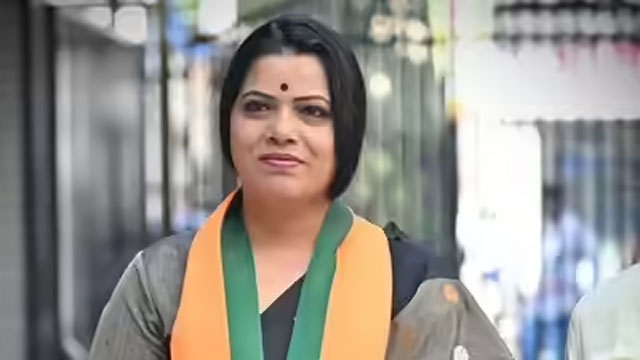
Ritu Tawde Elected Unopposed as Mumbai Mayor, BJP Returns After Decades
BJP corporator Ritu Tawde has been elected unopposed as Mumbai's new Mayor, marking the party's return to the top civic post after over four decades. Sanjay Ghadi of the Eknath Shinde-led Shiv Sena was also elected unopposed as Deputy Mayor. This election ends the Thackeray family's 25-year dominance over the Brihanmumbai Municipal Corporation (BMC).
Key Highlights
- BJP's Ritu Tawde elected Mumbai Mayor unopposed.
- Sanjay Ghadi (Shiv Sena-Shinde faction) named Deputy Mayor.
- BJP secures Mumbai Mayor post after 44 years.
- Ends Thackeray family's 25-year dominance in BMC.
- Mayor's role largely ceremonial, powers with Commissioner.
- Election signifies Mahayuti alliance's strong civic presence.
In a significant political development for India's financial capital, Bharatiya Janata Party (BJP) corporator Ritu Tawde was officially declared the new Mayor of the Brihanmumbai Municipal Corporation (BMC) on February 11, 2026. Tawde's election was unopposed, a result of the Uddhav Thackeray-led Shiv Sena (UBT) deciding not to field a candidate against the ruling Mahayuti alliance's nominee. This historic event marks the BJP's return to the BMC's mayoral office after a gap of 44 years, with the last BJP mayor being Dr. Prabhakar Pai from 1982-83.
Simultaneously, Sanjay Ghadi, a corporator from the Eknath Shinde-led Shiv Sena faction, was also elected unopposed as the Deputy Mayor. The mayoral and deputy mayoral elections followed the BMC elections held in January 2026, where the BJP emerged as the single largest party, securing 89 seats out of 227 wards. Its ally, the Shiv Sena (Shinde faction), won 29 seats. With four corporators from the Nationalist Congress Party (NCP) joining the alliance, the Mahayuti coalition now holds a solid majority of 122 seats, consolidating its control over the civic body.
Ritu Tawde, a two-time corporator representing Ghatkopar East (Ward 132), is Mumbai's eighth woman mayor. She joined the BJP from the Indian National Congress in 2012 and is considered a senior corporator and a prominent Marathi face within the party. Her nomination was seen as a strategic move by the BJP to give representation to Mumbai's eastern suburbs and appeal to Marathi-speaking voters.
The election signifies the end of the Thackeray family's uninterrupted 25-year dominance over the BMC, which is India's richest municipal corporation with a budget of ₹74,450 crore for the financial year 2025-26. The civic body had been under a state-appointed administrator since March 2022, following the completion of the previous elected corporators' term, making this the longest spell of bureaucratic governance in its 150-year history.
The process for electing Mumbai's mayor involves several steps. First, the Urban Development Department determines the reservation category for the mayor's post through a lottery system. This term, the post was reserved for a woman from the open category. After the reservation is announced, eligible corporators submit their nominations. The election is then held in a special meeting of the Brihanmumbai Municipal Corporation, where all elected corporators vote. A candidate needs a simple majority (more than 114 corporators in the 227-member House) to be elected.
Despite the prestigious title, the role of the Mumbai Mayor is largely ceremonial. The actual executive and administrative powers are concentrated in the hands of the Municipal Commissioner, an IAS-ranked officer. The Municipal Commissioner is authorized to set the agenda, prepare the budget proposal, and control the appointment and transfer of officials. In contrast, the Mayor cannot appoint or transfer civic staff and mainly presides over meetings of the general body, maintains order during debates, and uses a casting vote in case of a tie. The Mayor also serves as the city's 'First Citizen,' representing Mumbai at official functions and welcoming dignitaries. The term for the mayor is two and a half years, while the deputy mayor's post typically involves a rotational arrangement.
The election proceedings on February 11, 2026, were not without political drama, as opposition benches, including members from Congress and Shiv Sena (UBT), raised slogans during the formal declaration. However, the election proceeded smoothly, with BMC Commissioner Bhushan Gagrani formally declaring the results in the presence of Chief Minister Devendra Fadnavis and Deputy Chief Minister Eknath Shinde. Outside the BMC headquarters, large crowds of BJP supporters celebrated, highlighting the political significance of this victory for the Mahayuti alliance in Maharashtra's political landscape.
This outcome reflects the strengthened position of the Mahayuti alliance in the state's civic governance and marks a significant shift in Mumbai's political power dynamics. Ritu Tawde, upon her election, emphasized her commitment to working as a 'sevak' (servant) of the city, focusing on urban transformation and monsoon preparedness as top priorities.
Frequently Asked Questions
Who is Ritu Tawde?
Ritu Tawde is a two-time corporator from Ghatkopar East and a senior leader of the Bharatiya Janata Party (BJP). She has been elected unopposed as the new Mayor of Mumbai, making her the city's eighth woman mayor and the first BJP mayor in Mumbai in over four decades.
When was Ritu Tawde elected as Mumbai Mayor?
Ritu Tawde was formally declared the new Mayor of Mumbai on February 11, 2026, after being elected unopposed.
What is the significance of Ritu Tawde's election?
Her election is highly significant as it marks the BJP's return to the Mumbai Mayor's post after 44 years and effectively ends the Thackeray family's 25-year dominance over the Brihanmumbai Municipal Corporation (BMC), India's richest civic body. It also highlights the strong position of the Mahayuti alliance in Mumbai's civic politics.
What are the powers of the Mumbai Mayor?
The Mumbai Mayor holds a largely ceremonial role as the 'First Citizen' of the city, presiding over BMC meetings and representing Mumbai at official functions. However, actual executive and administrative powers are vested in the Municipal Commissioner, who controls civic departments, finances, and staff appointments.
Who was elected as the Deputy Mayor of Mumbai?
Sanjay Ghadi, a corporator from the Eknath Shinde-led Shiv Sena faction, was elected unopposed as the Deputy Mayor of Mumbai alongside Ritu Tawde.