Nepal Flash Floods: Survivor's Account Amidst Devastation and Rising Toll
Devastating flash floods triggered by an ice-rock avalanche near the Nepal-Tibet border on August 26, 2026, have caused widespread destruction in Nepal, sweeping away homes and infrastructure. A harrowing video captured the moment floodwaters engulfed a settlement, as the death toll rises and thousands remain missing. The disaster also impacted neighboring China.
Key Highlights
- Nepal experienced catastrophic flash floods on August 26, 2026.
- Glacier collapse near Nepal-Tibet border triggered the devastating surge.
- Over 1,300 confirmed deaths and thousands still missing from the disaster.
- Widespread destruction: homes, roads, bridges, hydropower projects destroyed.
- A viral video shows a survivor capturing the terrifying floodwaters.
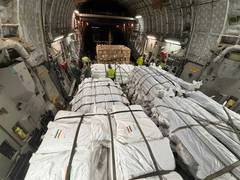
- Relief efforts are underway amid ongoing search and rescue challenges.
Nepal was struck by catastrophic flash floods on August 26, 2026, an event described as the country's deadliest natural disaster since the 2015 earthquake. The devastating floods were primarily triggered by a massive ice-rock avalanche from a glacier near the Langtang Lirung and Tsangbu Ri mountain peaks, located along the Nepal-Tibet border in the Himalayas. This collapse sent a powerful surge of water, ice, rock, and sediment downstream through the Lhende Khola and Bhote Koshi/Trishuli river systems, causing widespread destruction across central and northern Nepal.
The Times of India, on September 9, 2026, reported on a horrifying video that surfaced, capturing the moments flash floodwaters engulfed homes, roads, and buildings. The footage, uploaded by the Nepal7 media outlet, reportedly shows students inside a school building as the nearby river rapidly swells, carrying boulders and debris, and sweeping away structures and roads. This video highlights the terrifying speed and destructive power of the floods, corroborating survivor accounts of desperate scrambles for higher ground and narrow escapes.
The impact of the floods has been immense, affecting districts such as Rasuwa, Nuwakot, Dhading, Gorkha, and Tanahun in Nepal. The disaster's reach extended beyond Nepal's borders, also significantly affecting neighboring Tibet and China. Chinese media reported at least 43 deaths on their side and over 500 missing in Tibet.
By September 7, 2026, Nepal's National Disaster Risk Reduction and Management Authority (NDRRMA) confirmed that the death toll had tragically risen to 1,356, with a staggering 4,996 people, including at least 589 foreign nationals, still reported missing. Earlier reports from August 31 and September 1 indicated death tolls of 903 and 987 respectively, with thousands still missing, underscoring the escalating severity of the crisis. Over 13,400 people have been rescued.
The damage to infrastructure is extensive. The floods have destroyed approximately 7,500 homes, damaged around 20,000 more, and washed away 41 bridges. Key transportation routes, including the Prithvi Highway and the road linking Betrawati to the Rasuwagadhi border crossing (a vital trade link between Nepal and China), were severely damaged or completely swept away. Hydropower and solar projects were also impacted, affecting a combined capacity of about 748 megawatts. Access to many hard-hit areas remains a significant challenge for rescue and relief operations, with roads becoming impassable due to blockages.
Hundreds of thousands of people have been affected, with UNICEF reporting at least 84,270 individuals, including 32,000 children, impacted by the floods. These families are now without reliable access to safe water, healthcare, and other essential services. Organizations like UNICEF and CARE Nepal are actively involved in providing urgent humanitarian support, including healthcare, nutrition, safe water, and child protection services. The United Nations has highlighted the urgent need for emergency water, sanitation, and hygiene services for 65,000 people and has started assessing long-term needs, including protection for over 22,000 children and nutrition assistance for pregnant and breastfeeding women. Concerns about the spread of waterborne diseases are also high due to damaged water and sanitation infrastructure.
Experts from the International Centre for Integrated Mountain Development (ICIMOD) believe the immediate cause was an ice-and-rock avalanche that blocked the Lhende Khola, leading to a sudden surge downstream. The immense scale of the flood, described as a 'tsunami-like wall of water and mud,' moved exceptionally fast, overwhelming some of Nepal's automatic flood-monitoring stations before they could issue warnings, leaving communities with little to no advance notice. This event serves as a stark reminder of the vulnerability of Himalayan communities to climate-induced disasters and the critical need for robust early warning systems and disaster preparedness.
Frequently Asked Questions
What caused the recent devastating floods in Nepal?
The recent devastating floods in Nepal, which occurred on August 26, 2026, were primarily caused by a massive ice-rock avalanche or glacier collapse from a mountain peak near the Nepal-Tibet border. This triggered a powerful surge of water, ice, rock, and sediment down the Bhote Koshi and Trishuli river systems.
How many people have been affected by the Nepal floods?
As of September 7, 2026, the floods have tragically killed 1,356 people, with 4,996 individuals still reported missing. Additionally, over 84,270 people, including approximately 32,000 children, have been directly affected, losing homes and access to essential services.
What areas in Nepal and beyond were most impacted by the floods?
In Nepal, the floods heavily impacted districts such as Rasuwa, Nuwakot, Dhading, Gorkha, and Tanahu. The disaster also had significant cross-border effects, impacting Tibet and China, with reports of deaths and missing persons on the Chinese side.
What is the current state of rescue and relief efforts?
Rescue teams are still actively searching for thousands of missing people, and over 13,400 individuals have been rescued. However, access to many hard-hit areas remains challenging due to destroyed roads and bridges. Humanitarian organizations like UNICEF and CARE Nepal are providing urgent support including healthcare, nutrition, and safe water.
How has the disaster affected infrastructure in Nepal?
The floods caused widespread infrastructure damage, destroying around 7,500 homes and damaging 20,000 more. Key roads, including a vital trade route to China, and 41 bridges were swept away, severely disrupting transportation and communication. Several hydropower and solar projects were also affected.