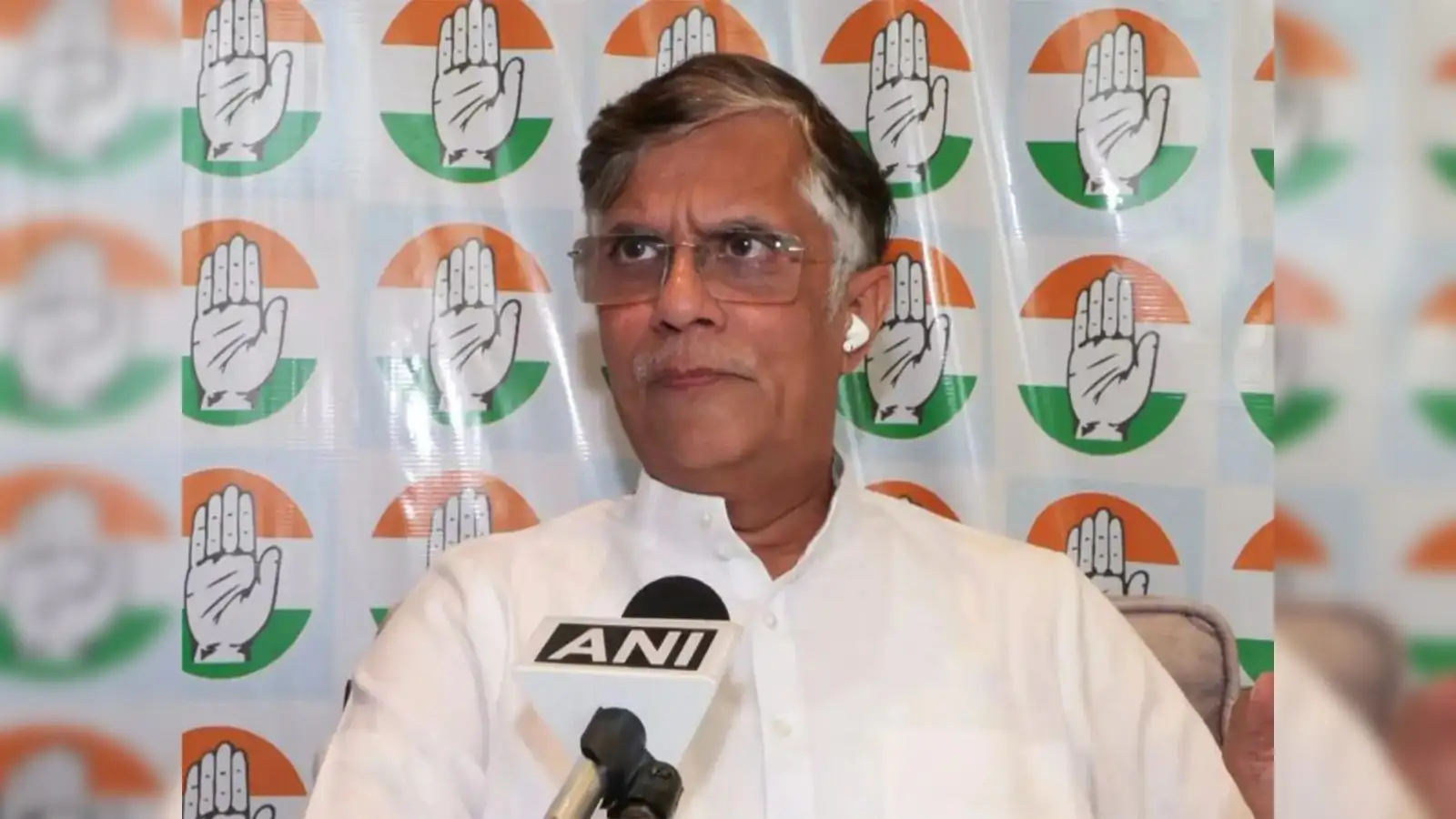
Supreme Court Grants Anticipatory Bail to Pawan Khera in Assam FIR
The Supreme Court has granted anticipatory bail to Congress leader Pawan Khera in a case filed by Assam Police regarding his remarks against CM Himanta Biswa Sarma's wife. The Court noted the political nature of the allegations and found no need for custodial interrogation.
Key Highlights
- Supreme Court granted anticipatory bail to Pawan Khera.
- Bail in case concerning remarks against Assam CM's wife.
- Allegations involved multiple passports and undisclosed assets.
- SC set aside Gauhati High Court's rejection of bail.
- Court cited political motivation, no need for custodial interrogation.
- Khera directed to cooperate with investigation and remain in India.
In a significant development for the Indian political landscape, the Supreme Court on Friday, May 1, 2026, granted anticipatory bail to Congress leader Pawan Khera. The bail was issued in connection with a First Information Report (FIR) lodged by the Assam Police following allegations Khera made against Riniki Bhuyan Sarma, the wife of Assam Chief Minister Himanta Biswa Sarma. The Apex Court's decision overturned an earlier order from the Gauhati High Court, which had rejected Khera's plea for pre-arrest bail.
The legal proceedings against Pawan Khera stemmed from a press conference held on April 5, 2026. During this event, Khera alleged that Riniki Bhuyan Sarma possessed multiple foreign passports—specifically from the UAE, Antigua-Barbuda, and Egypt—and also owned undisclosed assets and luxury properties in Dubai, along with a company in the United States. He further claimed that these details were not declared in Chief Minister Sarma's election affidavit. Following these serious accusations, Riniki Bhuyan Sarma filed a complaint with the Assam Police, leading to an FIR being registered against Khera. The FIR included charges of defamation, forgery, and criminal conspiracy under various sections of the Bharatiya Nyaya Sanhita (BNS), 2023.
The legal battle saw a series of judicial interventions. Initially, Pawan Khera sought relief from the Telangana High Court, which, on April 10, 2026, granted him a one-week transit anticipatory bail. This interim protection was intended to allow him sufficient time to approach the appropriate jurisdictional court in Assam. However, this relief was short-lived. The Assam government promptly challenged the Telangana High Court's order before the Supreme Court, which, on April 15, 2026, stayed the transit anticipatory bail.
Subsequently, on April 17, 2026, the Supreme Court declined Khera's request to extend the transit bail and instead directed him to seek anticipatory bail directly from the Gauhati High Court, the court with jurisdiction over the FIR. Following this directive, Khera moved the Gauhati High Court, arguing that the FIR was politically motivated and that his statements were made within a political context during a press conference. However, on April 24, 2026, the Gauhati High Court rejected his anticipatory bail application. The High Court's reasoning was that custodial interrogation was necessary to ascertain the source of the documents Khera had relied upon for his allegations. The court also observed that the case was not merely one of defamation and that Khera had not yet substantiated his claims.
Undeterred, Pawan Khera once again approached the Supreme Court, challenging the Gauhati High Court's refusal of anticipatory bail. The Supreme Court heard extensive arguments from both sides on April 30, 2026, before reserving its judgment. Senior advocate Abhishek Manu Singhvi, representing Khera, contended that his client faced a credible apprehension of arrest and that custodial interrogation was unwarranted in this case. In contrast, Solicitor General Tushar Mehta, appearing for the Assam government, strongly opposed the bail plea, alleging that Khera had used "fake" and "doctored" copies of passports and that custodial interrogation was essential to uncover the full extent of the alleged wrongdoing and the sources of the fabricated documents.
On May 1, 2026, the Supreme Court delivered its verdict, granting anticipatory bail to Pawan Khera. The bench, comprising Justice J.K. Maheshwari and Justice A.S. Chandurkar, observed that the allegations and counter-allegations in the case appeared to be politically motivated and, crucially, did not necessitate custodial interrogation. The Court also noted that the Gauhati High Court was incorrect in making observations regarding an offense (Section 339 of BNS) that was not even part of the original FIR. Granting the relief, the Supreme Court directed Khera to cooperate with the ongoing investigation, appear before the investigating officer whenever required, and stipulated that he should not leave India without the prior permission of the Court. The standard conditions against tampering with evidence were also imposed.
This ruling underscores the judiciary's role in safeguarding personal liberty, especially in cases perceived to have political undertones. The Supreme Court's decision ensures Khera's protection from immediate arrest while the investigation proceeds, emphasizing that the circumstances did not warrant his physical custody. The broader context of this case reflects the intense political rivalry between the Congress party and the ruling Bharatiya Janata Party (BJP) in Assam, often manifesting in legal challenges and public accusations.
Frequently Asked Questions
What was the main allegation against Pawan Khera?
Pawan Khera was accused of making defamatory statements and alleging forgery by claiming that Assam Chief Minister Himanta Biswa Sarma's wife, Riniki Bhuyan Sarma, held multiple foreign passports and undisclosed overseas assets.
Why did the Supreme Court grant anticipatory bail to Pawan Khera?
The Supreme Court granted anticipatory bail noting that the allegations appeared to be 'politically motivated' and that custodial interrogation was not necessary. The Court also emphasized the protection of personal liberty.
What was the procedural journey of Pawan Khera's bail application?
Khera first received transit anticipatory bail from the Telangana High Court, which was then stayed by the Supreme Court. The SC directed him to the Gauhati High Court, which rejected his plea. Finally, the Supreme Court granted him anticipatory bail after he appealed against the Gauhati High Court's decision.
What conditions did the Supreme Court impose on Pawan Khera's bail?
The Supreme Court directed Pawan Khera to cooperate with the investigation, appear before the investigating officer as and when required, and not leave India without prior court permission.
What charges were filed against Pawan Khera by Assam Police?
The FIR registered by Assam Police included charges of defamation, forgery, and criminal conspiracy under various sections of the Bharatiya Nyaya Sanhita (BNS), 2023.