Astronomers Globally Protest SpaceX AI Satellites, Orbital Mirror Project
Astronomers worldwide are vehemently protesting plans by SpaceX and Reflect Orbital to launch millions of AI data center satellites and tens of thousands of orbiting mirrors, warning of irreversible damage to the night sky, severe light pollution, and profound interference with astronomical research. They urge the FCC to reject these proposals.
Key Highlights
- Astronomers protest SpaceX's million AI satellite plan and Reflect Orbital's mirror project.
- Proposed constellations would drastically increase sky brightness, hindering stargazing and research.
- SpaceX plans 1 million AI data center satellites; Reflect Orbital 50,000 sun-reflecting mirrors.
- Protests cite severe impacts on optical and radio astronomy, cultural heritage.
- Astronomical societies filed objections with the U.S. FCC.
- Concerns about regulatory oversight and lack of environmental impact assessments are high.
Astronomical communities globally are raising significant alarms and protesting vehemently against two ambitious space projects: SpaceX's proposal to launch up to one million satellites as orbital data centers for artificial intelligence and Reflect Orbital's plan for 50,000 orbiting mirrors intended to reflect sunlight back to Earth. The Royal Astronomical Society (RAS), the European Southern Observatory (ESO), the International Astronomical Union (IAU), the American Astronomical Society (AAS), and DarkSky International are among the prominent organizations that have submitted formal objections to the U.S. Federal Communications Commission (FCC) regarding these proposals.
SpaceX, led by Elon Musk, filed its application with the FCC on January 30, 2026, outlining its vision for a massive constellation of AI data centers in space. Musk has articulated that moving power-hungry computing infrastructure into orbit is essential for unleashing the full potential of AI, citing advantages like abundant solar power and cold vacuum for cooling. Meanwhile, Reflect Orbital, a startup founded by former SpaceX intern Ben Nowack, submitted its proposal on July 31, 2025, detailing plans for approximately 50,000 orbiting mirrors, each about 180 feet (55 meters) wide. These mirrors are designed to beam concentrated sunlight onto ground-based solar power plants or for other applications.
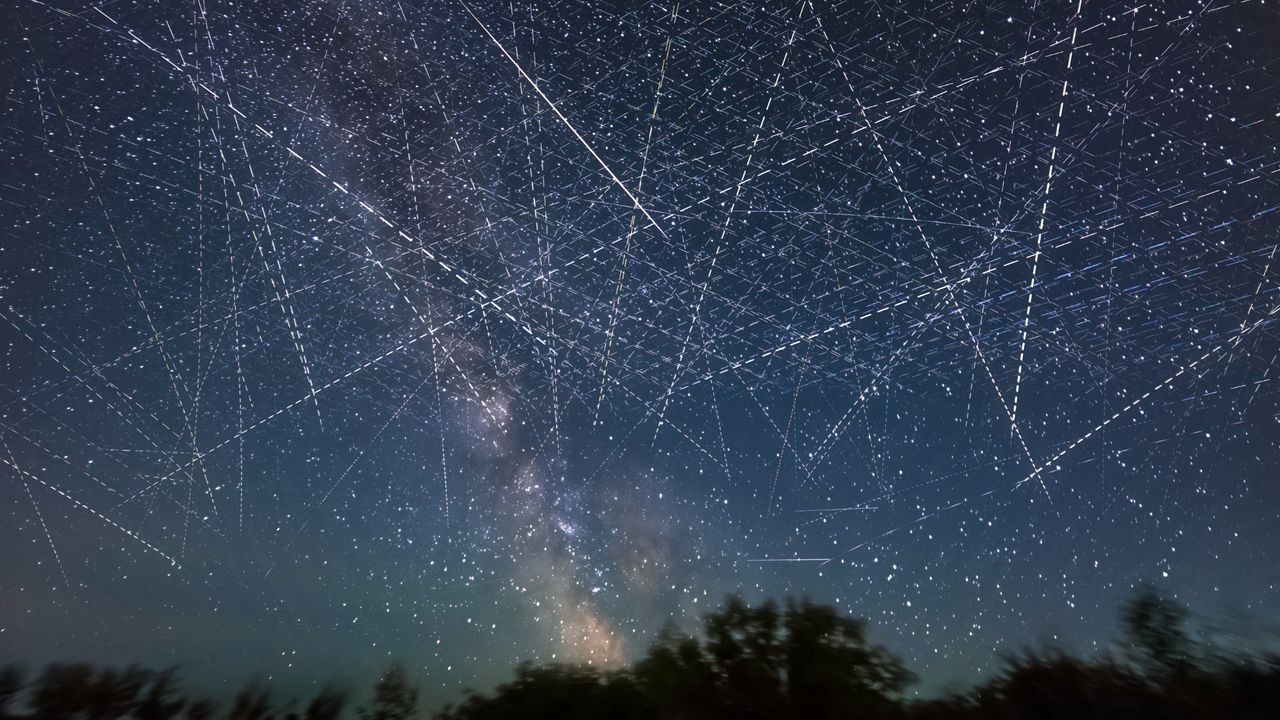
The primary concern voiced by astronomers is the unprecedented level of light pollution and interference these massive constellations would introduce into the night sky. Experts warn that if deployed, SpaceX's AI satellites and Reflect Orbital's mirrors would drastically increase the overall brightness of the night sky, making thousands of objects visible to the naked eye at any given moment, potentially outnumbering naturally visible stars. Robert Massey, deputy executive director at the British Royal Astronomical Society, described the situation as 'really intolerable' and the destruction of a 'central part of human heritage'. The Reflect Orbital mirrors, in particular, are projected to make the night sky three to four times brighter, with individual reflected beams potentially appearing four times brighter than a full moon.
Such a dramatic increase in sky brightness would have catastrophic consequences for both ground-based and space-based astronomical observatories. Optical telescopes, including major facilities like the European Southern Observatory's Very Large Telescope in Chile and the Vera C. Rubin Observatory, would face severe challenges. Astronomers estimate that these satellites would leave bright streaks across telescope images, leading to significant data loss, potentially impacting 10% to 30% or more of observations. The issue isn't confined to ground-based observations; a NASA study has warned that even space telescopes like Hubble could see between 30% to 99% of their images contaminated by satellite light if these projects proceed.
Beyond scientific research, astronomers emphasize the broader cultural and ecological impacts. The natural dark night sky is considered a shared human heritage, connecting civilizations for millennia. Its alteration would represent a profound loss for future generations and disrupt nocturnal ecosystems that rely on natural light cycles. Concerns also extend to the regulatory process, with criticisms directed at the FCC for allegedly fast-tracking the evaluation of these proposals without requiring comprehensive environmental impact assessments. Astronomical organizations are advocating for stronger international regulations and limits on the number of satellites in orbit to protect this shared celestial resource.
This isn't the first time SpaceX's satellite ambitions have drawn the ire of astronomers. The company's Starlink constellation, aimed at providing global internet, has previously sparked widespread concerns about its brightness and interference with observations. While SpaceX has introduced some mitigation measures, such as darker satellite coatings and adjusting solar panel angles, their effectiveness remains a point of contention within the astronomical community. The current proposals, however, are on an even larger scale, intensifying the debate over responsible space development versus the preservation of the night sky for scientific, cultural, and environmental reasons. The outcome of these FCC filings will critically shape the future of both space-based technology and humanity's ability to observe and understand the cosmos.
Frequently Asked Questions
What specific projects are astronomers protesting?
Astronomers are protesting two distinct but related projects: SpaceX's proposal to launch up to one million satellites to serve as orbiting data centers for artificial intelligence, and Reflect Orbital's plan to deploy 50,000 large orbiting mirrors designed to reflect sunlight to Earth.
Why are these projects considered a threat to astronomy?
These projects pose a significant threat due to the extreme light pollution and physical interference they would cause. The vast number of bright satellites and mirrors would drastically increase the brightness of the night sky, making thousands of artificial objects visible and severely hindering ground-based and space-based telescopes by creating streaks in images and obscuring faint celestial objects.
What are the broader impacts beyond scientific research?
Beyond disrupting scientific research, astronomers and environmental groups warn of irreversible damage to the night sky as a shared human heritage. There are also concerns about the potential disruption of nocturnal ecosystems that rely on natural dark-light cycles.
What actions are being taken by the astronomical community?
Leading astronomical organizations, including the Royal Astronomical Society, European Southern Observatory, and American Astronomical Society, have filed formal objections with the U.S. Federal Communications Commission (FCC), which is reviewing the proposals. They are advocating for stricter regulations and environmental impact assessments.
Has SpaceX faced similar protests before?
Yes, SpaceX's Starlink constellation has previously drawn criticism from astronomers due to its brightness and interference with astronomical observations. While SpaceX has implemented some mitigation efforts, such as darker coatings and adjusted satellite orientations, the effectiveness and scale of the current proposals amplify these concerns significantly.