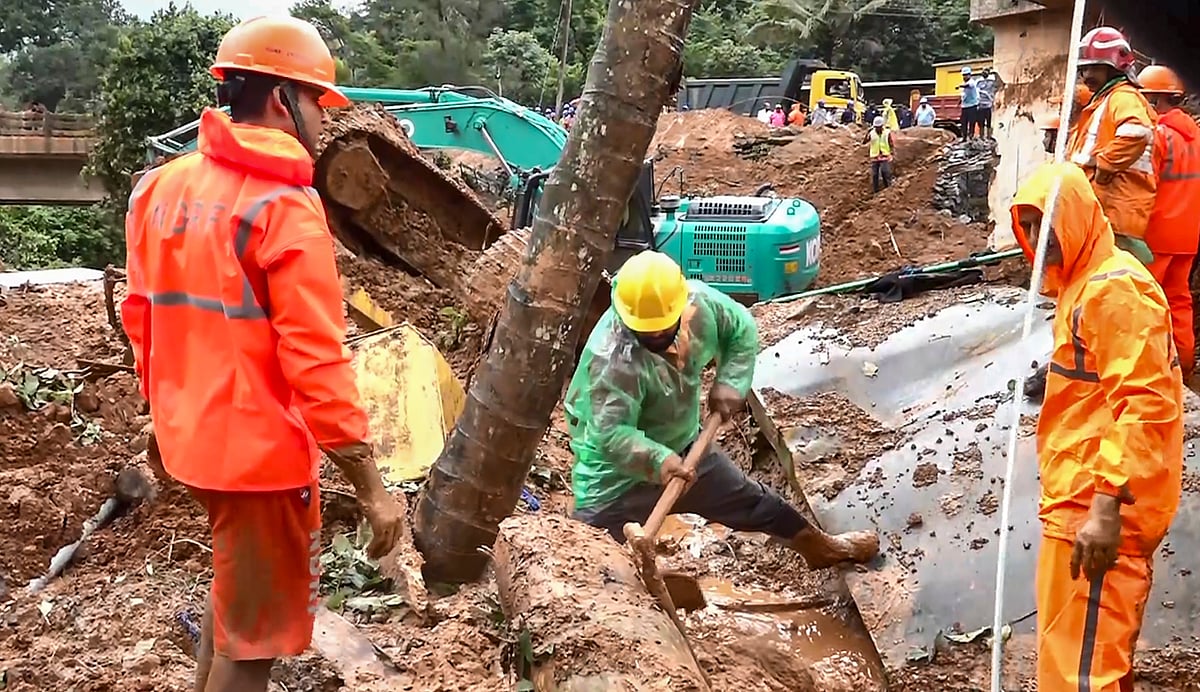
Wayanad landslide toll climbs to six; rescue efforts continue
The death toll from the Wayanad landslide has risen to six with the recovery of three more bodies. Rescue operations are ongoing, with concerns raised about landslide risks in the region.
Key Highlights
- Six bodies recovered after Wayanad landslide.
- Rescue missions intensify in the affected area.
- Landslide risks in Wayanad spark renewed concerns.
- Further investigations into the causes of the mudslide are underway.
The devastating landslide in Wayanad, Kerala, has claimed the lives of six people, with rescue teams recovering three additional bodies amidst ongoing efforts to find any remaining victims. The incident has amplified concerns regarding the vulnerability of hilly regions in India to landslides, particularly in areas like Wayanad that have experienced similar events. The full extent of the tragedy is still being assessed as search and rescue operations continue, with authorities also initiating twin probes into the causes of the mudslide. This disaster underscores the critical need for robust disaster management strategies and a deeper understanding of geological risks in vulnerable zones across the country. The article from The New Indian Express, corroborated by reports from The Hindu and Vision IAS, highlights the immediate aftermath and the broader implications of such natural calamities. The incident prompts a closer look at the factors contributing to landslides, including environmental changes, rainfall patterns, and potential human interventions. The recovery of more bodies indicates the severe impact of the landslide and the challenging nature of the rescue mission in the debris-strewn landscape. The involvement of multiple agencies and the focus on understanding the root causes through investigative probes suggest a comprehensive approach to addressing the aftermath and preventing future occurrences. The comparison drawn with other similar landslides, such as those in Kishtwar, further contextualizes the recurring nature of these disasters in India's diverse geographical terrain. The information available points towards a tragic event that has deeply affected the local community and brought national attention to the persistent issue of landslide risks in ecologically sensitive regions. The continuous recovery of bodies suggests that the death toll might have been initially underestimated, emphasizing the catastrophic nature of the event. The emphasis on 'renewed concerns' by Vision IAS suggests that this is not an isolated incident but part of a pattern that requires immediate attention and preventative measures. The Telegraph India's mention of 'twin probes' indicates a multi-faceted investigation into the landslide, likely involving geological surveys, environmental impact assessments, and an examination of local development activities. This proactive approach to understanding the disaster's origins is crucial for formulating effective mitigation strategies. The Down To Earth article comparing Kishtwar and Wayanad landslides implies a shared set of underlying causes or contributing factors, which could include deforestation, unscientific construction practices, or extreme weather events exacerbated by climate change. The coordinated rescue efforts, as detailed by The Hindu, showcase the dedication of emergency services in extremely challenging conditions. The ongoing nature of the rescue and investigation phases means that more details may emerge, providing a clearer picture of the event's scale and the factors that led to it. The impact of such disasters extends beyond the immediate loss of life, affecting infrastructure, livelihoods, and the environment. Therefore, the response needs to be comprehensive, addressing both the humanitarian crisis and the long-term sustainability of the region. The recovery of more bodies not only increases the final death toll but also highlights the immense difficulty faced by rescue teams in navigating the unstable terrain and heavy debris. The repeated mention of Wayanad in the context of landslide risks suggests a need for a more localized and in-depth geological assessment of the area to identify specific vulnerabilities and implement targeted safety measures. The comparison with Kishtwar, another region prone to landslides, points to a potential need for national-level policy reviews concerning land use in vulnerable mountainous areas. The commitment to conducting 'twin probes' signifies that authorities are looking at various angles, possibly including natural triggers and human-induced factors, to gain a complete understanding of the event. The continuous updates on the recovery of bodies and the progression of rescue missions indicate that this is an active and developing news story. The engagement of various media outlets in reporting on this incident underscores its significance and impact on the region and the nation's awareness of disaster preparedness. The prolonged search operations are a testament to the scale of the landslide and the challenges posed by the terrain and weather conditions. The heightened 'concerns' mentioned by Vision IAS are a crucial takeaway, suggesting that this event should serve as a catalyst for policy changes and community-level awareness programs aimed at disaster risk reduction in similar geographical areas across India.
Frequently Asked Questions
What caused the Wayanad landslide?
While the exact cause is under investigation, landslides in such regions are often attributed to heavy rainfall, deforestation, unscientific land use, and geological factors. Twin probes have been initiated to ascertain the specific reasons for the Wayanad landslide.
What is the current status of the rescue operations?
The rescue mission has entered its final phase, with efforts focused on recovering any remaining bodies. Six bodies have been recovered so far.
Are there ongoing concerns about landslide risks in Wayanad?
Yes, the Wayanad landslide has renewed significant concerns about landslide risks in the region and other hilly areas in India. Experts are calling for better disaster management and land-use planning.
What steps are being taken to prevent future landslides in Wayanad?
Investigations into the current landslide aim to identify contributing factors. This information is expected to inform future land-use policies, environmental regulations, and disaster preparedness strategies for Wayanad and similar vulnerable regions.