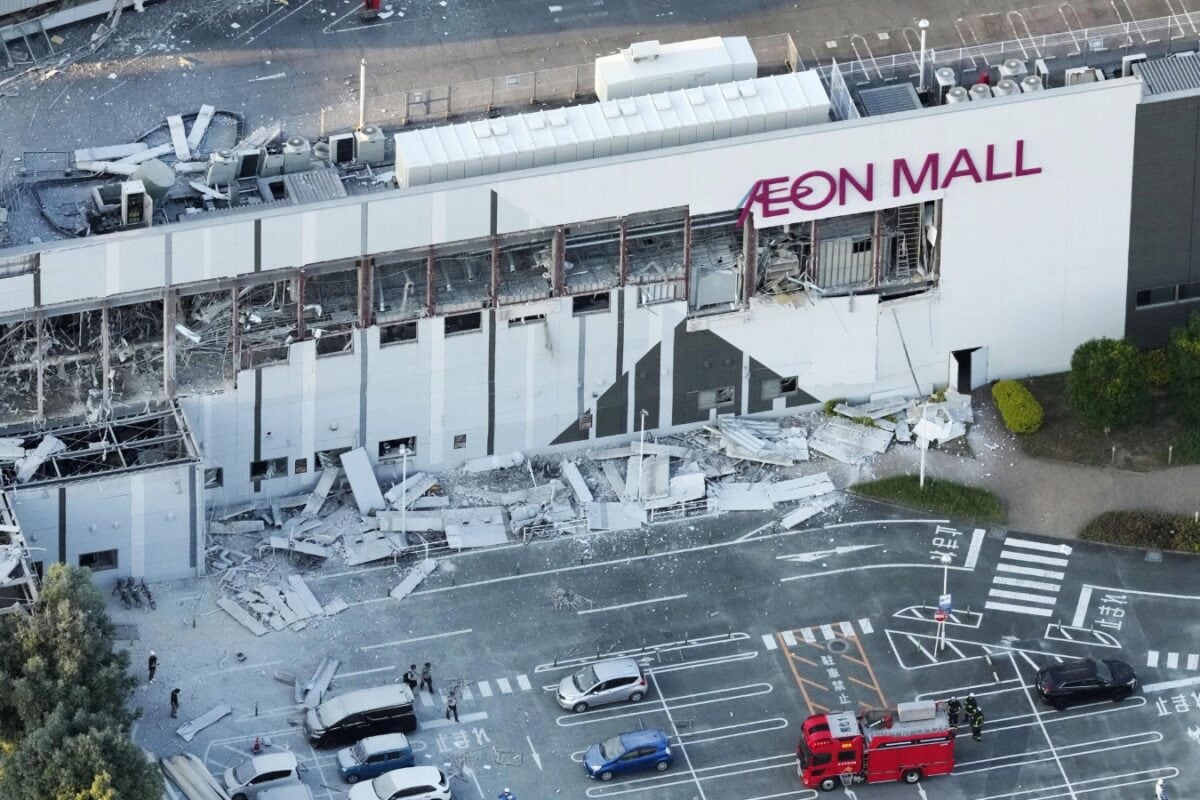
Magnitude 7.1 Quake Rocks Japan, Causes Blast at Kumamoto Mall
A powerful magnitude 7.1 earthquake struck Japan's Kumamoto Prefecture on July 28, 2026, triggering an explosion and partial collapse at Aeon Mall Kumamoto. Initial reports feared numerous casualties, with at least two confirmed deaths at the mall and an overall toll of five. Rescue operations are ongoing amid widespread damage and power outages.
Key Highlights
- Magnitude 7.1 earthquake hit Japan's Kumamoto Prefecture on July 28, 2026.
- Explosion and partial collapse occurred at Aeon Mall Kumamoto following the quake.
- Two women confirmed dead at the mall, one in cardiopulmonary arrest.
- Overall death toll reached five, with dozens injured and missing.
- Damage includes power outages, road closures, and Kumamoto Castle damage.
- Tsunami advisory issued briefly, then lifted; no nuclear plant issues reported.
A significant natural disaster unfolded in Japan's Kumamoto Prefecture on Tuesday, July 28, 2026, as a powerful magnitude 7.1 earthquake struck the region in the late afternoon. The shallow tremor, centered on the island of Kyushu, caused immediate and widespread disruption, leading to fears of numerous casualties and substantial infrastructure damage.
The most dramatic incident reported in the earthquake's immediate aftermath was an explosion at the Aeon Mall Kumamoto in Kashima Town. Local media and authorities indicated that the blast occurred shortly after the seismic event, resulting in a partial collapse of the shopping center, with sections of its second floor caving in and exterior walls being torn away. Emergency services faced a critical situation, with initial reports suggesting 'many people' were feared trapped inside the stricken mall.
Overnight rescue operations at Aeon Mall Kumamoto led to the recovery of eight individuals. Tragically, two women in their 20s were confirmed dead, and another person was found in a state of cardiopulmonary arrest. Five others sustained non-life-threatening injuries. Additionally, approximately 20 to 30 employees of the mall were initially unaccounted for following the explosion. Authorities are investigating the cause of the explosion, with preliminary reports suggesting a gas leak may have been involved.
Beyond the mall incident, the earthquake caused broader devastation across Kumamoto Prefecture. The Fire and Disaster Management Agency reported an overall death toll of five people, with dozens more injured across the affected areas. Damage assessments revealed widespread power outages affecting tens of thousands of homes, ruptured roads, damaged bridges, and collapsed buildings. Notably, sections of the historic Kumamoto Castle also sustained damage, including stone walls.
The Japan Meteorological Agency (JMA) issued a tsunami advisory for the nearby Ariake and Yatsushiro Seas on the western coasts of Kumamoto, Nagasaki, Fukuoka, and Saga prefectures, approximately 900 kilometers southwest of Tokyo. However, this advisory was subsequently lifted within two hours. Crucially, Japan's Nuclear Regulation Authority confirmed that no abnormalities were reported at the three nearby nuclear power plants.
The Kumamoto region is no stranger to seismic activity, having been hit by a devastating magnitude 7.3 earthquake in April 2016, which resulted in over 270 deaths and extensive damage. Ironically, the Aeon Mall Kumamoto had just reopened in June 2026 after extensive rebuilding and renovations aimed at making it more "disaster-resilient" following the 2016 event. This latest quake struck a mere 45 days after its reopening, reducing much of the sprawling site to a skeleton and rubble once more. The recurrence of such a powerful earthquake in the same region highlights Japan's ongoing vulnerability to seismic hazards and the challenges of building resilience. Officials have warned residents to remain vigilant for strong aftershocks that could continue for about a week.
Frequently Asked Questions
What was the magnitude and location of the earthquake?
The earthquake had a magnitude of 7.1 and struck Japan's Kumamoto Prefecture on the southern island of Kyushu.
What happened at Aeon Mall Kumamoto?
Following the earthquake, an explosion occurred at Aeon Mall Kumamoto in Kashima Town, leading to a partial collapse of the second floor and exterior walls. Two women were confirmed dead at the mall, and one person was in cardiopulmonary arrest.
Were there any other casualties or significant damage?
The overall death toll reached five people. Widespread damage included power outages to thousands of homes, ruptured roads, damaged bridges, collapsed buildings, and damage to parts of Kumamoto Castle.
Was there a tsunami warning?
Yes, a tsunami advisory was briefly issued for certain coastal areas but was lifted within two hours. No abnormalities were reported at nearby nuclear power plants.
What is the significance of this earthquake for Aeon Mall Kumamoto?
Aeon Mall Kumamoto had only recently reopened in June 2026, having been rebuilt and renovated after being severely damaged by the 2016 Kumamoto earthquake. This latest quake struck just 45 days after its grand reopening.