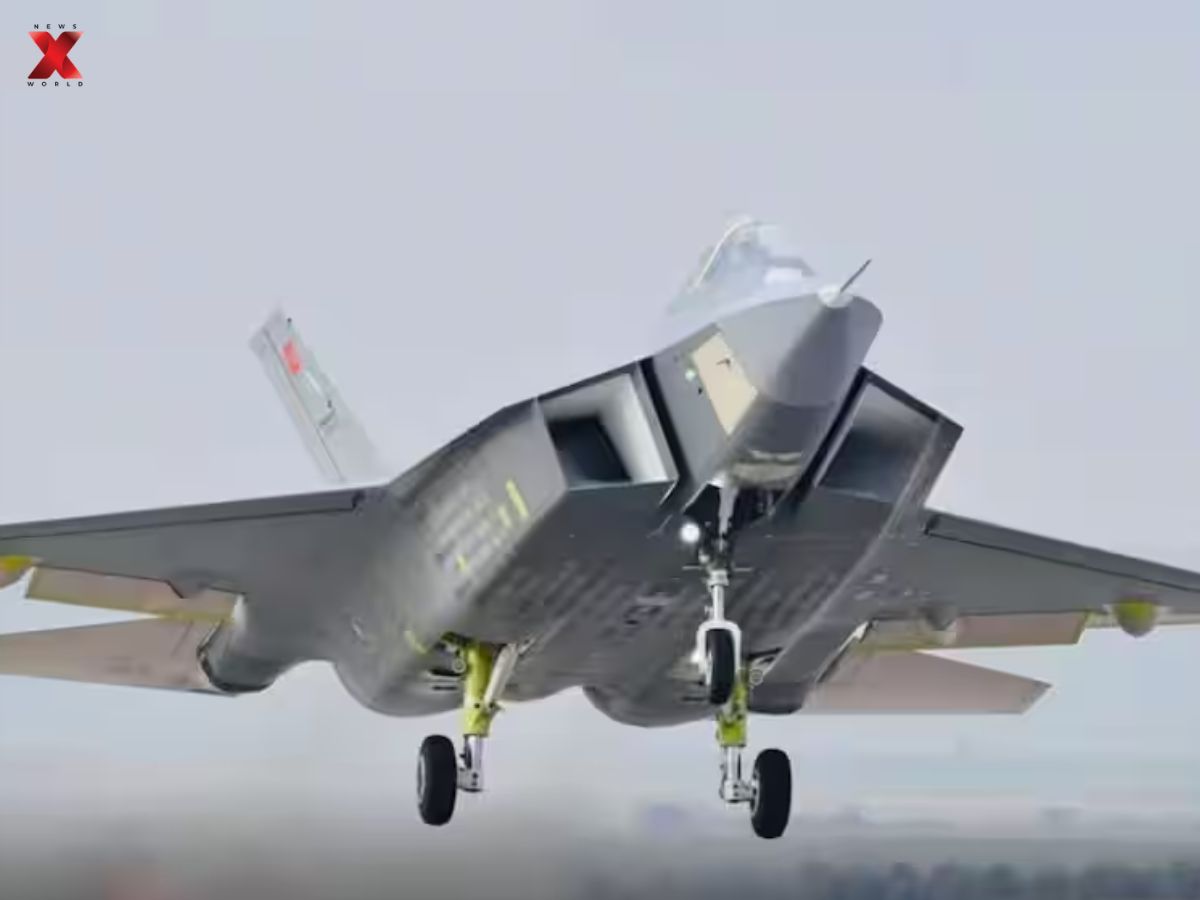
US F-35 Stealth Jet Hit Over Iran, Lands Safely Amid Escalating Conflict
A U.S. F-35 stealth fighter jet was hit by suspected Iranian fire during a combat mission over Iran, forcing an emergency landing at a Middle Eastern base on March 19, 2026. The pilot is stable, and an investigation is underway. Iran's IRGC claimed responsibility, marking a significant development in the ongoing US-Iran conflict.
Key Highlights
- US F-35 stealth jet hit by suspected Iranian fire over Iran.
- Aircraft made emergency landing at a regional US airbase.
- Pilot confirmed to be in stable condition after the incident.
- Iran's IRGC claimed responsibility, releasing video footage.
- Incident marks potential first hit on US crewed F-35 by Iran.
- Highlights F-35 vulnerability to passive infrared air defenses.
A significant escalation in the ongoing conflict between the United States and Iran occurred recently when a U.S. F-35 stealth fighter jet was reportedly struck by suspected Iranian fire during a combat mission over Iran, leading to an emergency landing at a U.S. airbase in the Middle East. The incident, which unfolded on or around March 19, 2026, has been widely reported by major news outlets, including NDTV and The Hindu, confirming a major development in the regional tensions.
U.S. Central Command (CENTCOM) spokesperson Captain Tim Hawkins confirmed that an F-35 aircraft was conducting a combat mission over Iranian airspace when it was forced to make an emergency landing. He stated that the aircraft landed safely and the pilot is in stable condition, with an investigation into the incident currently underway. While U.S. officials have not definitively confirmed that the F-35 was directly hit by Iranian fire, multiple reports citing anonymous U.S. sources suggest this was indeed the case.
Conversely, Iran's Islamic Revolutionary Guard Corps (IRGC) swiftly claimed responsibility for the strike, asserting that its air defense systems successfully targeted the advanced stealth fighter. The IRGC even released video footage, distributed via Iran's Fars News Agency and cited by various media, purporting to show a missile striking the F-35 on its port side. However, NDTV, among others, noted that it could not independently verify the authenticity of this video. Iranian statements varied, with some claims suggesting the jet was 'severely damaged' and others going as far as to say it was 'shot down,' with its fate remaining unclear and a 'high possibility' it may have crashed.
This incident carries immense significance, as it would mark the first confirmed instance of Iranian forces successfully striking a U.S. crewed F-35 since the current conflict intensified. The F-35 Lightning II is considered the cornerstone of U.S. and allied air power, renowned for its stealth capabilities, advanced sensors, and network-centric warfare abilities. Costing upwards of $100 million per unit, it is designed to evade radar detection and operate deep within heavily defended airspace.
The fact that an F-35 may have been hit raises critical questions about the aircraft's vulnerabilities, especially concerning the 'hi-tech solution to low-tech problem' aspect highlighted by NDTV. The F-35's stealth features are primarily designed to counter radar-based detection systems. However, Iranian forces are reported to have developed and employed air defense systems that utilize passive infrared sensors, which track heat signatures rather than radar reflections. These infrared-guided systems are considered more effective against stealth aircraft with reduced radar cross-sections but still possessing a heat signature. Such systems have reportedly proven effective in other regional conflicts, such as in Yemen where Iranian-backed Houthi rebels utilized them.
The broader context of this event is an escalating military confrontation in the Middle East, often referred to as the 'Iran War,' which reportedly began with U.S. and Israeli attacks on Iran on February 28, 2026. The region has seen a surge in hostilities, including Iranian attacks on energy infrastructure in the Gulf, such as gas fields in Qatar and refineries in Kuwait, leading to increased tensions and global concerns over energy supplies. U.S. Secretary of Defense Pete Hegseth had previously claimed that Iran's air defenses had been 'flattened,' making this F-35 incident a potential counter-narrative to such assertions. The U.S. and Israel have been actively deploying F-35s in the conflict, underscoring the strategic importance of this aircraft in their operations.
This incident is not an isolated event but rather part of a series of military engagements. Earlier in March 2026, there were reports of other U.S. aircraft losses, including a KC-135 refueling aircraft crash and F-15E Strike Eagles being shot down in a friendly fire incident. The damage to an F-35, if definitively proven to be from Iranian fire, represents a significant operational challenge and a psychological victory for Iran, potentially influencing future military strategies and the perception of fifth-generation fighter capabilities in contested environments. The ongoing investigation by CENTCOM will be crucial in determining the exact cause and implications of this high-stakes encounter.
Frequently Asked Questions
What happened to the US F-35 fighter jet over Iran?
A U.S. F-35 stealth fighter jet was reportedly hit by suspected Iranian fire during a combat mission over Iran and was forced to make an emergency landing at a U.S. airbase in the Middle East. The pilot is in stable condition, and the incident is under investigation.
Did Iran claim responsibility for hitting the F-35?
Yes, Iran's Islamic Revolutionary Guard Corps (IRGC) claimed responsibility, stating their air defense systems successfully targeted the F-35 and released a video purporting to show the strike.
Why is this incident significant for military aviation?
If confirmed as an Iranian strike, it would be the first time Iran has successfully hit a U.S. crewed F-35, a highly advanced stealth fighter. This raises questions about the F-35's vulnerabilities, especially to non-radar, infrared-guided air defense systems reportedly used by Iran.
What is the broader context of this F-35 incident?
This incident occurs amidst an escalating military conflict in the Middle East, often referred to as the 'Iran War,' which reportedly began on February 28, 2026, with U.S. and Israeli attacks on Iran. There have been ongoing strikes and rising tensions in the region.
What is the status of the pilot and the aircraft?
The U.S. Central Command confirmed that the F-35 landed safely at a regional U.S. airbase, and the pilot is in stable condition. The extent of the damage to the aircraft is under investigation.