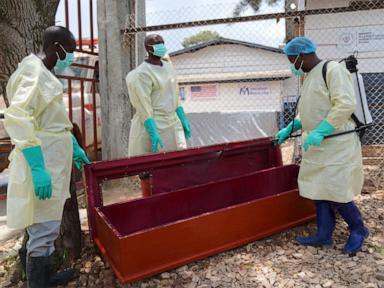
Gavi Pledges $50M for Bundibugyo Ebola Vaccine, Outbreak Response Amidst Crisis
Gavi, the Vaccine Alliance, has committed US$50 million to accelerate vaccine development and bolster the response to the severe Bundibugyo Ebolavirus outbreak predominantly affecting the Democratic Republic of Congo and Uganda. This crucial funding targets the urgent need for a specific vaccine against this strain, which currently lacks approved countermeasures.
Key Highlights
- Gavi allocates $50M to combat Bundibugyo Ebola outbreak.
- $40M prioritizes vaccine access, $10M supports immediate response.
- Bundibugyo strain currently lacks licensed vaccines or specific treatments.
- Outbreak in DRC and Uganda is the largest recorded for this strain.
- Multiple vaccine candidates are in development and clinical trials.
- Global health partners collaborate to accelerate research and deployment.
Gavi, the Vaccine Alliance, has announced a significant financial commitment of up to US$50 million through its First Response Fund (FRF) to address the escalating Bundibugyo Ebolavirus (BDBV) outbreak, primarily impacting the Democratic Republic of Congo (DRC) and Uganda. This funding aims to accelerate the development and access to much-needed vaccines for this specific Ebolavirus species and to support immediate outbreak response efforts.
The allocation includes up to US$40 million specifically dedicated to enabling accelerated vaccine access, with a further US$10 million directed towards supporting critical outbreak response needs and protecting routine immunization services in affected communities. Dr. Sania Nishtar, CEO of Gavi, emphasized the urgency of acting now to ensure manufacturing capabilities are in place once safe and effective vaccine candidates are ready for deployment.
The Bundibugyo Ebolavirus outbreak in the DRC and Uganda represents a severe global health challenge, marked as the largest recorded outbreak for this specific strain. As of early September 2026, the outbreak in the DRC alone has surpassed 5,700 confirmed cases and 2,700 deaths, demonstrating a high case fatality ratio. Unlike the more common Zaire Ebolavirus species, for which a licensed vaccine (Ervebo) exists and is stockpiled by Gavi, there are currently no licensed vaccines or approved specific treatments for the Bundibugyo strain.
This lack of specific countermeasures has made containing the current epidemic particularly challenging, especially in regions affected by ongoing conflict and significant population displacement, which complicate detection, contact tracing, and access to care. The World Health Organization (WHO) declared the outbreak a Public Health Emergency of International Concern (PHEIC), underscoring the severity and transnational threat posed by the virus.
In response to this critical gap, global efforts are underway to fast-track the development of Bundibugyo-specific vaccines and treatments. The Coalition for Epidemic Preparedness Innovations (CEPI) has activated its highest level of response, supporting several promising vaccine candidates. These include a vaccine developed by the University of Oxford (ChAdOx1 BDBV), which has entered Phase 1 human trials and utilizes the same viral vector platform as the Oxford/AstraZeneca COVID-19 vaccine. Notably, the Serum Institute of India (SII) has played a crucial role in manufacturing and stockpiling initial doses of the Oxford candidate for future use and the Phase 1 trial. Other vaccine approaches being explored include recombinant vesicular stomatitis virus (VSV)-based vaccines by the International AIDS Vaccine Initiative (IAVI) and an mRNA vaccine by Moderna.
Beyond vaccines, the WHO is sponsoring the PARTNERS clinical trial to identify effective treatments for Bundibugyo virus disease. This trial, which began enrolling patients in the DRC in July 2026, is assessing whether antiviral therapies such as a monoclonal antibody (MBP134) and remdesivir, alone or in combination, can improve patient survival. The urgency is heightened by the fact that the Bundibugyo strain has historically exhibited case fatality rates ranging from 30% to 50% in previous outbreaks.
Gavi's commitment comes as part of its broader mission to increase equitable access to immunization in lower-income countries and strengthen global health security. The organization has a history of supporting Ebola vaccination efforts, including funding the global Ebola vaccine stockpile for the Zaire species. The current investment for Bundibugyo is designed to create incentives for manufacturers to scale up production and navigate regulatory pathways swiftly, including potential Advance Purchase Commitments and support for WHO Emergency Use Listing and Prequalification. The cooperation between Gavi, UNICEF, WHO, CEPI, Africa CDC, the World Bank, and other partners is essential to ensure a coordinated and effective global response.
India's role in global vaccine manufacturing, exemplified by the Serum Institute of India's involvement in the Oxford vaccine candidate, makes this news particularly relevant to an Indian audience. The acceleration of vaccine development and global preparedness against emerging infectious diseases like Bundibugyo Ebolavirus directly impacts international health security and could involve Indian pharmaceutical capabilities in future production and distribution efforts.
Frequently Asked Questions
What is the Bundibugyo Ebolavirus and why is it a concern?
The Bundibugyo Ebolavirus (BDBV) is one of several species of Ebolavirus that causes severe and often fatal viral hemorrhagic fever. It is a major concern because, unlike the more common Zaire strain, there are currently no licensed vaccines or approved specific treatments available to combat it. The ongoing outbreak in the Democratic Republic of Congo and Uganda is the largest recorded for this specific strain, posing a significant public health emergency.
What is Gavi's role in responding to the Bundibugyo Ebola outbreak?
Gavi, the Vaccine Alliance, has committed up to US$50 million through its First Response Fund to address the Bundibugyo Ebola outbreak. This funding is primarily aimed at accelerating access to investigational vaccines (US$40 million) and supporting immediate outbreak response activities, including protecting routine immunization services and healthcare workers (US$10 million). Gavi works with partners like WHO, UNICEF, and CEPI to fast-track vaccine development and ensure rapid deployment once available.
Are there any vaccines or treatments currently available for Bundibugyo Ebola?
Currently, there are no licensed vaccines or specific approved treatments for the Bundibugyo Ebolavirus. While a vaccine (Ervebo) exists for the Zaire Ebolavirus, its efficacy against the Bundibugyo strain is uncertain. However, several vaccine candidates from institutions like the University of Oxford, Moderna, and IAVI are in various stages of development and clinical trials. Additionally, the WHO is sponsoring a clinical trial (PARTNERS) to test antiviral therapies like MBP134 and remdesivir as potential treatments.
Which countries are most affected by the current Bundibugyo Ebola outbreak?
The current Bundibugyo Ebolavirus outbreak is predominantly affecting the Democratic Republic of Congo (DRC) and Uganda. The DRC has reported the vast majority of cases and deaths, and the outbreak has been described as the largest Bundibugyo outbreak ever recorded in the country, spreading across multiple provinces and health zones.
How does India contribute to the global response against such outbreaks?
India, particularly through institutions like the Serum Institute of India (SII), plays a crucial role in the global response to outbreaks like Bundibugyo Ebola. For instance, SII has manufactured and stockpiled doses of the University of Oxford's Bundibugyo vaccine candidate for potential future use and supplied doses for its Phase 1 clinical trial. This highlights India's significant pharmaceutical manufacturing capacity and its contribution to global health security and vaccine accessibility.