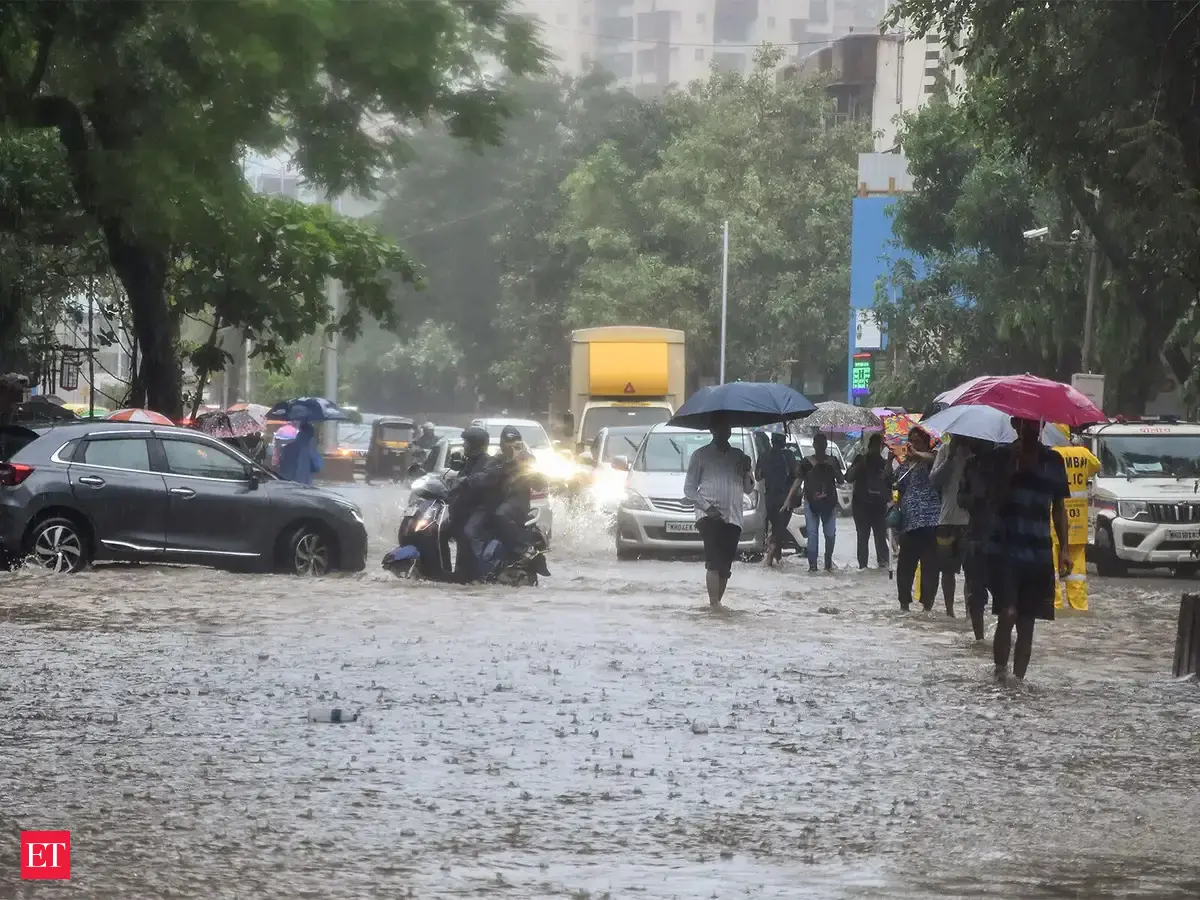
Mumbai Reels Under Heavy Rains: Flooding Disrupts Trains, Politics Intensifies
Mumbai experienced severe flooding and significant disruptions to train services due to heavy monsoon rains. Political parties, including Shiv Sena and Congress, have urged the Mayor to take immediate action, highlighting infrastructure failures and demanding accountability. The city's long-standing issues with monsoon flooding, attributed to factors like an aging drainage system, urbanization, and geographical vulnerabilities, continue to be a major concern.
Key Highlights
- Heavy monsoon rains caused widespread flooding in Mumbai's low-lying areas.
- Train services were significantly disrupted, leading to cancellations and delays.
- Political parties have criticized the government's preparedness and urged the Mayor to act.
- Mumbai's recurring monsoon flooding is linked to aging infrastructure and urbanization.
- Weather alerts indicate continued possibility of heavy rainfall in the coming days.
Mumbai, India's financial capital, found itself grappling with severe consequences of heavy monsoon rainfall, leading to widespread waterlogging in low-lying areas and significant disruptions to its vital train services. The incessant downpour, which intensified over recent days, brought parts of the city to a standstill, impacting daily life for millions of commuters. The situation has not only highlighted the recurring challenges posed by the monsoon season but has also ignited a political firestorm, with major parties like Shiv Sena and Congress urging the city's Mayor to take decisive action.
The article reports on a situation where heavy overnight rains on Wednesday, June 24, 2026, disrupted suburban train services, caused waterlogging in low-lying zones, and left commuters stranded. Several areas recorded over 200 mm of rainfall in 24 hours, leading to submerged streets and major traffic disruptions. The India Meteorological Department (IMD) issued an 'orange' alert, predicting heavy to very heavy rainfall and thunderstorms in Mumbai and its surrounding districts. This meteorological warning underscores the intensity of the monsoon and the ongoing threat of further disruptions.
The disruptions extended to the railway network, a lifeline for Mumbai. Suburban train services experienced delays and overcrowding, particularly on the Central Railway corridors. The Central Railway's Trans-Harbour line services between Thane and Vashi/Panvel were also affected due to a track cave-in between Turbhe and Koparkhairane stations, a direct consequence of excessive water flow. In fact, on July 9, 2026, heavy rainfall and waterlogging led to the cancellation and rescheduling of several trains on the Western Railway network, including premium services like the Mumbai Central-Ahmedabad Shatabdi Express and the Mumbai Central-Hazrat Nizamuddin Tejas Rajdhani Express.
In response to the escalating crisis, political parties have voiced strong criticism. Shiv Sena MLC Manisha Kayande urged Mumbai Mayor Ritu Tawde to intensify efforts for cleaning drains and removing waste to prevent waterlogging. She emphasized that the focus should be on solving people's problems rather than engaging in politics. Similarly, Congress MP Varsha Gaikwad targeted the Mayor, alleging inaction and corruption. She shared videos of flooded areas and incidents like a civic official falling into an open manhole during the Mayor's inspection, framing it as a consequence of administrative failures. The opposition, in general, has accused the ruling government of failing to make cities monsoon-ready and of neglecting infrastructure, leading to the recurrent plight of citizens.
The recurring nature of Mumbai's flooding during monsoons is a well-documented issue, stemming from a confluence of factors. Experts and analyses point to an aging and inadequate drainage system that struggles to cope with the volume of rainwater, especially during intense downpours. Rapid urbanization has further exacerbated the problem by reducing natural water absorption areas and increasing the amount of surface runoff. Mumbai's low-lying geography and its location on the coast, where high tides can impede the drainage of rainwater into the sea, also play a significant role. The destruction of natural buffers like mangrove swamps has also weakened the city's resilience.
The recent events highlight the persistent vulnerabilities of Mumbai to monsoon rains, a problem that has plagued the city for decades, with significant events like the 2005 floods serving as stark reminders of its potential devastation. While efforts have been made to upgrade infrastructure, such as the BRIMSTOWAD project, the effectiveness and completion of these measures remain a subject of debate, with many experts suggesting that significant investments are still needed to adequately prepare the city for extreme weather events.
The situation in Mumbai serves as a critical case study in urban resilience, highlighting the need for integrated urban planning, robust infrastructure development, and effective governance to mitigate the impact of natural disasters.
Frequently Asked Questions
What caused the heavy rains and flooding in Mumbai?
Mumbai experiences heavy monsoon rains annually. The current flooding is attributed to intense rainfall, compounded by long-standing issues like an aging drainage system, rapid urbanization, reduced green spaces, and Mumbai's low-lying geography, which makes it vulnerable to water accumulation. High tides can also exacerbate flooding by impeding the drainage of rainwater into the sea.
How were train services affected by the rains?
Heavy rains and waterlogging led to significant disruptions in Mumbai's suburban train services. This included cancellations, partial cancellations, rescheduling, and delays on various lines, including the Western Railway and Central Railway corridors. In some instances, track cave-ins and waterlogging above danger levels forced service suspensions or speed restrictions.
What are the political reactions to the monsoon disruptions?
Political parties, including Shiv Sena and Congress, have criticized the Maharashtra government and the Brihanmumbai Municipal Corporation (BMC) for their preparedness and handling of the monsoon crisis. Leaders have urged the Mayor to take immediate action, highlighting infrastructure failures and demanding accountability for the flooding and resulting disruptions.