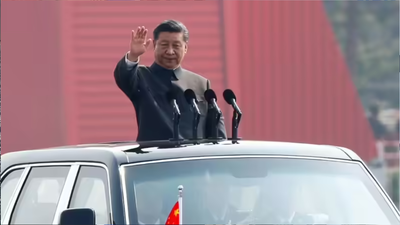
Xi's Purge Rattles PLA: Combat Readiness Concerns Amid Leadership Shake-up
Chinese President Xi Jinping's extensive purges within the People's Liberation Army (PLA) have led to significant command deficiencies and raised fears about its combat readiness. Over 100 senior officers have been removed since 2022, impacting key units like the Rocket Force and the Central Military Commission, potentially hindering operations, especially regarding Taiwan.
Key Highlights
- Over 100 senior PLA officers purged or missing since 2022.
- Purges affect Central Military Commission and Rocket Force leadership.
- Vacancies create serious deficiencies in PLA's command structure.
- Concerns raised over China's combat readiness, particularly for Taiwan.
- Corruption and political loyalty cited as key drivers behind the purges.
- Impact considered temporary; long-term modernization efforts continue.
Chinese President Xi Jinping's ongoing and extensive purges within the People's Liberation Army (PLA) have created significant disruptions in its leadership and command structure, sparking widespread concerns about China's military readiness and combat vulnerability. This unprecedented campaign, which has intensified since 2022, has seen over 100 senior military officers, including generals and lieutenant generals, dismissed, sidelined, or vanish from public view across nearly all branches of the armed forces.
The purges have notably impacted the powerful Central Military Commission (CMC), China's supreme military decision-making body. The seven-member commission has been significantly hollowed out, with several key operational roles being vacated. For instance, the CMC saw the removal of high-profile figures such as former defense ministers Wei Fenghe and Li Shangfu, and more recently, even long-time Xi ally General Zhang Youxia and chief of the Joint Staff Department Liu Zhenli were placed under investigation for serious disciplinary violations. These removals have reportedly left only Xi Jinping himself and newly promoted Vice Chairman Zhang Shengmin as active leaders within the core of the CMC.
A primary target of this sweeping anti-corruption and loyalty campaign has been the PLA Rocket Force, which is responsible for China's strategic missile and nuclear capabilities. All four of its past commanders have reportedly been purged or are under investigation, along with numerous deputy commanders and political commissars. Investigations into corrupt procurement processes, dating back to the Rocket Force's formation in 2015, are believed to be a major factor behind these specific purges. Beyond the Rocket Force, the Army has also been significantly affected, particularly in 2024 and 2025, with several commanders and commissars being purged.
Credible defense research centers, such as the London-based International Institute for Strategic Studies (IISS) and the Washington-based Center for Strategic and International Studies (CSIS), have highlighted the profound implications of these purges. The IISS, in its annual Military Balance survey, stated that the PLA is currently "operating with serious deficiencies in its command structure" due to the numerous unfilled vacancies. CSIS data indicates that approximately 52% of the top 176 leadership roles in the PLA have been affected by investigations, dismissals, or replacements since 2022. These expert analyses suggest that the extensive leadership churn could hamper decision-making processes, coordination, and overall operational effectiveness during critical moments.
The purges directly raise concerns about China's near-term readiness for potential military operations, particularly regarding Taiwan, which Beijing considers a renegade province. Experts believe that the significant vacancies and the removal of experienced operational commanders would make it "incredibly difficult for China to launch large military campaigns against Taiwan" in the short term. The instability within strategic command structures also poses questions about command confidence and the credibility of China's deterrence capabilities.
While corruption is the officially stated reason for most dismissals, observers widely believe that Xi Jinping's campaign is also driven by a desire to consolidate his absolute control over the military, eliminate potential dissent, and remove any obstacles to his ambitious military modernization agenda. Xi has consistently emphasized political loyalty within the armed forces since taking power in 2012, aiming to transform the PLA into a modern, combat-ready force capable of protecting China's growing global interests. The purges are seen as a tool to ensure that the military remains unequivocally loyal to him and the Communist Party.
Despite the immediate disruptions, analysts note that the impact might be temporary. The long-term goal remains to build a stronger and more loyal military leadership. While experienced commanders have been removed, newly appointed officers are expected to gain experience over time, potentially strengthening China's military capabilities in the long run. However, the narrowing pool of eligible candidates due to the purges and Xi's emphasis on absolute loyalty alongside professional competence could complicate the process of finding suitable replacements, thereby affecting the PLA's institutional experience and cohesion for years.
The implications of these purges extend beyond China's borders, affecting regional security dynamics, particularly in the Indo-Pacific. The international community is closely monitoring these developments, as they could influence diplomatic relationships and the strategic balance of power. China's assertive military posture in the Indo-Pacific, including increased deployments around Taiwan, continues despite the internal upheaval, with its defense spending still outpacing the rest of Asia.
In conclusion, while the headline's use of "cripples" may be an exaggeration of the PLA's long-term capabilities, the verified information strongly corroborates that Xi Jinping's unprecedented purges have indeed created significant deficiencies in China's military command structure and legitimately sparked fears about its near-term combat vulnerability. The campaign is a complex blend of anti-corruption efforts and power consolidation, with both immediate and long-term consequences for the PLA and global security.
Frequently Asked Questions
What is the extent of Xi Jinping's military purges in China?
Since 2022, over 100 senior officers, including generals and lieutenant generals, have been purged, dismissed, or have gone missing from the People's Liberation Army (PLA). This affects various branches, most notably the Rocket Force and the Central Military Commission.
How do these purges affect China's military readiness?
The purges have created significant deficiencies in the PLA's command structure due to numerous vacancies and the removal of experienced commanders. Experts warn this could hinder decision-making and operational effectiveness, particularly for complex military actions like a potential invasion of Taiwan in the near term.
What are the primary reasons behind Xi Jinping's military purges?
While corruption is the official reason, analysts suggest that the purges are also driven by Xi Jinping's efforts to consolidate absolute political control over the military, eliminate potential dissent, and remove obstacles to his ambitious modernization agenda for the PLA.
Which specific military branches or leadership bodies have been most affected?
The PLA Rocket Force, responsible for China's strategic missile and nuclear arsenal, has been particularly hard hit, with all four of its past commanders reportedly purged. The Central Military Commission (CMC), China's top military command body, has also seen several high-ranking members removed.
What are the international implications of these military purges?
The purges introduce uncertainty about China's military capabilities and decision-making processes, particularly concerning regional security in the Indo-Pacific and the Taiwan Strait. This complicates deterrence planning for other nations and influences diplomatic relationships and the global balance of power.