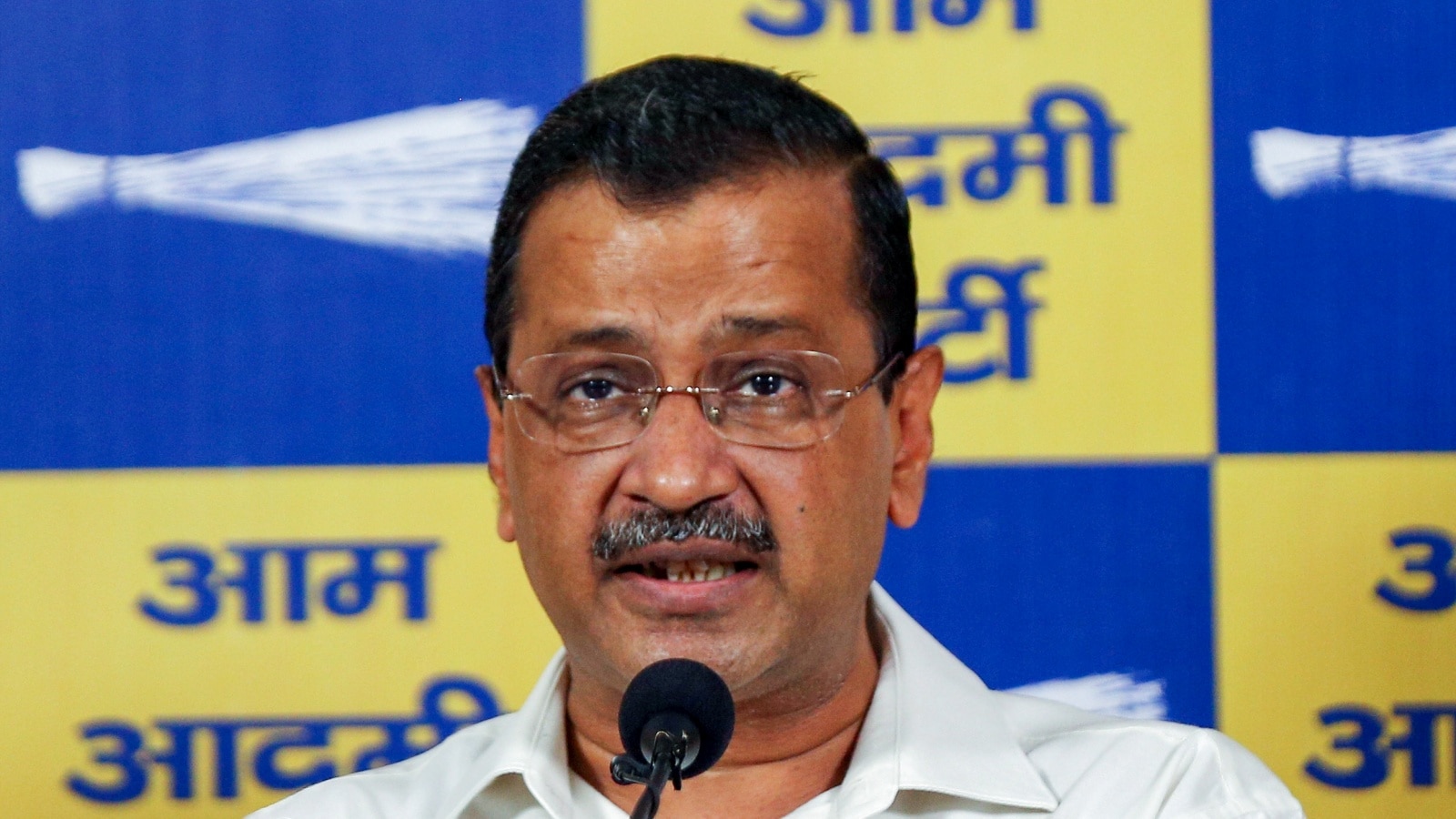
Arvind Kejriwal seeks recusal of Justice Sharma in Delhi excise policy case
Arvind Kejriwal has filed an application in the Delhi High Court seeking the recusal of Justice Swarana Kanta Sharma from hearing the CBI's petition challenging his discharge in the liquor policy case. The court has issued notice and will hear the matter on April 13. Kejriwal intends to argue his recusal plea in person.
Key Highlights
- Kejriwal seeks recusal of Justice Swarana Kanta Sharma from excise policy case.
- Delhi High Court issues notice on Kejriwal's recusal application.
- Hearing on recusal plea scheduled for April 13.
- Arvind Kejriwal to argue his recusal plea in person.
- CBI opposes the recusal application, calling it baseless.
In a significant development concerning the Delhi liquor policy case, former Chief Minister Arvind Kejriwal has formally applied to the Delhi High Court for the recusal of Justice Swarana Kanta Sharma from hearing the Central Bureau of Investigation's (CBI) petition. The CBI is challenging the trial court's order that discharged Kejriwal and other accused individuals in the corruption case related to the alleged liquor policy scam. The Delhi High Court, on Monday, April 6, 2026, officially took note of Kejriwal's application seeking recusal and issued a notice to the CBI. The matter has been scheduled for a detailed hearing on April 13, 2026.
Arvind Kejriwal, who appeared in person before Justice Sharma, stated his intention to argue the recusal application himself. This move has garnered considerable attention, with legal experts observing the unique approach taken by the AAP leader. While the court acknowledged his intention to argue in person, it also clarified that a petitioner would typically need to discharge their legal counsel to do so. Kejriwal asserted his right to argue, mentioning that he had not yet issued his 'vakalatnama' (a document authorizing a lawyer to represent him) for this specific plea.
The CBI, represented by Solicitor General Tushar Mehta, strongly objected to the recusal application. Mehta described the allegations as "frivolous and contemptuous" and argued that the court should not be a "forum for theatrics." He further contended that such applications, especially when targeting an institution, were serious and could set a problematic precedent. Mehta also highlighted that several other discharged accused had also filed similar recusal applications. Justice Sharma, in response to the objections and the multiplicity of applications, remarked that if any other parties wished to file recusal applications, they should do so promptly so that all could be decided together.
Kejriwal's plea for recusal is based on an apprehension that the matter might not receive an impartial hearing. This follows an earlier attempt by Kejriwal to have the case transferred from Justice Sharma's bench, which was declined by the Chief Justice of the Delhi High Court. Justice Sharma, a permanent Judge of the Delhi High Court since March 28, 2022, has a distinguished career, including experience as a Special Judge (CBI) and authoring several books.
The Delhi liquor policy case itself dates back to 2021 when the Delhi government introduced a new policy aimed at boosting revenue and reforming the liquor trade. The policy was later withdrawn amid allegations of irregularities. The CBI initiated a probe, leading to the arrest of several individuals, including Arvind Kejriwal and Manish Sisodia. Subsequently, a trial court discharged Kejriwal and others, a decision that the CBI has now challenged in the High Court.
The proceedings on April 6, 2026, were marked by an exchange between Kejriwal and the Solicitor General, underscoring the high stakes and political sensitivity of the case. The court's decision to issue notice and schedule further hearings indicates that the recusal plea will be a significant aspect of the ongoing legal battle. The outcome of this recusal application could potentially influence the future course of the excise policy case.
Kejriwal's decision to argue his case in person, particularly on a sensitive matter like a recusal application, is a notable strategy. It allows him direct engagement with the court and a platform to articulate his concerns. The CBI's strong opposition, however, suggests a significant legal contest ahead. The court's directive to decide all recusal applications together aims to streamline the process and avoid piecemeal litigation. The next hearing on April 13 will be crucial in determining the path forward for Justice Sharma's involvement in the case.
Frequently Asked Questions
What is a recusal application?
A recusal application is a formal request made to a judge to disqualify themselves from hearing a case. This is usually sought when there is a perceived conflict of interest, bias, or a reasonable apprehension that the judge may not be able to provide a fair and impartial hearing.
Why has Arvind Kejriwal requested the recusal of Justice Swarana Kanta Sharma?
Arvind Kejriwal has sought the recusal of Justice Swarana Kanta Sharma from the Delhi liquor policy case due to a 'grave, bona fide, and reasonable apprehension' that the matter may not receive a hearing marked by impartiality and neutrality. He has also cited previous instances where the judge's observations or decisions have been questioned.
What is the CBI's stance on Kejriwal's recusal plea?
The CBI, represented by Solicitor General Tushar Mehta, has strongly opposed Arvind Kejriwal's recusal application. The CBI has termed the allegations as 'frivolous and contemptuous' and argued that the court should not be used for 'theatrics.' They also expressed concern about the implications of such allegations on the institution.
What is the significance of Kejriwal arguing his plea in person?
Arvind Kejriwal's decision to argue his recusal plea in person is a strategic move that allows him direct engagement with the court and a platform to articulate his concerns. It signifies his personal involvement and commitment to presenting his case directly.