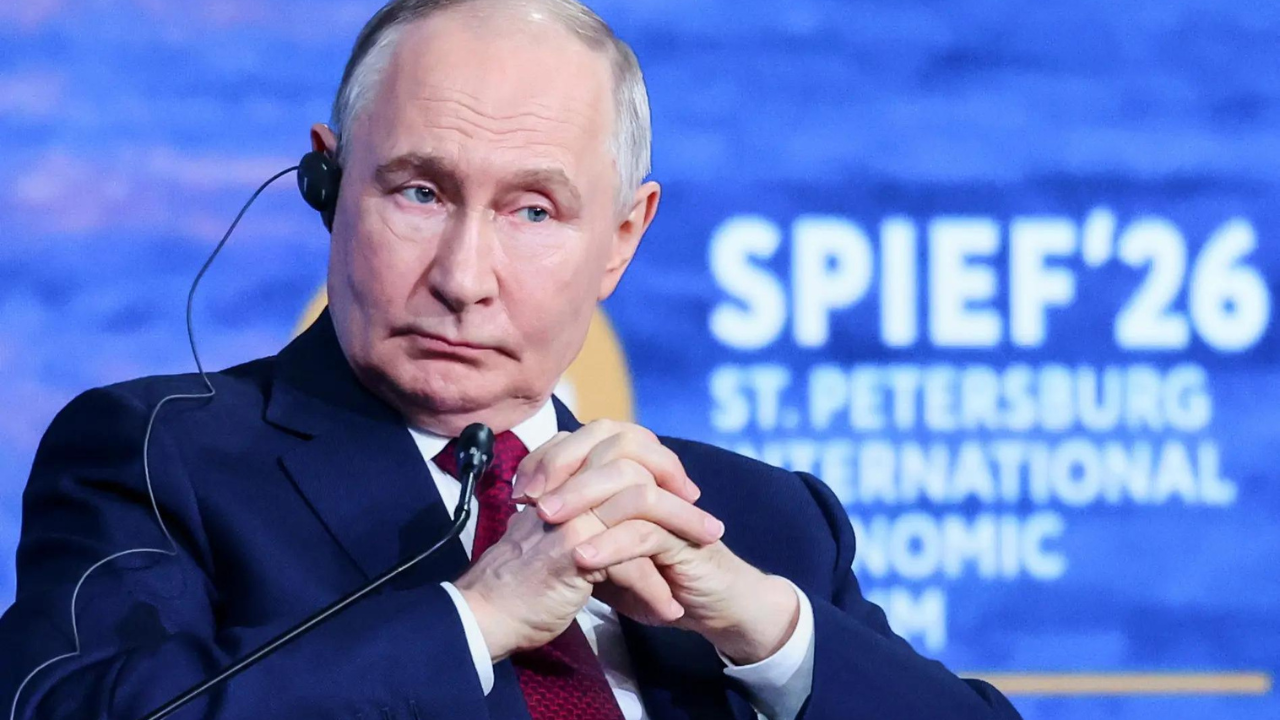
Putin Acknowledges Russian Military Setbacks Amidst Ukrainian Strikes
Russian President Vladimir Putin has admitted to 'problems' within his country's military, a rare acknowledgment amidst escalating Ukrainian attacks targeting Russian territory. The admission comes as Ukraine demonstrates a growing capability to strike deep within Russia, raising concerns about national security.
Key Highlights
- Putin admits 'problems' in the Russian military.
- Ukraine conducts successful deep strikes inside Russia.
- Russian defense capabilities face scrutiny.
- Security concerns rise within Russia.
- Ongoing conflict impacts Russian domestic stability.
Russian President Vladimir Putin has publicly acknowledged 'problems' within the Russian military, a rare admission that comes as Ukraine has intensified its attacks, striking targets deep inside Russian territory. This development signifies a potential shift in the dynamics of the ongoing conflict, with Ukraine demonstrating an enhanced capacity to project power beyond its borders and into Russia itself.
Recent Ukrainian drone and missile attacks have targeted various Russian regions, including Moscow, Belgorod, and Crimea, hitting military infrastructure, fuel depots, and airfields. These strikes, often occurring with surprising frequency and precision, have challenged Russia's air defense systems and exposed vulnerabilities in its domestic security. The ability of Ukraine to conduct such deep incursions suggests a significant improvement in its intelligence gathering, targeting capabilities, and the range of its strike assets, potentially including Western-supplied weaponry.
Putin's acknowledgment of 'problems' is a departure from the typically assertive and confident rhetoric emanating from the Kremlin. While he did not elaborate on the specific nature of these issues, they are widely interpreted to encompass logistical challenges, equipment shortages, and potentially issues with troop morale and training, all of which have been persistent concerns throughout the protracted conflict. The admission may also be an attempt to manage domestic perceptions and prepare the Russian public for a potentially longer and more challenging war, especially as Ukrainian counteroffensives aim to reclaim occupied territories.
The implications of these Ukrainian strikes for Russia are multi-faceted. Firstly, they directly impact Russia's war-fighting capacity by disrupting supply lines and damaging military assets. Secondly, they create a sense of vulnerability and insecurity among the Russian populace, potentially leading to increased domestic pressure on the government. The attacks also serve as a significant morale boost for Ukraine, demonstrating its resilience and ability to retaliate effectively.
Analysts suggest that Ukraine's success in conducting these deep strikes is partly due to Western intelligence sharing and the provision of advanced weaponry, including long-range drones and missiles. These capabilities allow Ukraine to bypass heavily fortified front lines and strike at strategic targets within Russia, forcing Moscow to divert resources to bolster its internal defenses. This, in turn, could weaken Russia's offensive capabilities in Ukraine.
The Russian government has largely downplayed the impact of these attacks, often attributing them to failed Ukrainian attempts or claiming successful interception by air defense systems. However, the repeated nature and visibility of these strikes, particularly those near the capital, make them difficult to ignore. Putin's candid admission, however brief, suggests a growing awareness within the Russian leadership of the severity of these challenges.
For India, this development is significant as it underscores the evolving nature of modern warfare and the interconnectedness of global security. India maintains strategic ties with both Russia and Ukraine, and any escalation or prolonged instability in the region has the potential to affect energy prices, global supply chains, and diplomatic relations. The technological advancements in drone warfare and long-range strikes demonstrated by Ukraine also hold implications for defense strategies worldwide, including for India, which faces its own complex geopolitical security environment.
The news highlights the ongoing resilience and adaptive capacity of Ukraine in the face of a larger aggressor. It also exposes the strain that the protracted conflict is placing on Russia's military and its leadership. As the war continues, the ability of both sides to innovate and adapt will be crucial in determining its ultimate outcome. The 'problems' acknowledged by Putin suggest that Russia is facing significant hurdles in achieving its objectives, while Ukraine's offensive actions demonstrate its determination to resist and to inflict costs on the aggressor.
Frequently Asked Questions
What specific 'problems' did Putin admit to regarding the Russian military?
While Vladimir Putin acknowledged 'problems' within the Russian military, he did not specify the exact nature of these issues in his public statements. However, these are generally understood to encompass logistical, equipment, and personnel-related challenges that have plagued Russia's military operations in Ukraine.
What types of attacks has Ukraine been conducting deep inside Russia?
Ukraine has been conducting drone and missile attacks targeting various Russian regions. These strikes have reportedly hit military infrastructure, fuel depots, airfields, and other strategic targets, demonstrating Ukraine's growing capability to strike deep within Russian territory.
How does Ukraine manage to conduct these deep strikes inside Russia?
Ukraine's ability to conduct deep strikes is attributed to a combination of factors, including improved intelligence gathering, enhanced targeting capabilities, and the use of advanced weaponry, potentially including long-range drones and missiles, possibly with support from Western allies in terms of intelligence and equipment.
What is the significance of Putin admitting to military problems?
Putin's admission is significant because it is a rare acknowledgment of internal military weaknesses. It suggests that the ongoing conflict is proving more challenging than initially presented by the Kremlin and may indicate efforts to manage domestic perceptions amid battlefield realities.