New Delhi Gripped by Dense Fog, 'Very Poor' Air Quality at 376 | Quick Digest
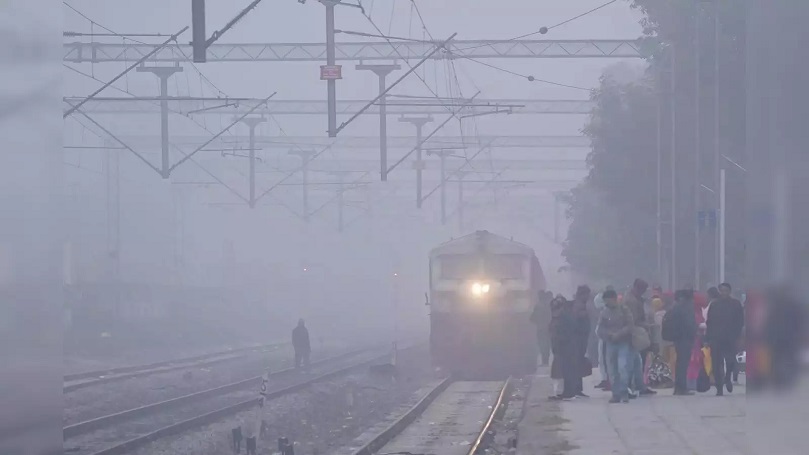
Dense fog enveloped New Delhi on January 17, 2026, causing significant visibility issues and affecting transportation. Concurrently, the city recorded a 'very poor' Air Quality Index (AQI) of 376, prompting authorities to implement stringent pollution control measures.
Dense fog severely impacted visibility across New Delhi on January 17, 2026.
Air Quality Index (AQI) reached 376, categorized as 'very poor' by CPCB.
Flight operations at IGI Airport faced delays due to low visibility.
Cold wave conditions persisted alongside the dense fog and high pollution.
Authorities invoked Stage-III of the Graded Response Action Plan (GRAP) due to deteriorating air quality.
Other reports indicated AQI values even higher, reaching 'severe' or 'hazardous' in some areas.
New Delhi woke up to a harsh winter morning on Saturday, January 17, 2026, as dense fog blanketed the national capital, severely reducing visibility and disrupting daily life. The India Meteorological Department (IMD) reported minimum visibility and noted that cold wave conditions continued to prevail. This dense fog led to significant delays in several flights at Indira Gandhi International (IGI) Airport, with authorities advising passengers to check their flight status before traveling.
Compounding the weather challenges, New Delhi's air quality remained in the 'very poor' category. The Central Pollution Control Board (CPCB) data recorded an Air Quality Index (AQI) of 376 at 9 a.m. on January 17. This level falls within the 301-400 range, which is classified as 'very poor' and can cause respiratory illness on prolonged exposure. Other monitoring stations and news outlets reported even higher AQI values, with some areas experiencing 'severe' (401-500) or 'hazardous' (above 401) air quality, reaching up to 450 and 501 in specific locations. In response to the escalating pollution, the Commission for Air Quality Management (CAQM) declared Stage-III of the Graded Response Action Plan (GRAP) across the entire National Capital Region (NCR). This proactive measure aims to prevent further deterioration of air quality and includes restrictions on non-essential construction and the plying of BS-III petrol and BS-IV diesel vehicles. The combination of dense fog, biting cold, and hazardous air quality created a challenging environment for the city's residents.
Read the full story on Quick Digest