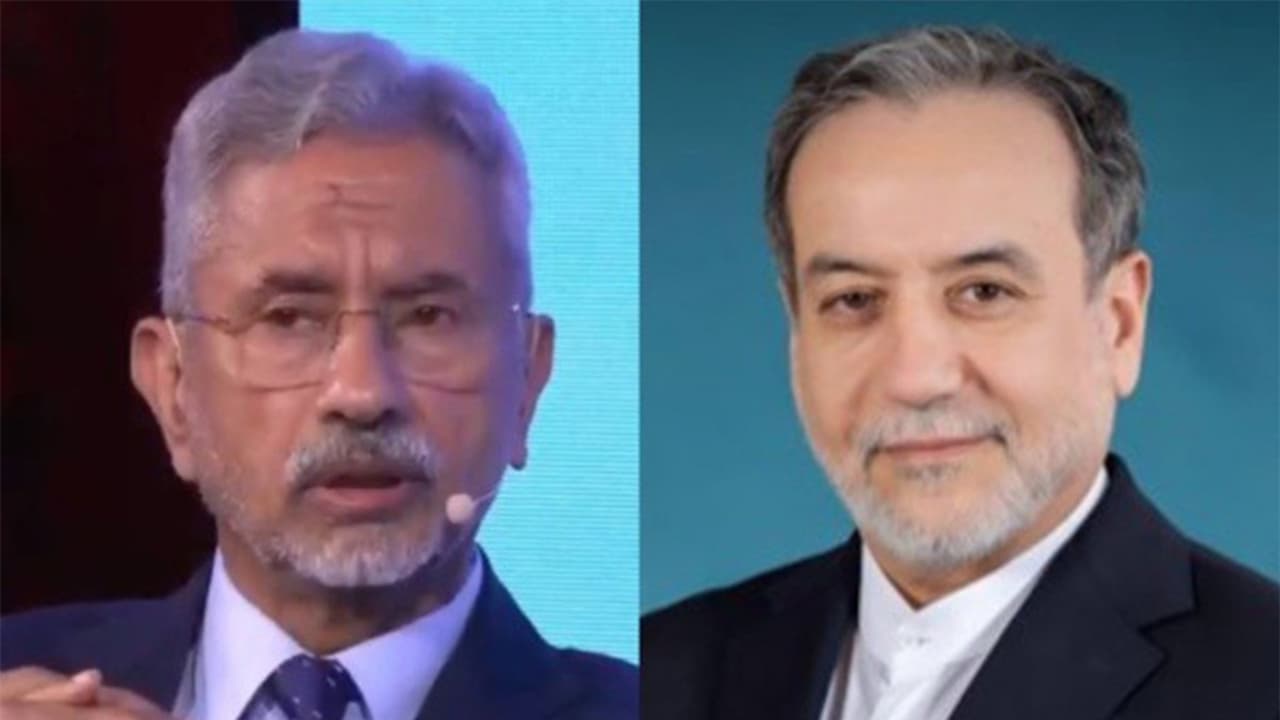
India's EAM Engages Qatar, UAE Amid Deepening West Asia Crisis
India's External Affairs Minister S. Jaishankar held crucial talks with Qatar's Prime Minister and the UAE's Foreign Minister amid an escalating West Asia crisis. Discussions focused on de-escalation, safeguarding global energy supplies through the Strait of Hormuz, and protecting India's strategic interests and diaspora in the volatile region.
Key Highlights
- EAM Jaishankar held telephonic talks with Qatari PM and UAE FM.
- Discussions centered on the escalating West Asia conflict.
- Concerns raised over global energy supplies via Strait of Hormuz.
- India advocates for de-escalation, dialogue, and diplomacy.
- Safeguarding India's energy security and diaspora is crucial.
- Tensions heightened by US President Donald Trump's ultimatum to Iran.
External Affairs Minister (EAM) S. Jaishankar recently engaged in a series of high-level diplomatic conversations with key leaders in West Asia, including the Prime Minister and Foreign Minister of Qatar, Sheikh Mohammed bin Abdulrahman bin Jassim Al Thani, and the Deputy Prime Minister and Foreign Minister of the United Arab Emirates (UAE), Sheikh Abdullah bin Zayed Al Nahyan. These crucial telephonic discussions, which also involved Iranian Foreign Minister Abbas Araghchi, took place on Sunday, April 5, 2026, and Monday, April 6, 2026, amidst a rapidly escalating crisis in the West Asian region.
The primary focus of these conversations was the volatile regional situation and its far-reaching implications, particularly concerning global energy supplies and the security of the Strait of Hormuz. The crisis has been intensified by a renewed ultimatum from US President Donald Trump to Iran, threatening strikes on key infrastructure if the Strait of Hormuz, a critical global energy artery, is not reopened. Following this, Iran has reportedly blocked the narrow shipping lane, which handles nearly 20 percent of global oil and liquefied natural gas (LNG) supplies, leading to a significant surge in global oil and gas prices.
India, a major energy importer, has significant stakes in the stability of West Asia. The region remains a key source of India's energy procurement, making uninterrupted energy flows through the Strait of Hormuz paramount for its economic security. Moreover, millions of Indian expatriates reside and work in the Gulf countries, and their safety and welfare are a top priority for the Indian government. Jaishankar's diplomatic outreach underscores India's commitment to de-escalation, dialogue, and diplomacy as the only viable path to resolve the crisis.
In his discussions, Jaishankar conveyed India's deep concern over the escalating tensions and emphasized the need for all sides to exercise restraint, avoid further escalation, and prioritize civilian safety. He stressed respect for the sovereignty and territorial integrity of all states in the region. While details of all conversations were not extensively revealed, Jaishankar confirmed through social media posts that he discussed the "present situation" with Iran's Foreign Minister and the "ongoing conflict" with Qatar's Prime Minister, and the "evolving situation in West Asia" with the UAE's Deputy Prime Minister and Foreign Minister.
India has been proactive in its diplomatic efforts, intensifying engagements in recent weeks to manage the crisis. This includes Prime Minister Narendra Modi's conversations with leaders of other Gulf nations like Oman and Malaysia, where he also favored de-escalation and safe navigation through the Strait of Hormuz. The Indian government has also issued travel advisories and assisted its citizens with relocation and evacuation efforts from the region.
The crisis's potential impact extends beyond energy, affecting international trade, particularly for India's exports and imports. Officials in India believe that a prolonged blockade could have serious consequences not just for India but for several countries dependent on the crucial maritime route. India's balanced diplomatic stance, maintaining communication with various regional players including Iran, Saudi Arabia, and the US, positions it as a stabilizing force that prioritizes communication over confrontation.
The Hindu's headline accurately captures the core event, and the information is corroborated by numerous other credible Indian news outlets such as Telegraph India, PTI, Outlook India, Rediff, and Business Standard. There is no evidence of sensationalism, misinformation, or exaggeration in the reporting. The story is highly significant for an Indian audience due to its direct implications for national interests, making it a critical piece of foreign policy and energy security news.
Frequently Asked Questions
What is the 'West Asia crisis' referred to in the news?
The 'West Asia crisis' primarily refers to escalating tensions in the Middle East, particularly involving the United States and Iran. Recent reports highlight a renewed ultimatum from US President Donald Trump to Iran regarding the Strait of Hormuz and subsequent disruptions by Iran, which has significantly impacted global energy supplies.
Why is India engaging diplomatically in this crisis?
India has significant stakes in the West Asia region, particularly concerning its energy security, as West Asia is a major source of India's oil and gas imports. Additionally, a large Indian diaspora resides in these countries. India's diplomatic engagement aims to de-escalate the conflict, ensure uninterrupted energy flows, and safeguard the welfare of its citizens.
Who did EAM Jaishankar speak with and what was discussed?
External Affairs Minister S. Jaishankar held telephonic conversations with Iranian Foreign Minister Abbas Araghchi, Qatari Prime Minister and Foreign Minister Sheikh Mohammed bin Abdulrahman bin Jassim Al Thani, and UAE Deputy Prime Minister and Foreign Minister Sheikh Abdullah bin Zayed Al Nahyan. The discussions centered on the evolving regional situation, the ongoing conflict, its implications for global energy supplies, and the need for dialogue and diplomacy to restore stability.
What is the significance of the Strait of Hormuz in this crisis?
The Strait of Hormuz is a critical narrow shipping lane between the Persian Gulf and the Gulf of Oman, through which nearly 20% of global oil and liquefied natural gas (LNG) supplies pass. Its disruption, reportedly by Iran in response to the US ultimatum, has led to a surge in global oil and gas prices and widespread international concern over commercial shipping.
How does this crisis impact India directly?
The crisis impacts India directly through potential disruptions to its energy imports, as West Asia is a crucial energy source. A prolonged blockade of the Strait of Hormuz could threaten India's fuel and fertilizer security. Furthermore, the safety and well-being of the millions of Indian expatriates working in the Gulf region are a primary concern for the Indian government.