Shahzad Bhatti: ISI's New Gangster-Terror Weapon Threatening India
Pakistani gangster-turned-terrorist Shahzad Bhatti has emerged as a significant cross-border threat, orchestrating a terror network with ISI backing. His modules, including the newly formed Tehreek-e-Taliban Hindustan, are actively recruiting Indian youth for attacks on police and public targets, leading to multiple arrests across India. His activities have intensified concerns about national security and the evolving hybrid terror model.
Key Highlights
- Shahzad Bhatti is a Pakistan-based gangster-turned-terrorist with ISI links.
- He masterminds the 'Tehreek-e-Taliban Hindustan' (TTH) terror outfit.
- Bhatti recruits Indian youth via social media for terror acts.
- His network plans attacks on police, temples, and military installations.
- Multiple arrests across India have been made, busting his terror modules.
- Bhatti's operations exemplify a 'gangster-operative' model backed by Pakistan.
Shahzad Bhatti, a Pakistani national described as a gangster who has transitioned into a key terror operative, has become a central figure in cross-border terror activities targeting India. Indian intelligence and law enforcement agencies have identified Bhatti, believed to be around 45 years old, as the mastermind behind a Pakistan-linked terror network operating with the strategic backing of Pakistan's Inter-Services Intelligence (ISI).
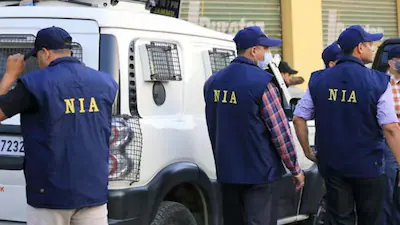
Bhatti gained significant attention from Indian security agencies following a grenade attack near the residence of Punjab-based influencer Rozer Sandhu in Jalandhar in March 2024, an incident he allegedly orchestrated. Since then, his name has consistently surfaced in numerous investigations across various Indian states, including Delhi, Uttar Pradesh, Punjab, Haryana, Rajasthan, Uttarakhand, and Madhya Pradesh, with cases also being registered by the National Investigation Agency (NIA).
A key aspect of Bhatti's operations is his alleged leadership of a newly emerged outfit named 'Tehreek-e-Taliban Hindustan' (TTH). Indian agencies consider TTH a front driven by Bhatti, aimed at spreading terror propaganda and executing targeted attacks within India. TTH has claimed responsibility for various violent acts, notably the killing of two police personnel in Gurdaspur, Punjab, in February 2026, and the murder of an Assistant Sub-Inspector (ASI) in Amritsar in May 2026. The outfit has also reportedly issued warnings to government and police officials, urging them to resign if they wish to live, and has released videos documenting these killings.
The modus operandi of Bhatti's network involves leveraging social media platforms to recruit unemployed Indian youth. He is known for his '333' branding online and uses videos focusing on religion, nationalism, and influencer controversies to build a following. These recruits are then indoctrinated and tasked with carrying out a range of terror activities. Recent investigations have revealed sinister plots, including plans for targeted killings of police personnel, painting pro-TTH graffiti, and orchestrating grenade attacks.
For instance, the Delhi Police Special Cell apprehended an individual named Sohail who was instructed by Bhatti to paint 'TTH' graffiti across prominent locations in Delhi and Faridabad, with an 'S' beneath to signify Bhatti's personal signature. Financial payments from Pakistan were also established for this 'test task.' Further arrests in Delhi and other states uncovered plans to target a historic temple in Delhi, a popular eatery on the Delhi-Sonipat highway, and a military installation in Hisar, Haryana. Operatives reportedly conducted reconnaissance and sent videos and photographs of these targets to handlers in Pakistan.
Bhatti's network also shows a sophisticated level of organization, including digital communication, remote training for attacks, and arrangements for weapons and financial support from Pakistan. The arrests of multiple individuals across various states, including Uttar Pradesh, Madhya Pradesh, Jammu & Kashmir, Punjab, and Gujarat, highlight the widespread reach of his network.
Interestingly, Bhatti has also been linked to Indian gangster Lawrence Bishnoi. Initially, Bhatti claimed a friendship with Bishnoi, purportedly seeking help with anti-Islam social media content. However, this relationship reportedly soured, with Bhatti later issuing death threats to Bishnoi and his brother. Indian agencies suspect that the ISI is using Bhatti to expand its influence among Indian criminal elements, thereby employing a 'gangster-operative' model to destabilize Indian states.
The continuous efforts by various Indian law enforcement agencies, including the Delhi Police Special Cell, Uttar Pradesh ATS, and Punjab Police, have led to the busting of several modules linked to Bhatti, preventing numerous potential attacks. These operations underscore the evolving nature of cross-border terrorism, where social media influencers and criminal networks are increasingly being weaponized by state-backed actors like the ISI to undermine national security. The story is of critical importance to an Indian audience as it directly concerns national security, cross-border terrorism, and the safety of its citizens and law enforcement.
Frequently Asked Questions
Who is Shahzad Bhatti?
Shahzad Bhatti is a Pakistan-based individual, originally a gangster, who has transformed into a significant terror operative. He is believed to be around 45 years old and is accused by Indian agencies of orchestrating a cross-border terror network with the backing of Pakistan's Inter-Services Intelligence (ISI).
What is Tehreek-e-Taliban Hindustan (TTH) and what are its activities?
Tehreek-e-Taliban Hindustan (TTH) is a newly formed outfit that Indian agencies claim is a front driven by Shahzad Bhatti with ISI backing. It is responsible for spreading terror propaganda and executing targeted attacks in India, including the killing of police personnel and grenade attacks.
How does Shahzad Bhatti recruit individuals in India?
Shahzad Bhatti primarily uses social media platforms, including his '333' brand, to recruit unemployed Indian youth. He attracts them through videos on religion, nationalism, and controversies, subsequently indoctrinating and tasking them with terror activities.
What kind of attacks has Bhatti's network planned or carried out?
Bhatti's network has been linked to grenade attacks (e.g., Jalandhar, Gurdaspur) and targeted killings of police personnel (e.g., Gurdaspur, Amritsar). Investigations have also revealed plans to attack prominent public places like a historic temple in Delhi, a highway eatery, and a military camp in Hisar.
What is the 'gangster-operative model' used by ISI?
The 'gangster-operative model' refers to Pakistan's ISI utilizing criminal elements, such as gangster-turned-terrorists like Shahzad Bhatti, to conduct terror activities and destabilize Indian states. This involves leveraging their existing networks for recruitment, logistics, and execution of attacks.