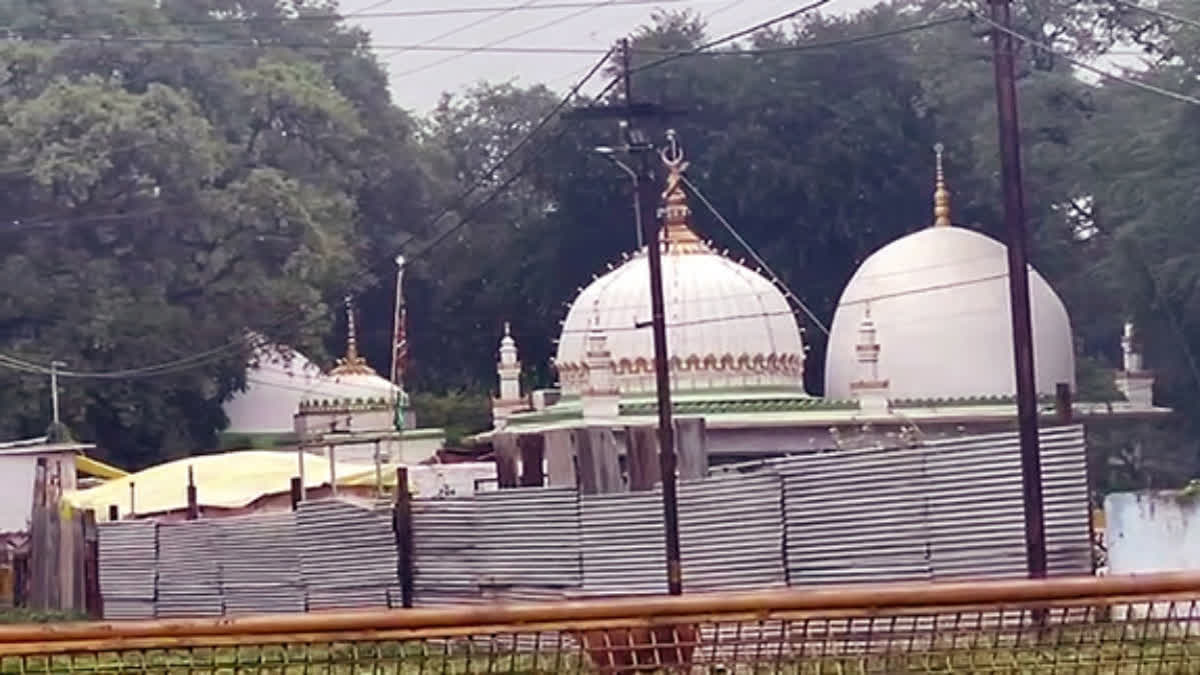
MP High Court declares Bhojshala a Hindu temple, rejects Jain claims
The Madhya Pradesh High Court has declared the Bhojshala complex in Dhar a temple dedicated to Goddess Vagdevi (Saraswati), rejecting claims by the Muslim and Jain communities. The court cited historical and archaeological evidence, including an ASI survey, to support its ruling that the site was originally a Hindu temple and a center for Sanskrit learning. The verdict allows Hindu worship at the site and directs the government to consider alternative land for a mosque.
Key Highlights
- MP High Court ruled Bhojshala is a Hindu temple.
- Jain community's claim to the site was rejected.
- ASI survey and historical evidence formed basis of verdict.
- Hindu worship rights upheld; alternate land for mosque suggested.
- Court directed repatriation of Saraswati idol from London.
The Madhya Pradesh High Court has delivered a landmark verdict in the long-standing Bhojshala-Kamal Maula Mosque dispute, declaring the complex in Dhar a temple dedicated to Goddess Vagdevi (Saraswati). The court's decision, on May 15, 2026, also dismissed the claims made by the Muslim and Jain communities regarding the site's religious identity.
The division bench, comprising Justices Vijay Kumar Shukla and Alok Awasthi, based its ruling on extensive historical literature, architectural references, and a scientific survey conducted by the Archaeological Survey of India (ASI). The court noted that historical records establish Bhojshala as a center of Sanskrit learning associated with Raja Bhoj of the Parmar dynasty and indicated the existence of a temple dedicated to Goddess Saraswati at the site. The ASI's 2024 survey, which involved excavation, architectural analysis, and the study of inscriptions, revealed that the current structure incorporates parts of an earlier monumental complex from the Paramara period. The report identified temple remains, Sanskrit inscriptions, sculptures of Hindu deities such as Ganesha, Brahma, Narasimha, Hanuman, Saraswati, and Krishna, as well as reused temple materials in the later construction. The court also cited a 15th-century inscription referencing the destruction of a temple and its conversion into a mosque.
The court quashed a 2003 ASI order that had allowed the Muslim community to offer Friday prayers at the site while restricting Hindu worship. The High Court has now granted the Hindu community the right to worship at the site without restriction. The court also directed the Union government to consider efforts to bring back an idol of Goddess Saraswati from the London Museum and re-establish it in the Bhojshala complex.
The Jain community's claim that the site was a Jain temple was rejected due to a lack of sufficient historical, archaeological, and ASI survey evidence. The court stated that even if an idol depicted a Jain goddess, it would not establish the site as a Jain temple, emphasizing that the central issue was the overall character of the structure. The court noted that Jainism and Hinduism are not distinct entities in India and that idols from both traditions can be found in each other's temples.
While upholding the Hindu right to worship, the court also addressed the religious rights of the Muslim community. It suggested that if the Muslim community applies for suitable land within the Dhar district for the construction of a mosque or prayer site, the state government may consider the application in accordance with the law.
The administration of the Bhojshala complex will remain under the overall control and management of the ASI, which will also ensure its upkeep and the preservation and regulation of religious practices at the site. The verdict, which echoes principles from the Ayodhya case, has been welcomed by Hindu groups as historic, while the Muslim side has indicated plans to challenge the ruling in the Supreme Court.
The news is specific to India and falls under the categories of Politics, Law, and History. The publication date of the primary article is May 15, 2026. This is a significant national event with ongoing legal and political ramifications, making it highly relevant and urgent.
Frequently Asked Questions
What is the Bhojshala case about?
The Bhojshala case concerns a dispute over the religious identity of an 11th-century monument in Dhar, Madhya Pradesh. Hindus consider it a temple dedicated to Goddess Saraswati (Vagdevi), while Muslims identify it as the Kamal Maula Mosque. The case also involved claims from the Jain community.
What was the verdict of the Madhya Pradesh High Court?
The Madhya Pradesh High Court declared the Bhojshala complex a Hindu temple dedicated to Goddess Saraswati. It upheld the right of Hindus to worship at the site and rejected the claims of the Muslim and Jain communities. The court also quashed a previous ASI order allowing Friday prayers for Muslims.
What evidence was considered by the court?
The court relied on historical literature, architectural evidence, inscriptions, and a scientific survey conducted by the Archaeological Survey of India (ASI). The ASI's findings indicated that the current structure incorporated parts of earlier temples and revealed numerous Hindu artifacts and inscriptions.
What are the implications of the verdict?
The verdict allows unrestricted Hindu worship at the Bhojshala complex. It also directs the government to consider allocating alternative land for a mosque and to explore bringing back the Saraswati idol from the British Museum. The Muslim side has indicated plans to appeal the decision in the Supreme Court.