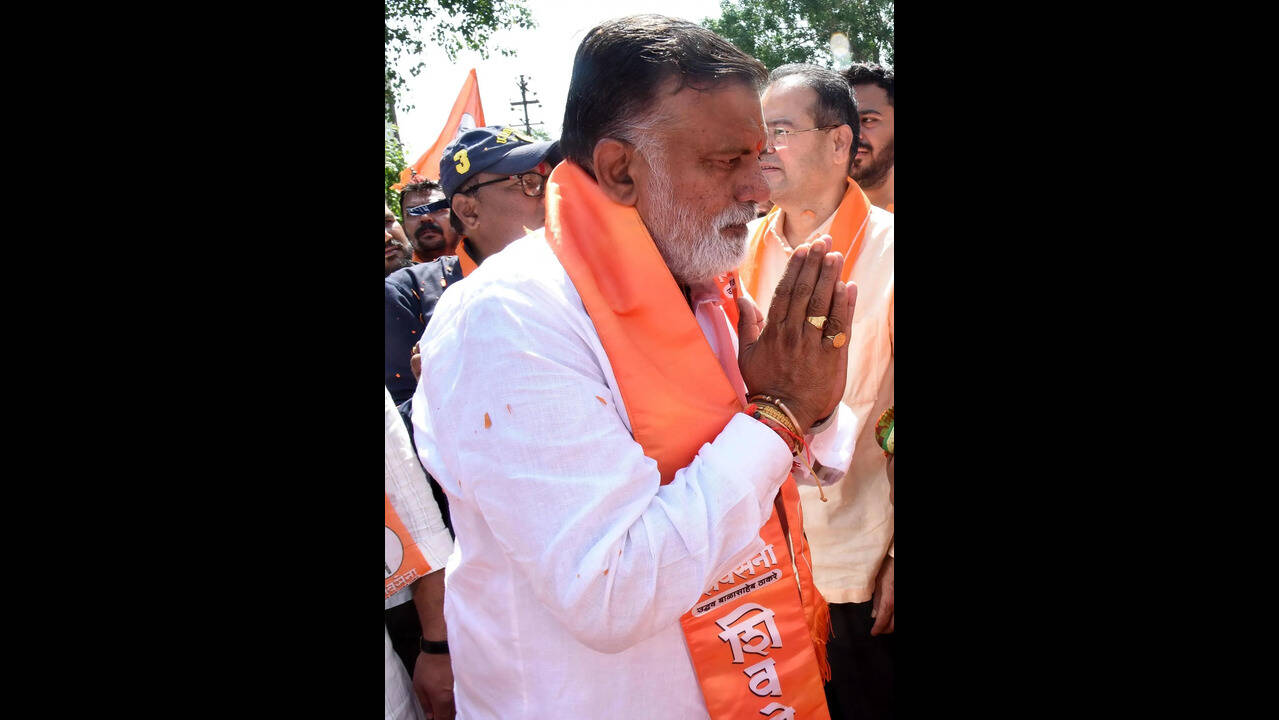
Uddhav Sena Faces New Rebellion Threat as 6 MPs Consider Defection
Uddhav Thackeray's Shiv Sena (UBT) is grappling with a potential fresh split as reports indicate at least six of its nine Lok Sabha MPs are considering joining the rival Eknath Shinde faction, reviving concerns from the 2022 party division. The move, dubbed 'Operation Tiger', is fueled by alleged leadership disconnect and comes amidst strong accusations of horse-trading.
Key Highlights
- Six Shiv Sena (UBT) Lok Sabha MPs reportedly considering defection to Shinde camp.
- Potential split mirrors the 2022 rebellion that divided the original Shiv Sena.
- MPs' discontent cited as leadership disconnect and alleged arrogance.
- Sanjay Raut accused ruling party of offering up to ₹50 crore to defecting MPs.
- Anti-defection law requires 6 MPs (two-thirds) to avoid disqualification.
- UBT attempts to show unity amid conflicting reports of MPs' meeting attendance.
Uddhav Thackeray's Shiv Sena (UBT) is facing a significant political challenge with widespread reports indicating a potential fresh split, as at least six of its nine Lok Sabha Members of Parliament (MPs) are reportedly contemplating a defection to the Eknath Shinde-led Shiv Sena faction. This development echoes the dramatic 2022 rebellion, led by Eknath Shinde, which saw a majority of Shiv Sena MLAs switch allegiance, ultimately leading to the collapse of the Maha Vikas Aghadi (MVA) government and the recognition of Shinde's group as the official Shiv Sena by the Election Commission of India.
The current crisis centers around six Shiv Sena (UBT) Lok Sabha MPs who are reportedly in contact with the Shinde camp and may be preparing to formally switch sides. These MPs have been identified across various credible news sources as Sanjay Dina Patil from Mumbai North East, Sanjay Deshmukh from Yavatmal, Nagesh Patil Ashtikar from Hingoli, Omraje Naik Nimbalkar from Dharashiv, Sanjay Jadhav from Parbhani, and Bhausaheb Wakchaure from Shirdi. If these six MPs were to defect, it would meet the two-thirds threshold required under the anti-defection law to avoid disqualification, as Shiv Sena (UBT) currently holds nine Lok Sabha seats. Shiv Sena (UBT) MP Arvind Sawant has already written to the Lok Sabha Speaker, Om Birla, urging him not to recognize any breakaway group, citing the 2003 amendment to the Tenth Schedule of the Constitution which, he argues, eliminated the legal provision for a 'split' and mandates that only a formal merger of the original political party can protect defectors from disqualification.
The motivations behind the potential defections are attributed to growing dissatisfaction and internal dissent within the Shiv Sena (UBT). Sanjay Nirupam, a prominent political figure (formerly with Congress and now with Shiv Sena), has criticized the Uddhav Thackeray-led faction for what he perceives as 'arrogance' within the leadership and a significant disconnect with party workers and elected representatives. Reports suggest that Uddhav Thackeray and his son, Aaditya Thackeray, are seen as inaccessible, and the party leadership allegedly failed to actively campaign or support grassroots workers in recent local body elections, fostering resentment among cadres and office-bearers. Some reports also link the potential switches to discomfort among MPs regarding the anticipated elevation of Aaditya Thackeray to a more prominent leadership role.
The political maneuvering has been dubbed 'Operation Tiger' in political circles, referring to the alleged strategy by the Eknath Shinde-led Shiv Sena to entice defections from the Shiv Sena (UBT). Amidst this, Shiv Sena (UBT) Rajya Sabha MP Sanjay Raut has made strong accusations, alleging that the ruling party is offering substantial financial incentives, ranging from ₹15 crore to ₹50 crore, to persuade MPs to switch sides. Raut also drew controversy for using abusive language against the suspected rebel MPs at a press conference, which he unapologetically defended as 'regular usage in Maharashtra' and urged the media not to censor.
In response to the intensifying speculation, the Shiv Sena (UBT) attempted to project a united front. While initial reports on June 17, 2026, indicated that some MPs were unreachable or absent from a parliamentary committee meeting called by Uddhav Thackeray in Delhi, later reports on June 18, 2026, claimed that all nine Shiv Sena (UBT) Lok Sabha MPs attended a subsequent parliamentary party meeting in Delhi. However, even with this show of unity, the Shinde camp continued to assert that six MPs had expressed confidence in Eknath Shinde and joined his faction.
The context of recent electoral performances further highlights the precarious position of Shiv Sena (UBT). In the 2024 Lok Sabha elections, while the Maha Vikas Aghadi (MVA) alliance performed strongly in Maharashtra, Shiv Sena (UBT) itself won only nine out of the 21 seats it contested. Furthermore, the 2024 Maharashtra Legislative Assembly elections saw the BJP-led Maha Yuti alliance achieve a landslide victory, with the Shiv Sena (UBT) securing a significantly lower number of seats than expected, prompting political observers to suggest that more MLAs and cadres might consider defecting.
This ongoing political drama in Maharashtra underscores the persistent challenges faced by Uddhav Thackeray's faction in maintaining party cohesion and political relevance after the original Shiv Sena split. The situation remains fluid, with both factions actively engaged in efforts to consolidate their positions and influence the political landscape of the state.
Frequently Asked Questions
Who are the '6 rebels' mentioned in the article?
The six Shiv Sena (UBT) Lok Sabha MPs reportedly considering defection are Sanjay Dina Patil, Sanjay Deshmukh, Nagesh Patil Ashtikar, Omraje Naik Nimbalkar, Sanjay Jadhav, and Bhausaheb Wakchaure.
What is 'Operation Tiger'?
'Operation Tiger' is the term being used in political circles for the alleged efforts by the Eknath Shinde-led Shiv Sena faction to encourage and facilitate defections from Uddhav Thackeray's Shiv Sena (UBT).
How would this potential split impact Uddhav Thackeray's Shiv Sena (UBT)?
If six out of nine Shiv Sena (UBT) Lok Sabha MPs defect, it would significantly weaken Uddhav Thackeray's faction's parliamentary presence and could trigger further internal instability, especially given the two-thirds threshold required under the anti-defection law.
What led to the dissatisfaction among these MPs?
Reasons cited for the MPs' discontent include alleged 'arrogance' within the Shiv Sena (UBT) leadership, a perceived disconnect between Uddhav and Aaditya Thackeray and party workers, and a lack of support in local elections.
What is the significance of the anti-defection law in this context?
Under the anti-defection law, at least two-thirds of the elected members of a political party in a legislature (in this case, 6 out of 9 Shiv Sena (UBT) MPs) must defect together to avoid disqualification. Shiv Sena (UBT) has also argued that a 'split' provision no longer exists, and only a formal merger can protect defectors.