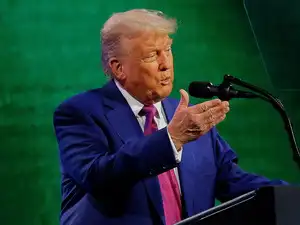
Trump Urges Australia to Grant Asylum to Iranian Women Footballers
Five members of the Iranian women's national soccer team have been granted humanitarian visas in Australia after former US President Donald Trump urged Australian Prime Minister Anthony Albanese not to deport them, citing fears for their lives. The players sought asylum after facing threats for silently protesting the Iranian national anthem during a tournament.
Key Highlights
- Five Iranian women footballers received asylum in Australia after silent protest.
- Donald Trump appealed to PM Albanese, warning of fatal consequences for players if deported.
- Players were branded 'traitors' in Iran for not singing the national anthem.
- Australian Home Affairs Minister Tony Burke confirmed humanitarian visas were granted.
- The incident highlights severe human rights concerns for athletes in Iran.
- Australia's decision was influenced by global human rights advocacy and Trump's intervention.
Five members of the Iranian women's national soccer team have been granted humanitarian visas by Australia, a decision that followed a direct appeal from former US President Donald Trump to Australian Prime Minister Anthony Albanese. The players sought asylum after facing severe criticism and threats from Iranian hard-liners for their silent protest during the Iranian national anthem at the AFC Women's Asian Cup held in Australia.
The controversy began on March 2, 2026, when several players from the Iranian team stood in silence as their national anthem played before their opening match against South Korea. This act was widely interpreted as a silent protest against the Iranian government amidst ongoing political uncertainty and military operations in Iran. Subsequently, Iranian state media and hard-line commentators reportedly branded the players as "traitors" and called for harsh punishment upon their return to Iran, raising significant concerns for their safety.
Amidst these fears, Donald Trump intervened on March 9, 2026, using his Truth Social platform to urge Prime Minister Albanese not to send the team back. Trump stated that Australia would be "making a terrible humanitarian mistake" and warned that the players would "most likely be killed" if forced to return to Iran. He also offered that the United States would grant them asylum if Australia declined. Following an initial critical post, Trump later praised Albanese, stating he had spoken with the Australian leader and that Albanese was "on it!" regarding the situation.
Australia's Home Affairs Minister, Tony Burke, confirmed on March 9, 2026, that five members of the team had been granted humanitarian visas. The players, identified as Fatemeh Pasandideh, Zahra Ghanbari (the team captain), Zahra Sarbali, Atefeh Ramazanzadeh, and Mona Hamoudi, were transported to a "safe location" by Australian federal police. Minister Burke shared images of himself with the players and reiterated Australia's welcome, assuring them they were safe and could feel at home.
Prime Minister Albanese later confirmed having a "very positive" phone call with Trump, during which he informed the former US President about the actions already undertaken by Australia to assist the Iranian players. Albanese also stated that assistance remained available for other members of the team who wished to seek protection, emphasizing that it was their individual decision. The Australian government's swift action was praised by human rights organizations like Amnesty International Australia and the Refugee Council of Australia, who had also raised urgent concerns about the players' safety if repatriated.
The incident garnered global attention, highlighting the risks faced by athletes who express dissent in countries with repressive regimes. The situation also brought to light complexities in international asylum policies, especially concerning public figures. While five players have found safety, concerns remain for the rest of the team, some of whom may feel compelled to return to Iran due to fears for their families' safety. This event underscores the critical role of international advocacy and humanitarian intervention in protecting individuals facing persecution for exercising their fundamental human rights. The decision by Australia, following significant international pressure, represents a crucial moment for human rights in sports and international diplomacy.
Frequently Asked Questions
Why did members of the Iranian women's soccer team seek asylum in Australia?
Five members of the Iranian women's national soccer team sought asylum in Australia after they faced severe threats and accusations of being 'traitors' by Iranian hard-liners. This backlash stemmed from their silent protest during the Iranian national anthem at the AFC Women's Asian Cup, which was widely seen as an act of defiance against the Iranian government.
What was Donald Trump's role in the asylum decision?
Former US President Donald Trump publicly urged Australian Prime Minister Anthony Albanese not to deport the Iranian women footballers, warning that they would 'most likely be killed' if returned to Iran. He made these remarks on his social media platform, Truth Social, and later confirmed a direct phone call with Albanese about the situation.
How did the Australian government respond to the asylum requests?
The Australian government, through Home Affairs Minister Tony Burke, granted humanitarian visas to five of the Iranian women's soccer players. Burke confirmed that the players were in a 'safe location' and assured them a home in Australia. Prime Minister Anthony Albanese also affirmed that assistance remained available for other team members.
Which players received asylum in Australia?
The five Iranian women footballers who were granted humanitarian visas by Australia are Fatemeh Pasandideh, Zahra Ghanbari (team captain), Zahra Sarbali, Atefeh Ramazanzadeh, and Mona Hamoudi.
What are the broader implications of this event?
This incident highlights critical human rights issues faced by athletes in oppressive regimes and underscores the importance of international intervention in such cases. It also brought global attention to the human rights situation in Iran and the role of countries like Australia and the United States in providing refuge.