Pakistan Deployed Spies to Find India's S-400 During Operation Sindoor
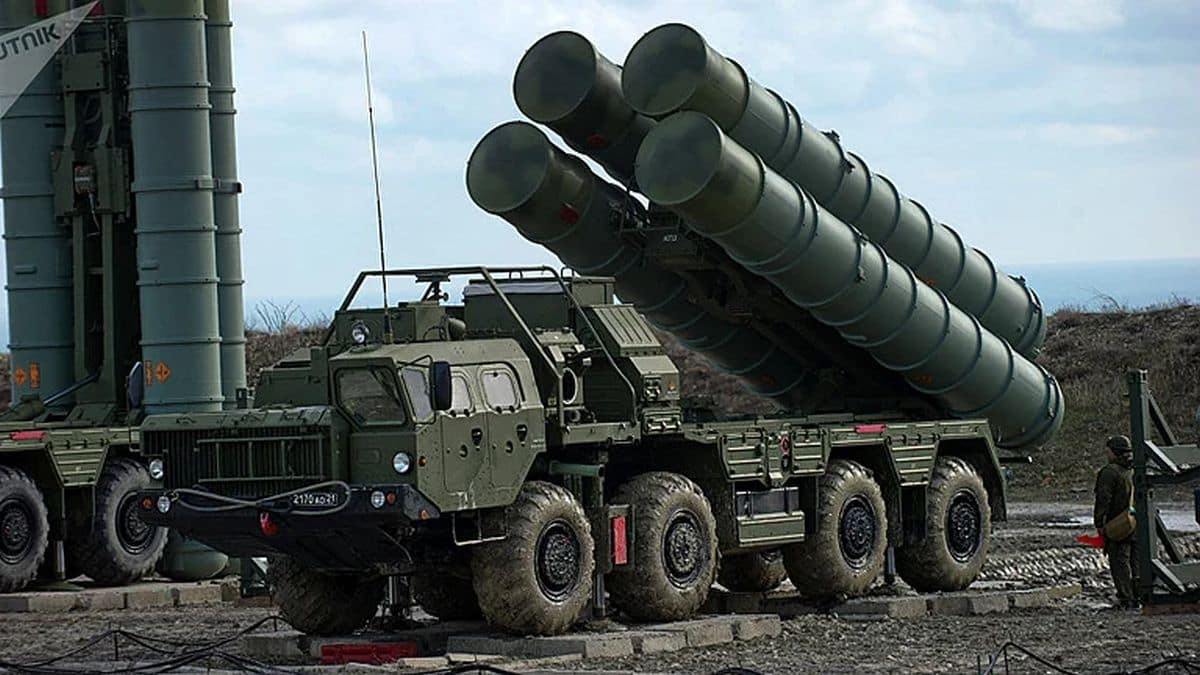
During India's Operation Sindoor in May 2025, Pakistan deployed spies and activated sleeper cells within India in a desperate bid to locate the Indian Air Force's S-400 air defence systems, according to former Air Marshal Jeetendra Mishra. The S-400 'Sudarshan' proved pivotal in countering Pakistani aerial threats, forcing Islamabad to resort to extreme measures, including potential satellite assistance from other nations.
Key Highlights
- Air Marshal Jeetendra Mishra revealed Pakistan's desperate attempts to locate S-400s.
- Pakistan deployed spies and activated sleeper cells within India during Operation Sindoor.
- Operation Sindoor was India's response to the April 2025 Pahalgam terror attack.
- S-400 'Sudarshan' air defence systems proved crucial in countering Pakistani aerial threats.
- The S-400 reportedly achieved the longest surface-to-air kill by downing a Pakistani AWACS at 314 km.
- Pakistan also used air intelligence, electronic warfare, and potentially satellite aid from other countries.
Air Marshal (retd) Jeetendra Mishra, who commanded the Indian Air Force's Western Air Command during the critical 'Operation Sindoor', has revealed that Pakistan employed an extensive network of 'spies' and 'sleeper cells' within India in a desperate attempt to locate India's advanced S-400 'Sudarshan' air defence missile systems. These extraordinary measures were taken during the May 2025 hostilities, which saw India launch Operation Sindoor as a retaliatory military strike against terrorist infrastructure in Pakistan and Pakistan-occupied Kashmir, following the devastating Pahalgam terror attack in April 2025 that claimed 26 lives.
Mishra's revelations, made during an interview with ANI, highlight the pivotal role played by the Russian-made S-400 systems in altering the balance of power during the conflict. According to the Air Marshal, the S-400 emerged as the 'biggest threat' to Pakistan's air operations, significantly constraining their fighter jets from approaching within 200 km of the Indian border. He stated that Pakistan was 'desperate' to find the S-400s and 'employed all tricks in the book', including the deployment of human intelligence assets.
The S-400's effectiveness was further underscored by its reported achievement of the longest surface-to-air kill in military history, downing a Pakistani Airborne Early Warning and Control (AWACS) aircraft at an astounding range of 314 kilometers. This particular incident, which involved Mishra granting permission to an S-400 operator to engage the target, demonstrated the system's formidable long-range detection and interception capabilities. The Air Marshal also suggested that Pakistan might have received 'satellite help from other nations' in its efforts to pinpoint the S-400 locations, though he refrained from naming any specific country.
India signed a $5.43 billion agreement with Russia in 2018 for five S-400 systems. As of the time of the reported events in May 2025, India had already received and inducted three S-400 squadrons into the Indian Air Force, with a fourth squadron delivered in June 2026. These systems are crucial components of India's air defence network, capable of engaging multiple aerial threats simultaneously, including aircraft, cruise missiles, and ballistic missiles, at various ranges and altitudes. The Indian Air Force had strategically deployed these systems along its western front, facing both Pakistan and China.
Mishra's statements also shed light on Pakistan's targeting strategy during Operation Sindoor. He mentioned that the Adampur Air Force Station came under particularly heavy attack because Pakistan erroneously believed it was associated with the deployment of India's S-400 systems. Earlier in the conflict, the Indian Air Force had reportedly disrupted Pakistan's ground-based radar network and command-and-control centres, effectively 'blinding' them. This forced Pakistan to rely more heavily on airborne radar platforms like AWACS, making their detection and interception by the S-400 even more critical.
The comprehensive nature of Air Marshal Mishra's revelations, which have been corroborated by multiple credible Indian news outlets including India Today, NDTV, The Times of India, WION, Business Today, and Indiablooms, underscores the high-stakes nature of Operation Sindoor and the significant impact of India's S-400 air defence capabilities on regional security dynamics. The news category is accurately identified as Defence, National Security, and India-Pakistan Relations, affecting multiple countries, primarily India and Pakistan, but also Russia (as the supplier) and potentially other unnamed nations. The claims appear well-grounded in the statements of a relevant official and cross-media reporting.
Frequently Asked Questions
What was Operation Sindoor and when did it occur?
Operation Sindoor was a precision military strike launched by India on May 7, 2025, targeting terrorist infrastructure in Pakistan and Pakistan-occupied Kashmir. It was a direct response to the Pahalgam terror attack in April 2025, which resulted in 26 casualties.
What role did India's S-400 missile systems play during Operation Sindoor?
The S-400 'Sudarshan' air defence systems played a crucial role in countering missile and aerial threats from Pakistan. According to Air Marshal Jeetendra Mishra, they were the 'biggest threat' to Pakistan's air operations, preventing their jets from approaching within 200 km of the Indian border. One S-400 system reportedly achieved the longest surface-to-air kill in military history by downing a Pakistani AWACS aircraft at 314 km.
How did Pakistan try to locate India's S-400 systems?
Air Marshal Jeetendra Mishra revealed that Pakistan was 'desperate' to locate the S-400s and employed various methods, including deploying 'spies' and activating 'sleeper cells' within India. They also utilized air intelligence, electronic warfare, and potentially received satellite assistance from other unnamed countries.
Who is Air Marshal Jeetendra Mishra and what is his significance to this news?
Air Marshal (retd) Jeetendra Mishra was the chief of the Indian Air Force's Western Air Command during Operation Sindoor. His recent interview with ANI is the primary source of these revelations about Pakistan's attempts to locate India's S-400 systems and the overall dynamics of the conflict.
Is the S-400 'Sudarshan' an Indian-made system?
No, the S-400 'Sudarshan' is a sophisticated Russian-made air defence missile system. India acquired these systems from Russia under a 2018 agreement.