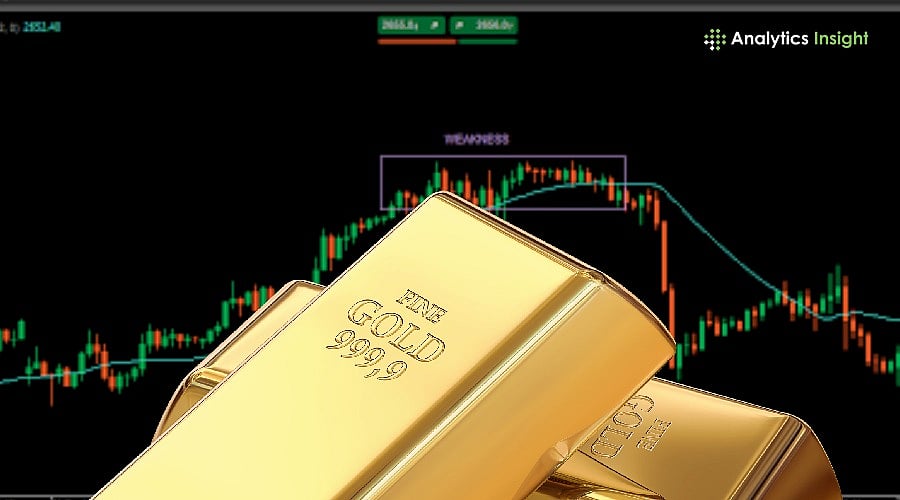
Gold Slumps to $4,450 Amid Inflation Fears, Rate Hike Prospects
Gold prices experienced a notable decline to around $4,450 per ounce in late March 2026, driven by persistent global inflation fears and the increasing likelihood of central bank interest rate hikes. This downturn followed recent all-time highs, reflecting a shift in investor sentiment as a stronger US Dollar and rising bond yields made non-yielding assets less attractive.
Key Highlights
- Gold prices fell to around $4,450-$4,460 per ounce in late March 2026.
- Inflation fears and potential central bank rate hikes were primary drivers of the decline.
- Stronger US Dollar and rising bond yields pressured non-yielding gold.
- Geopolitical tensions in Middle East fueled inflation, paradoxically hurting gold.
- Central banks, including China's, continued gold accumulation offering long-term support.
- This correction followed gold's record highs exceeding $5,000 earlier in 2026.
Gold prices witnessed a significant downturn in late March 2026, dropping to levels near $4,450-$4,460 per ounce. This decline was primarily attributed to intensified inflation fears and the growing anticipation of further interest rate hikes by major central banks globally. The article from FXStreet, published around March 22, 2026, accurately captured this market sentiment and price movement.
The precious metal, often considered a safe-haven asset, found itself under considerable selling pressure. A stronger US Dollar (USD) and rising US Treasury bond yields played a crucial role, making non-yielding assets like gold less attractive to investors. When interest rates are high or expected to rise, the opportunity cost of holding gold, which does not offer interest or dividends, increases.
This correction came after a period of remarkable gains for gold, which had reached unprecedented all-time highs. In late 2025 and early 2026, gold prices had eclipsed the $5,000 per ounce mark, with some reports indicating highs even above $5,500 per ounce in January 2026. For instance, JM Bullion noted gold's all-time high eclipsed $5,000/oz in January 2026, and TheStreet reported an all-time high of $5,589 per ounce on January 28, 2026. This context is crucial as it highlights that the fall to $4,450 represented a substantial pullback from recent peaks.
Geopolitical tensions, particularly the ongoing conflicts in the Middle East, also contributed to the market dynamics. While such tensions traditionally boost gold's appeal as a safe haven, in this instance, they paradoxically fueled energy price increases, exacerbating inflation concerns. This, in turn, reinforced the hawkish stance of central banks, signaling a potential for higher-for-longer interest rates or even additional rate hikes, which weighed heavily on gold. The Federal Reserve's decision to hold interest rates steady in March 2026, coupled with a median 'dot plot' projection suggesting only one 25-basis-point rate cut (or even no cuts) later in 2026, dashed earlier market hopes for more aggressive easing, further impacting gold negatively.
Despite the immediate pressures, several factors offered a nuanced perspective on gold's long-term outlook. Central banks, particularly those from emerging economies like China and India, continued their consistent gold accumulation. China's official gold reserves, for example, reached a record 2,309 tonnes following 16 consecutive months of buying by the People's Bank of China. This robust demand from official institutions acts as an underlying support for the yellow metal. India, a significant consumer of gold, also saw its central bank increasing gold purchases.
For an Indian audience, gold holds immense cultural and financial significance, often seen as a hedge against inflation and a store of value. The domestic gold market is influenced by global trends, currency movements, and import duties. In late 2024 and early 2025, predictions for Indian gold prices ranged from ₹85,000 to ₹90,000 per 10 grams in 2025, with some experts anticipating prices to reach $3,000 per ounce in international markets. However, the Economic Survey (India) projected a decline in gold prices for 2025, while silver prices might increase. These varied forecasts underscore the inherent volatility and complexity of the gold market.
Some analysts maintained a bullish long-term outlook for gold, with major Wall Street banks forecasting gold could reach $6,000 or more in 2026, viewing the recent pullback as a tactical event rather than a fundamental shift in the structural bull market. Factors such as de-dollarization trends, US fiscal deficits, and sustained central bank accumulation are cited as structural foundations supporting gold's long-term appreciation. However, it's also noted that gold's traditional correlation with inflation has been strikingly negative in some recent periods, where higher inflation coincided with falling gold prices.
In summary, the fall in gold prices to around $4,450 in March 2026 was a reaction to immediate macroeconomic concerns, particularly inflation and interest rate expectations, amplified by a strong US Dollar and rising yields. While this represented a significant correction from recent highs, underlying demand from central banks and long-term bullish forecasts suggested that the market was experiencing a tactical adjustment within a broader upward trend, albeit with considerable volatility.
Frequently Asked Questions
Why did gold prices fall to $4,450 in March 2026?
Gold prices declined to approximately $4,450 per ounce in March 2026 primarily due to heightened inflation fears and the strong anticipation of further interest rate hikes by global central banks, notably the US Federal Reserve. A stronger US Dollar and rising bond yields also made the non-yielding metal less appealing to investors.
Was $4,450 a significant drop for gold at that time?
Yes, a fall to $4,450 was a significant correction. Gold had reached new all-time highs above $5,000 and even $5,500 per ounce in late 2025 and early 2026, making this decline a substantial pullback from its recent peaks.
How did geopolitical tensions affect gold prices?
Geopolitical tensions in the Middle East played a complex role. While conflicts often boost gold's safe-haven appeal, in this scenario, they significantly drove up energy prices. This, in turn, intensified inflation concerns and reinforced central banks' hawkish stances, contributing to expectations of higher interest rates, which ultimately weighed on gold.
What is the long-term outlook for gold despite this fall?
Despite the short-term fall, many analysts maintain a bullish long-term outlook for gold. Factors such as continued gold accumulation by central banks (including China and India), ongoing de-dollarization trends, and US fiscal deficits are seen as structural supports that could push gold prices higher, with some forecasts suggesting above $6,000 in 2026.
How do inflation fears and interest rates impact gold?
Inflation fears can sometimes boost gold as a hedge, but if inflation leads to expectations of aggressive interest rate hikes, it can negatively impact gold. When interest rates rise, the opportunity cost of holding non-yielding assets like gold increases, as other investments offer better returns. A stronger currency (like the USD) also makes dollar-denominated gold more expensive for international buyers.