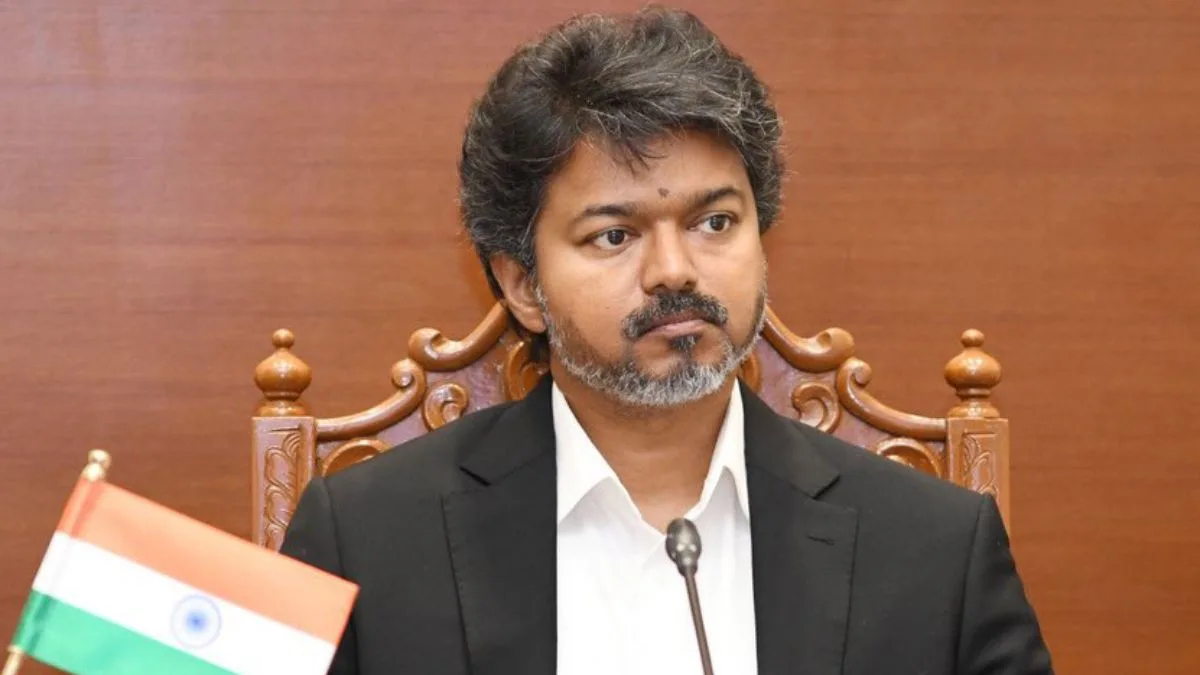
Congress Joins TN Cabinet, First Multi-Party Ministry Formed After 59 Years
Tamil Nadu has entered a new era of coalition governance with the formation of its first multi-party ministry led by Chief Minister C. Joseph Vijay of the Tamilaga Vettri Kazhagam (TVK). The Congress party has rejoined the state cabinet after a 59-year hiatus, with two of its MLAs taking ministerial berths. This development marks a significant shift in the state's political landscape, moving away from the decades-long dominance of Dravidian parties.
Key Highlights
- Tamil Nadu sees its first multi-party ministry formation.
- Congress returns to the state cabinet after 59 years.
- TVK led by CM C. Joseph Vijay forms the new government.
- The coalition marks a new political era in Tamil Nadu.
- Two Congress MLAs sworn in as ministers.
- This is Tamil Nadu's first coalition government since 1952.
Tamil Nadu has ushered in a new political chapter with the formation of its first multi-party ministry, led by Chief Minister C. Joseph Vijay of the Tamilaga Vettri Kazhagam (TVK). This significant development also marks the return of the Congress party to the state cabinet after a hiatus of 59 years, with two of its MLAs, Rajesh Kumar and P. Viswanathan, taking their oath as ministers. The swearing-in ceremony took place on May 21, 2026, at 10 am in Lok Bhavan. This marks a historic moment for the Congress, as their last ministerial inclusion in Tamil Nadu was in 1967.
The formation of this coalition government is a direct consequence of the 2026 Tamil Nadu Legislative Assembly election results, declared on May 4, 2026. The TVK, a new party founded by Tamil actor C. Joseph Vijay, emerged as the single largest party, winning 108 seats in the 234-member assembly. However, falling short of the majority mark of 118, the TVK entered into coalition talks with various allies.
The Congress, which contested in alliance with the Dravida Munnetra Kazhagam (DMK) in the pre-poll negotiations, secured five seats. Following the election results, the Congress, along with other smaller parties such as the Viduthalai Chiruthaigal Katchi (VCK), Indian Union Muslim League (IUML), Communist Party of India (CPI), and Communist Party of India (Marxist) (CPI(M)), extended their support to the TVK to form the government. The inclusion of these parties has resulted in the formation of Tamil Nadu's first coalition government since 1952.
The political landscape of Tamil Nadu has been historically dominated by the Dravidian parties, namely the Dravida Munnetra Kazhagam (DMK) and the All India Anna Dravida Munnetra Kazhagam (AIADMK), for decades. The 2026 election results, however, disrupted this long-standing bipolarity, with the TVK emerging as a significant new force. The DMK secured 59 seats, and the AIADMK won 47 seats, indicating a shift in the state's political power dynamics.
Chief Minister C. Joseph Vijay took oath on May 10, 2026, along with a nine-member council of ministers, after his party secured the necessary support. The expansion of the cabinet to include coalition partners like the Congress signifies a move towards inclusive governance. The article from The New Indian Express highlights that initially, 19 MLAs from TVK and two from Congress were likely to be sworn in, with potential later induction of representatives from IUML and VCK.
This coalition era marks a departure from the state's political tradition, where single-party majority governments have been the norm since 1967, and coalition governments were last seen in 1952. The formation of such a government necessitates a consensus-driven approach and careful negotiation among alliance partners, moving away from the perceived one-man power. The inclusion of the Congress in the state cabinet is a strategic move, potentially aimed at strengthening the alliance and securing support for future political endeavors, including a possible Rajya Sabha berth for the party.
The economic outlook for Tamil Nadu remains positive, with analysts expecting the new government to focus on stability, inclusive growth, and efficient governance. The state has a strong industrial base and has witnessed accelerated growth in recent years. The new government's policy decisions, particularly regarding maintaining policy continuity, business-friendly regulations, and addressing labor concerns, will be crucial for sustaining investments and achieving the goal of transforming Tamil Nadu into a trillion-dollar economy.
The article also implicitly addresses the fact that the Congress party's return to the cabinet is a significant political event, emphasizing the long gap of 59 years. The fact that the new government is a coalition, and not a single-party majority, is also a key takeaway, underscoring the changing political dynamics in Tamil Nadu. The original article's headline is accurate in stating that a coalition era has begun and that the Congress is joining the government after 59 years.
Frequently Asked Questions
What is significant about the new government formation in Tamil Nadu?
The formation of the new government in Tamil Nadu is significant because it is the state's first multi-party coalition government since 1952, and it marks the return of the Congress party to the state cabinet after a gap of 59 years.
Which party leads the new government in Tamil Nadu?
The new government in Tamil Nadu is led by the Tamilaga Vettri Kazhagam (TVK), with C. Joseph Vijay serving as the Chief Minister.
Which parties are part of the new coalition government in Tamil Nadu?
The new coalition government in Tamil Nadu includes the Tamilaga Vettri Kazhagam (TVK) as the leading party, along with the Congress, Viduthalai Chiruthaigal Katchi (VCK), Indian Union Muslim League (IUML), Communist Party of India (CPI), and Communist Party of India (Marxist) (CPI(M)).
When was the last time the Congress was part of the Tamil Nadu government?
The Congress party was last part of the Tamil Nadu government in 1967, making their current induction after a 59-year absence a historic event.