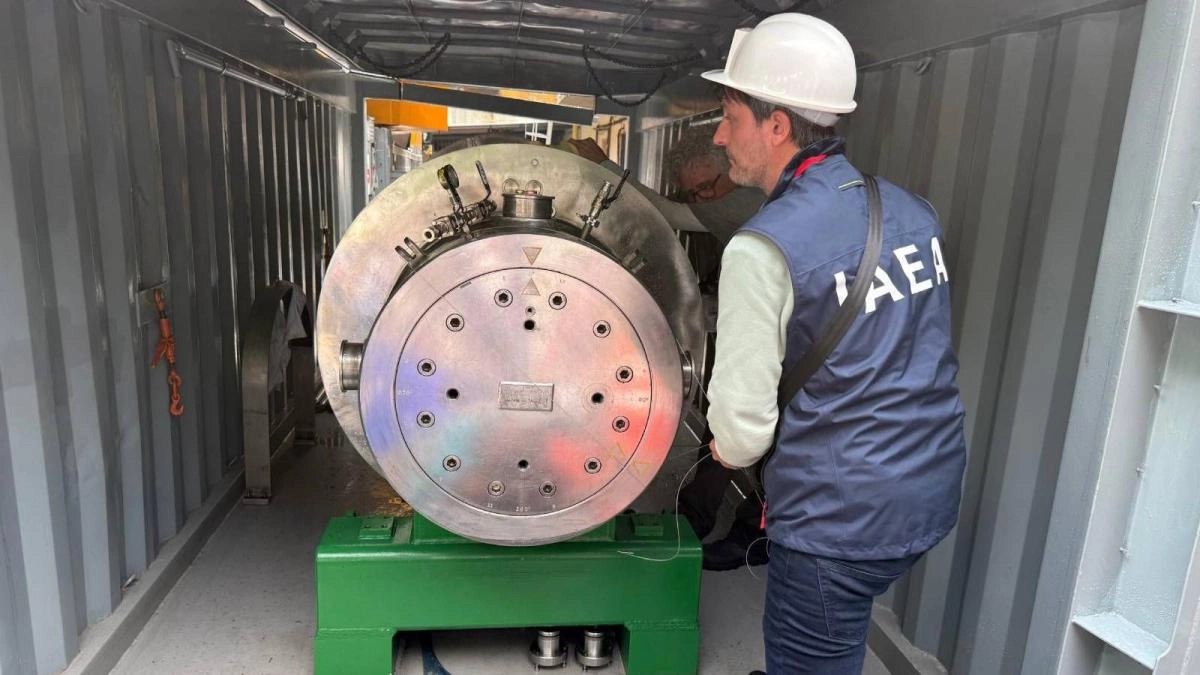
IAEA Warns of Increased Iran Nuclear Risk Amid Unverified Uranium Stockpiles
The UN nuclear watchdog has stated it's unable to inspect key Iranian nuclear facilities following past military attacks. The IAEA cannot determine the current status of Iran's enriched uranium stockpile, raising proliferation concerns. While Bushehr nuclear plant was inspected, access to other sites remains blocked, hindering safeguards responsibilities. Tensions in the Middle East are heightened, impacting global oil prices.
Key Highlights
- IAEA unable to inspect critical Iranian nuclear sites post-military attacks.
- Status and whereabouts of Iran's enriched uranium stockpile unknown.
- IAEA's safeguards responsibilities are hindered by lack of access.
- Increased proliferation concerns due to unverifiable nuclear material.
- Bushehr nuclear plant inspected, but other key sites remain off-limits.
- Regional tensions impact global oil prices and geopolitical stability.
The International Atomic Energy Agency (IAEA) has issued a stark warning, stating its inability to inspect crucial nuclear facilities in Iran that were affected by military actions in June 2025. A confidential report, circulated to member states and seen by the Associated Press, reveals that the IAEA cannot ascertain the current size, composition, or location of Iran's enriched uranium stockpile, nor can it confirm if enrichment activities have been halted. This lack of oversight has led the IAEA to declare that it is "unable to discharge its safeguards responsibilities" as mandated by the Nuclear Non-Proliferation Treaty (NPT).
Despite these significant limitations, IAEA inspectors were permitted to visit the Bushehr nuclear power plant between June 1-3. However, this facility utilizes uranium enriched to 4.5%, which is a low level suitable for power generation and distinct from the highly enriched uranium that poses a proliferation risk. The report highlights that such highly enriched nuclear material, typically up to 60% purity, should be verified monthly according to IAEA guidelines. Iran reportedly maintains a stockpile of approximately 440.9 kilograms (972 pounds) of uranium enriched to 60% purity, which, if further enriched to 90%, could theoretically be used to produce enough fissile material for multiple nuclear weapons, though the IAEA stresses this does not mean Iran currently possesses a bomb.
The IAEA's inability to verify Iran's nuclear materials stems from a broader issue of restricted access following military strikes by the United States and Israel on Iranian nuclear sites in June 2025. Since these attacks, monitors have not been able to return to damaged sites in Fordow, Isfahan, and Natanz, where Iran's enriched material was last observed. The loss of "continuity of knowledge" over Iran's nuclear materials is a significant concern, leading to a "proliferation concern" as the agency cannot verify the status of this material.
IAEA Director General Rafael Grossi has reiterated calls for Iran to implement its treaty obligations and has expressed his "full support to the negotiations underway aimed at finding a mutually acceptable solution" to the nuclear program issues. The agency's findings come amid heightened geopolitical tensions in the Middle East, including recent drone attacks attributed to Iran that damaged a passenger terminal in Kuwait. These escalating tensions have a tangible impact on global markets, particularly crude oil prices, which have seen increases due to fears of supply disruptions. The uncertainty surrounding Iran's nuclear program and the ongoing regional conflict contribute to increased market volatility and a geopolitical risk premium on energy commodities.
For India, this situation holds significant implications. As a major energy consumer, India is particularly vulnerable to fluctuations in global oil prices. Any sustained rise in crude oil costs due to the Iran conflict directly affects India's import bill, potentially leading to higher inflation and impacting economic growth. Furthermore, regional instability can disrupt crucial trade routes and supply chains, affecting not only energy but also other commodities essential for India's economy. The geopolitical developments in the Middle East thus require close monitoring by Indian policymakers and businesses to mitigate potential economic fallout. The situation underscores the interconnectedness of global security and economic stability, where a standoff over a nuclear program can have far-reaching consequences on energy markets and international relations.
Frequently Asked Questions
Why is the IAEA unable to inspect Iranian nuclear facilities?
The IAEA's ability to inspect key Iranian nuclear facilities has been hindered since military attacks by the US and Israel in June 2025 damaged some sites. Access to these and other facilities remains blocked, preventing the agency from fulfilling its verification and safeguards responsibilities.
What is the concern regarding Iran's enriched uranium stockpile?
The IAEA cannot determine the current status, quantity, or location of Iran's enriched uranium stockpile. This lack of transparency raises concerns about potential diversion of nuclear material for weapons development, as Iran possesses a significant amount of uranium enriched to near weapons-grade purity.
How does the situation in Iran affect global oil prices?
Escalating tensions in the Middle East, including the standoff over Iran's nuclear program and the ongoing conflict, create uncertainty about energy supply disruptions. This geopolitical risk premium often leads to an increase in global crude oil prices.