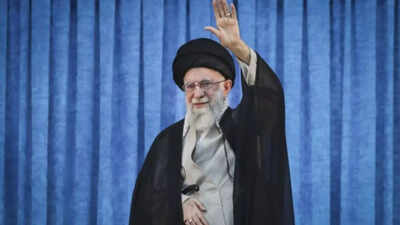
Iran-Israel War Escalates on Day 5, Khamenei Assassinated, Successor Chosen
The Middle East faces escalating conflict as the US-Israeli war on Iran enters its fifth day, triggered by the assassination of Supreme Leader Ayatollah Ali Khamenei. Israel has launched new attacks on Iran and Lebanon, while Iran responds with missile strikes amidst leadership transition efforts.
Key Highlights
- Ayatollah Ali Khamenei assassinated in US-Israeli strikes on Feb 28, 2026.
- War between US, Israel, and Iran enters its fifth day on March 4, 2026.
- Israel targets Iranian nuclear facilities and clerical meeting sites.
- Mojtaba Khamenei reportedly chosen as Iran's new Supreme Leader.
- Israel launches ground troops and airstrikes in Lebanon against Hezbollah.
- Regional conflict impacts Gulf states and international shipping.
A major conflict involving the United States, Israel, and Iran has dramatically escalated in the Middle East, with hostilities entering their fifth day as of March 4, 2026. This intensified phase of conflict was fundamentally triggered by the assassination of Iran's Supreme Leader, Ayatollah Ali Khamenei, on February 28, 2026. Khamenei, who had led Iran since 1989, was killed in a coordinated joint US-Israeli attack on his compound in Tehran, part of an operation reportedly aimed at regime change and addressing Iran's nuclear program. The attack also resulted in the deaths of other senior Iranian officials, including the chief of staff of the armed forces and the defense minister.
Following Khamenei's death, Iran declared a 40-day mourning period and announced that he would be buried in the holy city of Mashhad, his birthplace. This unprecedented event prompted the immediate convening of Iran's Assembly of Experts, an 88-member clerical body constitutionally tasked with selecting the next Supreme Leader. On March 3, 2026, Israel carried out an airstrike on a building in the Iranian city of Qom, which was reported to be hosting senior clerics of this Assembly as they met to choose Khamenei's successor. While Iranian state news agencies disputed the claim, asserting the targeted structure was an unused, dilapidated building, Israeli officials confirmed the strike, aiming to disrupt the succession process. Similar strikes reportedly targeted the Assembly's main headquarters in Tehran on March 2.
Amidst these turbulent developments, Mojtaba Khamenei, the son of the late Supreme Leader, has emerged as a front-runner and is reportedly chosen to succeed his father. Reports from Iran International and Israeli media indicated his selection by the Assembly of Experts on March 3, the same day the Qom building was hit. His ascension could raise questions given the Islamic Republic's past criticism of hereditary rule and the fact that Khamenei himself did not include his son on a list of potential successors last year.
On the fifth day of the conflict, March 4, 2026, Israel continued its military actions, launching a "broad wave of strikes" on targets across Iran, including missile launchers, aerial defense systems, and nuclear research facilities in Qom, Tehran, and Isfahan. The Israel Defense Forces (IDF) claimed to have struck a secret nuclear facility in Tehran, with pilots reportedly flying approximately 1,600 missions and dropping about 4,000 bombs on Iran since the war began. Iran, in turn, reported launching over 40 missiles at US and Israeli targets on this fifth day of hostilities.
The conflict has also significantly expanded into Lebanon. On March 2, 2026, Hezbollah, an Iran-backed militant group, initiated missile and drone strikes against northern Israel in direct retaliation for Khamenei's assassination. Israel responded forcefully, deploying ground troops into southern Lebanon and launching extensive airstrikes across the country, including in Beirut's southern suburbs and the Beqaa Valley. These Israeli strikes targeted approximately 60 Hezbollah sites, including weapons depots, missile launchers, and command centers. The Israeli military also confirmed the killing of Daoud Ali Zada, the most senior Iranian commander of the IRGC Quds Force's Lebanon Corps. The Lebanese Health Ministry reported at least 50 fatalities in Israeli strikes, and over 30,000 people displaced in Lebanon by March 4. The Lebanese government condemned Hezbollah's actions as irresponsible and outside state authority.
The broader regional impact of this conflict is significant. Iran has launched counter-strikes targeting US military bases and diplomatic missions in Gulf countries like Bahrain, Qatar, Kuwait, and the United Arab Emirates, causing disruptions to energy supplies and air travel. The US military has identified casualties among its service members in the conflict. International bodies, including the United Nations, have urged restraint and called for an end to the escalating cycle of violence, while countries like Canada and France have reacted to the widening conflict.
This current escalation comes after a period of heightened tensions and previous US-Israeli strikes on Iran in 2024 and 2025, which aimed to degrade Iran's defenses and nuclear program and resulted in the deaths of many senior IRGC and armed forces leaders. A ceasefire from the 'Twelve-Day War' in June 2025, mediated by the US and Qatar, had held until early 2026. The current conflict marks a critical juncture for regional stability with profound geopolitical and humanitarian implications. The situation remains highly volatile, with both sides expressing readiness for prolonged hostilities.
Frequently Asked Questions
What triggered the current escalation between Iran and Israel?
The current escalation was triggered by the assassination of Iran's Supreme Leader, Ayatollah Ali Khamenei, in coordinated US-Israeli airstrikes on February 28, 2026. This act led to immediate retaliatory strikes from Iran and a wider regional conflict.
Who is expected to succeed Ayatollah Ali Khamenei as Iran's Supreme Leader?
Mojtaba Khamenei, the son of the late Ayatollah Ali Khamenei, has reportedly been chosen by Iran's Assembly of Experts to succeed his father as the new Supreme Leader. His selection came amidst Israeli strikes targeting the Assembly's reported meeting locations.
What is the current status of the conflict between Israel and Lebanon?
The conflict has expanded significantly into Lebanon, with Hezbollah launching strikes against Israel in retaliation for Khamenei's assassination. In response, Israel has deployed ground troops into southern Lebanon and conducted extensive airstrikes across the country, targeting Hezbollah infrastructure and leadership.
How long has the current US-Israel-Iran conflict been ongoing?
The current major conflict involving the United States, Israel, and Iran began on February 28, 2026, with the assassination of Ayatollah Ali Khamenei. As of March 4, 2026, the hostilities have entered their fifth day.
What are the broader regional and international implications of this conflict?
The conflict has significant regional and international implications, including Iranian counter-strikes on US bases and diplomatic missions in Gulf states, disruptions to global energy supplies and air travel, and increasing calls for restraint from international bodies like the UN. The situation remains highly volatile with the potential for further escalation and widespread instability in the Middle East.