2027 Total Solar Eclipse: Longest in Century, India to See Partial Phase | Quick Digest
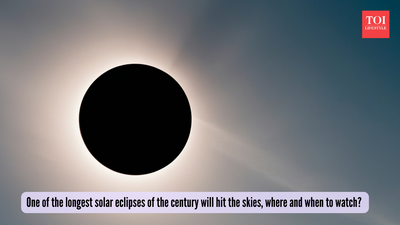
The highly anticipated total solar eclipse of August 2, 2027, will be the longest of the century on land, offering over six minutes of totality in parts of Africa, Europe, and the Middle East. India will experience a partial solar eclipse.
Total solar eclipse occurs on August 2, 2027.
Maximum totality will last 6 minutes and 23 seconds.
Path of totality covers North Africa, Spain, Middle East.
Luxor, Egypt, is a prime location for maximum duration.
India to witness a partial solar eclipse, not totality.
Often dubbed 'eclipse of the century' for its duration.
The upcoming total solar eclipse on August 2, 2027, is widely being referred to as the 'eclipse of the century' due to its remarkable duration. This celestial event will feature a maximum totality of approximately 6 minutes and 23 seconds, making it the longest total solar eclipse visible on land since 1991 and until 2114. During totality, the Moon will completely obscure the Sun, temporarily turning day into night for those within the narrow path.
The path of totality will begin over the eastern Atlantic Ocean, then sweep across southern Spain (including Gibraltar), North Africa (Morocco, Algeria, Tunisia, Libya, Egypt, Sudan, Somalia), and parts of the Middle East (Saudi Arabia, Yemen). Luxor in central Egypt is highlighted as a significant viewing point, where observers can witness the longest duration of the eclipse.
For audiences in India, the event will manifest as a partial solar eclipse, particularly visible in western and northwestern regions such as Rajasthan, Gujarat, Maharashtra, and Goa. The partial eclipse in India is expected to occur between approximately 3:34 PM IST and 5:53 PM IST on August 2, 2027, though complete darkness will not be experienced. This rare astronomical phenomenon offers significant scientific opportunities to study the Sun's corona, solar winds, and atmospheric changes. Safe viewing practices, using ISO-certified solar filters, are essential for observing any phase of the eclipse.
Read the full story on Quick Digest