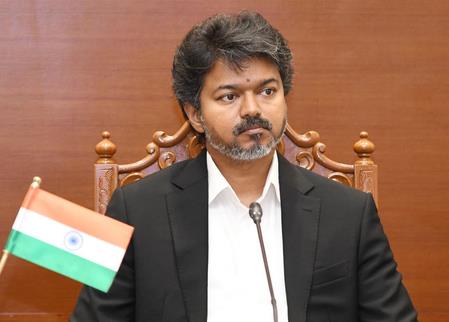
TN CM writes to PM Modi against Karnataka's Mekedatu dam
Tamil Nadu Chief Minister M. K. Stalin has urged Prime Minister Narendra Modi to reject Karnataka's Mekedatu dam proposal, citing violations of Supreme Court judgments and the Cauvery Water Disputes Tribunal award. This comes as Karnataka prepares to proceed with the project, despite Tamil Nadu's objections and ongoing legal challenges.
Key Highlights
- Tamil Nadu CM urges PM Modi to reject Mekedatu dam.
- Project allegedly violates Supreme Court and CWDT rulings.
- Karnataka plans 'Bhoomi Puja' amidst opposition.
- Farmers express concern over potential impact on water supply.
- SC dismissed TN's review petition, placing onus on the Centre.
Tamil Nadu Chief Minister M. K. Stalin has penned a letter to Prime Minister Narendra Modi, imploring him to reject Karnataka's proposal for the Mekedatu dam project. The core of Stalin's argument lies in the assertion that the proposed dam unequivocally violates the Supreme Court's judgments concerning the Cauvery water-sharing dispute and the final award of the Cauvery Water Disputes Tribunal (CWDT). The letter comes at a critical juncture, with Karnataka reportedly preparing to conduct a "Bhoomi Puja" for the project, a move that has escalated tensions between the two southern states.
Stalin's letter highlights that the Mekedatu project, envisioned as a balancing reservoir with a significant storage capacity of 67.16 TMC (Thousand Million Cubic feet), is not among the projects sanctioned by the CWDT, a stance that has been affirmed by the Supreme Court. He argues that constructing such a reservoir would amount to a "clear violation" of the Supreme Court's 2018 judgment, which mandates that upper riparian states cannot undertake actions that adversely affect the scheduled water releases to lower riparian states. This point is particularly significant given Tamil Nadu's heavy reliance on the Cauvery River for irrigation, especially in its delta districts, where a substantial farming community depends on a consistent water supply. The Chief Minister expressed deep concern over remarks made by Karnataka's Deputy Chief Minister, D.K. Shivakumar, suggesting that Tamil Nadu cannot prevent the project, which has caused considerable anxiety among the state's farmers.
Furthermore, Stalin has requested that Prime Minister Modi direct officials within the Ministry of Jal Shakti and the Central Water Commission (CWC) to reject Karnataka's Detailed Project Report (DPR) for the Mekedatu project. He also urged the Prime Minister to advise the Karnataka government against initiating any new projects on the Cauvery without the concurrence of co-basin states, emphasizing the need for strict adherence to the Supreme Court's directives. The Chief Minister questioned the rationale behind the Ministry of Jal Shakti and the CWC considering Karnataka's proposal despite Tamil Nadu's long-standing objections.
This development follows closely on the heels of the Supreme Court dismissing Tamil Nadu's review petition against the Mekedatu project. Following this dismissal, Karnataka's Deputy Chief Minister, D.K. Shivakumar, stated that the onus of clearing the project now lies with the Union government. Shivakumar indicated that Karnataka is in the process of submitting a revised DPR and expressed gratitude to the Supreme Court on behalf of the state. Karnataka has consistently argued that the Mekedatu project is crucial for supplying drinking water to Bengaluru and for generating hydroelectric power, and that it would help regulate surplus water flows, thereby not harming Tamil Nadu's interests.
The decades-old Cauvery water dispute between Tamil Nadu and Karnataka, along with Kerala and the Union Territory of Puducherry, remains a sensitive issue. The Mekedatu project has emerged as a significant flashpoint in this ongoing dispute. Tamil Nadu's stance is rooted in the fear that any upstream reservoir construction could disrupt the natural flow patterns of the river and create uncertainty in the scheduled water releases, which are critical for its agricultural sector. The state has previously filed petitions in the Supreme Court opposing the project, underscoring the gravity of the situation and the deep-seated concerns of its government and farming community. The next steps will likely involve the Union government's decision on the DPR, taking into account the legal complexities and the inter-state water sharing agreements.
Frequently Asked Questions
What is the Mekedatu dam project?
The Mekedatu dam project is a proposed balancing reservoir and drinking water project across the Cauvery River in Karnataka, aimed at supplying water to Bengaluru and generating hydroelectric power.
Why is Tamil Nadu opposing the Mekedatu dam project?
Tamil Nadu opposes the project, arguing it violates Supreme Court judgments and the Cauvery Water Disputes Tribunal award, and could adversely affect water flow to the state, impacting its farmers.
What is the legal status of the Mekedatu dam project?
The Supreme Court has dismissed Tamil Nadu's review petition against the project. Karnataka is now awaiting clearance from the Central government, which will decide on the Detailed Project Report (DPR).
What is the historical context of the Cauvery water dispute?
The Cauvery water dispute is a long-standing inter-state river water dispute between Tamil Nadu, Karnataka, Kerala, and Puducherry, with its origins dating back decades and involving various tribunals and Supreme Court judgments.