Middle East Conflict Strands Indians, Disrupts Flights Amid Escalating Tensions
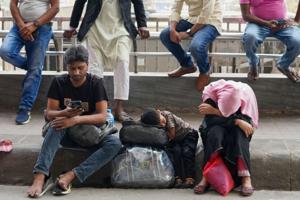
An escalating conflict involving Iran, the US, and Israel has led to widespread flight cancellations, leaving thousands of Indian passengers stranded at airports and in the Gulf region. The crisis, following the reported death of Iran's Supreme Leader, has sparked protests in India and raised concerns for the Indian diaspora and the nation's economic stability.
Key Highlights
- Iran-US-Israel conflict escalates after Iranian Supreme Leader's death.
- Major flight disruptions at Indian airports, hundreds of cancellations reported.
- Thousands of Indian nationals stranded in Gulf and at airports.
- Protests erupt in India over Middle East tensions.
- Indian government actively assisting stranded citizens, monitoring situation.
- Significant economic impact on India's aviation, oil, and trade sectors.
The Middle East is currently grappling with a rapidly escalating conflict involving Iran, the United States, and Israel, which has had immediate and severe repercussions for India, particularly impacting its citizens, air travel, and economic interests. The crisis intensified following reports of the death of Iran's Supreme Leader, Ayatollah Ali Khamenei, allegedly in joint strikes carried out by the US and Israel. This has led to swift retaliatory strikes by Iran across the UAE, Kuwait, Qatar, and Bahrain, plunging the region into further instability.
One of the most immediate and visible impacts on India has been the widespread disruption of international air travel. Indian airports, including major hubs like Delhi's Indira Gandhi International (IGI) Airport, Mumbai, Chennai, Amritsar, Bengaluru, and Tiruchirappalli, have experienced significant chaos due to extensive airspace closures across the Middle East. Hundreds of flights, both arrivals and departures, have been cancelled or diverted, leaving thousands of passengers stranded for prolonged periods. For instance, over 100 international flights were reportedly cancelled at Delhi's IGI airport alone on a single day, with the Ministry of Civil Aviation noting that Indian airlines were expected to cancel a total of 350 flights on March 1, 2026, and 444 on subsequent days. Airlines such as Air India, IndiGo, Air India Express, SpiceJet, and Akasa Air have been significantly affected, issuing advisories and offering flexibility on bookings.
The humanitarian aspect of this crisis for India is profound, with thousands of Indian nationals finding themselves stranded in various Gulf countries, including Dubai, Abu Dhabi, and Doha, as well as at transit airports. Reports have also emerged of several Indians being among those injured in missile and drone attacks in the UAE and Oman, underscoring the direct danger faced by the Indian diaspora. The situation is particularly concerning for the nearly 10 million Indian expatriates living and working in West Asia, many of whom are now facing uncertainty and fear for their safety, with families back home in India anxiously awaiting news. Community organizations in the Gulf have stepped in to provide temporary accommodation and support to those unable to return home.
The Indian government has responded by issuing advisories and actively coordinating with its missions in the region to assist affected citizens, including students and professionals. The Ministry of External Affairs has advised foreign nationals stranded in India due to changed travel plans to contact Foreigners Regional Registration Offices (FRROs) for assistance with visa extensions. Political leaders from various states, including Punjab, have urged Prime Minister Narendra Modi and External Affairs Minister S. Jaishankar to prioritize the evacuation of stranded Indians, highlighting the urgency of the situation.
Beyond travel disruptions and the safety of its citizens, India faces significant economic implications. As a major importer of crude oil, with nearly 90% sourced from abroad, the escalating tensions pose a threat to energy prices and India's energy security. The aviation sector itself is facing a substantial financial hit, with estimated impacts reaching billions of rupees due to increased operating costs from rerouting flights, lost revenue from cancellations, and operational disruptions. Key Indian exports, such as basmati rice, could also face profound disruptions.
The geopolitical events have also resonated domestically, leading to protests in several parts of India. Demonstrations erupted in various districts of Jammu and Kashmir, Uttar Pradesh, and Ladakh, as people expressed outrage and grief over the killing of Iran's Supreme Leader. In response to these protests and heightened tensions, security measures have been beefed up across sensitive areas, including outside the US Consulate in Hyderabad and diplomatic missions in Delhi, particularly in localities with significant Shia populations.
The situation remains dynamic, with calls for diplomacy amidst the military confrontation. Iranian security chief Ali Larijani stated that Tehran would not negotiate with the US, while peace talks that were underway in Geneva have been paused. The continuity of the conflict poses a sustained challenge for India, requiring ongoing diplomatic efforts and proactive measures to ensure the safety of its citizens and mitigate economic fallout. The news is a critical update for the Indian audience, reflecting the direct and indirect consequences of global geopolitical shifts on national interests and individual lives.
Frequently Asked Questions
What triggered the latest escalation in the Middle East conflict?
The recent escalation was triggered by the reported death of Iran's Supreme Leader, Ayatollah Ali Khamenei, in joint military strikes carried out by the United States and Israel. This was followed by retaliatory strikes from Iran across several Gulf nations.
How has the conflict impacted air travel for Indians?
The conflict has severely disrupted air travel, leading to widespread airspace closures in the Middle East and hundreds of flight cancellations and delays at major Indian airports like Delhi, Mumbai, and Chennai. Thousands of Indian passengers have been left stranded both in India and in Gulf countries.
What measures is the Indian government taking to assist its citizens?
The Indian government, through its Ministry of External Affairs and missions abroad, has issued advisories and is working to assist stranded citizens. The Ministry of Civil Aviation is coordinating with airlines to manage disruptions, and political leaders have urged for the prioritization of evacuations.
What are the economic implications for India due to this conflict?
The conflict poses significant economic risks for India, including potential disruptions to its crude oil imports and a rise in energy prices, as India sources nearly 90% of its oil from abroad. The Indian aviation sector is also facing substantial financial losses due to flight disruptions and increased operating costs.
Have there been any domestic repercussions in India from the Middle East conflict?
Yes, there have been domestic repercussions, with protests erupting in several parts of India, particularly in Jammu and Kashmir, Uttar Pradesh, and Ladakh, condemning the killing of Iran's Supreme Leader. Security has been heightened in sensitive areas across the country in response.