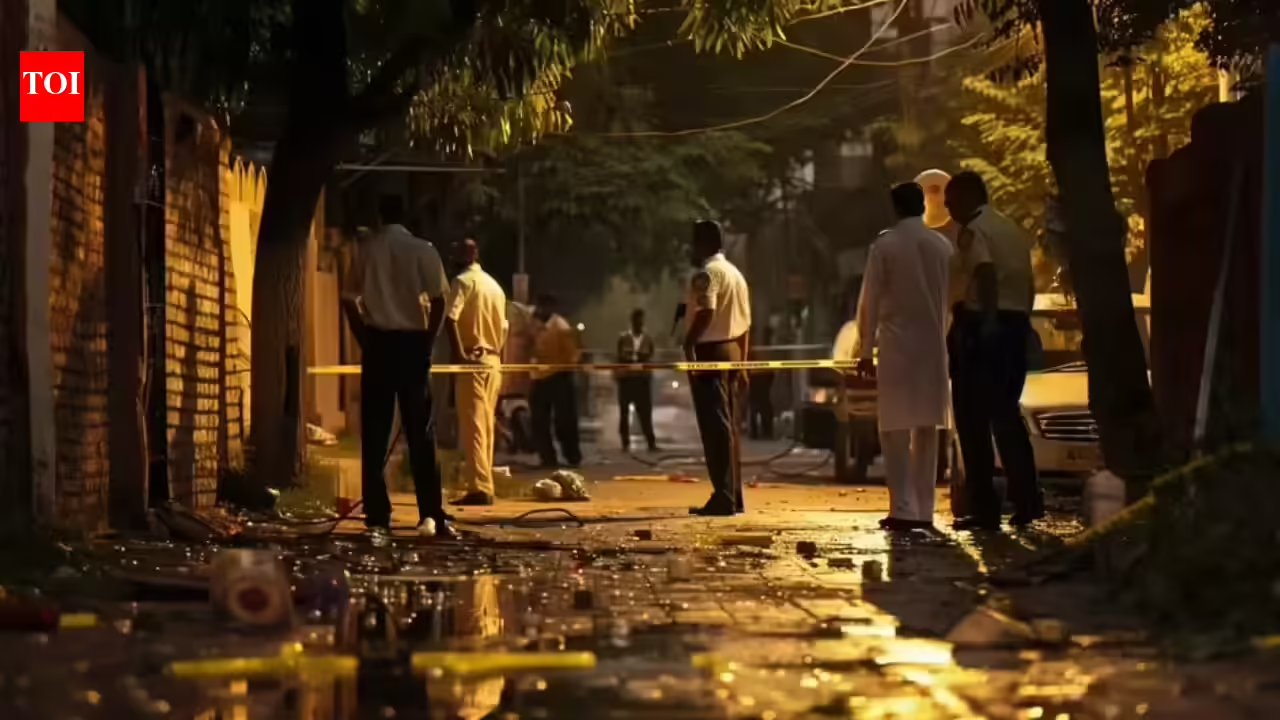
Delhi fire: Grills, locked exits turn building into death trap
A devastating fire in Delhi's Vivek Vihar claimed nine lives, with iron grills, malfunctioning smart locks, and a locked terrace severely hindering escape. The blaze, suspected to be caused by an AC unit, highlights critical fire safety lapses in residential buildings.
Key Highlights
- Nine people died in a pre-dawn fire in Delhi's Vivek Vihar.
- Iron grills and a locked terrace blocked escape routes for residents.
- Malfunctioning smart locks trapped individuals inside their homes.
- A suspected AC unit blast may have triggered the rapid fire spread.
- The incident underscores significant fire safety violations in the building.
- Rescue efforts were hampered by the building's design and safety features.
A catastrophic fire in a four-storey residential building in Delhi's Vivek Vihar early Sunday morning, May 3, 2026, resulted in the deaths of nine people and left four injured. The incident has brought into sharp focus the severe fire safety deficiencies within the building, which tragically transformed it into a death trap for its occupants [3, 4, 5, 6, 9, 10, 12, 13, 15].
The fire, which reportedly began around 3:30-3:48 am on the second floor, is suspected to have originated from a malfunctioning air conditioning unit [3, 6, 9, 13, 24]. The blaze rapidly spread to the upper floors, engulfing flats and filling them with thick smoke, which is believed to be the primary cause of death for many victims due to asphyxiation [9, 12, 25].
Crucially, the building's design and the safety measures implemented ironically acted as fatal impediments to escape. Residents were confronted with iron grills on windows and balconies, installed primarily for security and to keep birds out, which prevented them from exiting onto the exterior [3, 4, 6, 9, 12, 15, 24, 25]. Compounding the issue, the terrace door, which could have offered an alternative escape route, was found to be locked [4, 6, 12, 15, 25]. Adding to the peril, electronic smart door locks on some apartment doors malfunctioned due to the short circuit, jamming them shut and trapping residents inside their homes [3, 7, 24]. The building reportedly had only one staircase and no designated emergency exit, a critical failure in fire safety planning [3, 25].
Rescue operations were significantly hampered by these structural issues. Firefighters faced difficulties in gaining access and evacuating occupants due to the darkness of the early morning hours and the restrictive nature of the building's external and internal barriers [4, 12]. While approximately 10 to 15 people were rescued, nine individuals could not be saved [4, 5, 9, 10, 12, 13, 15].
The victims, comprising families including a toddler, have been identified and sent to GTB Hospital for post-mortem examination [4, 6, 9, 13]. Initial reports suggest that some victims were found huddled near the locked terrace door or on their beds, unable to escape the encroaching flames and smoke [6, 7].
This tragedy has reignited discussions on fire safety compliance in Delhi's residential buildings. Experts and officials point to violations of building bye-laws and a lack of adherence to fire safety norms. Data indicates that a significant percentage of schools in Delhi, for example, do not possess the mandatory fire No Objection Certificates (NOCs), highlighting a broader issue of compliance in the city [23]. The National Building Code of India (NBC) provides guidelines for fire prevention and life safety, emphasizing features like fire detection systems, emergency exits, and accessible escape routes [8, 11, 14, 17, 19, 20]. The Delhi Fire Prevention and Fire Safety Act, 1986, and the Delhi Fire Service Act, 2007, aim to enforce these measures [19, 20]. However, instances like the Vivek Vihar fire suggest that these regulations are not always adequately implemented or enforced, particularly in older or retrofitted buildings.
Authorities are investigating the exact cause of the fire and the specific safety violations that contributed to the high number of casualties. The incident serves as a grim reminder of the importance of stringent fire safety measures, regular audits, and prompt corrective actions to prevent future loss of life in urban India.
Frequently Asked Questions
What caused the fire in the Delhi building?
The fire is suspected to have been triggered by a short circuit or a blast in an air conditioning (AC) unit on the second floor of the building. The exact cause is under investigation.
Why did the fire become a death trap for residents?
The building had several safety impediments that hindered escape, including iron grills on windows and balconies, a locked terrace door, and malfunctioning smart locks that trapped residents inside their apartments. The building also lacked adequate emergency exits.
How many people died in the Vivek Vihar fire?
Tragically, nine people lost their lives in the fire incident. Four others were injured.
What are the implications of this fire for building safety in Delhi?
This incident highlights serious lapses in fire safety regulations and their enforcement in residential buildings in Delhi. It has brought renewed attention to the importance of compliance with building codes, regular safety audits, and the provision of adequate escape routes.