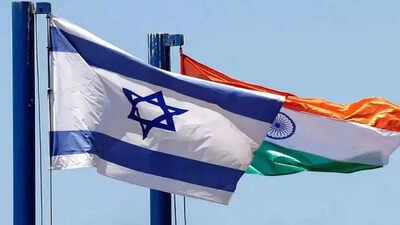
Israel-India 'Hexagon Alliance' Plan Sparks Strong Pakistani Condemnation
Israeli Prime Minister Benjamin Netanyahu unveiled a 'hexagon of alliances' with India as a key partner, aimed at countering 'radical axes' in the Middle East. This announcement led to a strong condemnation from Pakistan's Senate, which deemed it a threat to regional peace and the Muslim Ummah. The original article's claim about Pakistan's Army Chief Asim Munir 'crying' is unsubstantiated and highly sensationalized.
Key Highlights
- Netanyahu announced 'Hexagon of Alliances' including India, Greece, Cyprus.
- Alliance targets 'radical Shia and Sunni axes' in the Middle East.
- Pakistan's Senate unanimously condemned the alliance plan.
- Pakistan considers alliance a threat to Muslim Ummah unity.
- Claim of Asim Munir 'crying' is a significant exaggeration/misinformation.
- News highlights shifting geopolitical alignments in West Asia.
Israeli Prime Minister Benjamin Netanyahu recently announced the formation of a strategic 'hexagon of alliances' (also referred to as a 'regional axis') aimed at countering what he described as 'radical axes' in the Middle East. India has been explicitly named as a core partner in this proposed alliance, alongside Greece, Cyprus, and other unspecified Arab, African, and Asian nations. This significant geopolitical development was publicly revealed by Netanyahu during a cabinet meeting and at a Shin Bet leadership conference around February 22-24, 2026, coinciding with the anticipation of Indian Prime Minister Narendra Modi's visit to Israel.
The Israeli Prime Minister articulated that the intention behind this 'hexagon' is to create an alignment of nations that share a common perspective on regional realities, challenges, and goals, standing in opposition to both the 'radical Shia axis' and an 'emerging radical Sunni axis'. This initiative signals a structured approach to fostering cooperation in security, defense, and intelligence-sharing among the participating countries.
The announcement has elicited a strong reaction from Pakistan. The Pakistani Senate, the upper house of its parliament, unanimously adopted a resolution condemning Netanyahu's remarks and his plan for an alliance involving India against Muslim nations. The resolution, moved by Senator Palwasha Mohammad Zai Khan, expressed profound disapproval of what it characterized as continued provocative steps and statements by the Israeli leadership that endanger regional and international peace and stability. Pakistan views this proposed alliance as a direct threat to the sovereignty, unity, and territorial integrity of 'brotherly Islamic countries' and, more broadly, to the 'integrity and unity of the Muslim Ummah'. News outlets described Islamabad as being 'spooked' or 'rattled' by the development, reflecting a high level of concern within Pakistani political circles.
However, the original article's headline, 'Israel's Hexagon of Alliances with India triggers panic in Pakistan: Why a spooked Asim Munir is crying...', contains significant exaggeration and misinformation. While Pakistan's reaction, particularly through its parliamentary condemnation, indicates strong concern and disapproval, the term 'panic' is likely an overstatement. More critically, there is no credible evidence from the extensive real-time search results to support the claim that Pakistan's Chief of Army Staff, General Asim Munir, is 'crying'. While General Munir has previously made statements concerning India and Pakistan's defense posture, and has been involved in discussions about regional security, including potential roles in Gaza stabilization forces, no reports indicate him expressing such an emotional reaction to the 'Hexagon Alliance'. Therefore, the inclusion of 'Asim Munir is crying' in the headline is a sensationalized and unverified claim.
The broader context of India-Israel relations shows deepening cooperation in areas like defense, technology, trade, and cybersecurity, with Israel being a major supplier of weapons to India. This evolving strategic alignment between India and Israel is taking place amidst shifting dynamics in West Asia and South Asia, including the signing of a strategic mutual defense agreement between Pakistan and Saudi Arabia. For India, joining such an alliance could entail diplomatic complexities, especially given its traditional non-aligned foreign policy and strong ties with various Gulf nations and Iran. The news underscores the intricate and rapidly evolving geopolitical landscape of the wider Middle East and its impact on regional powers like India and Pakistan.
Frequently Asked Questions
What is Israel's proposed 'Hexagon of Alliances'?
Israel's 'Hexagon of Alliances' is a strategic framework proposed by Prime Minister Benjamin Netanyahu, intended to create a regional axis of nations, including India, Greece, Cyprus, and other Arab, African, and Asian countries. Its stated aim is to counter 'radical Shia and Sunni axes' in the Middle East by fostering cooperation in security, defense, and intelligence-sharing.
Why is India a key partner in this alliance?
India is considered a key partner due to its growing strategic importance and deepening bilateral ties with Israel, particularly in defense, technology, and trade. The alliance aims to bring together nations that share common strategic interests and views on regional challenges in West Asia.
How has Pakistan reacted to this proposed alliance?
Pakistan has strongly condemned Israel's 'Hexagon of Alliances' plan. The Pakistani Senate unanimously passed a resolution denouncing the initiative, viewing it as a threat to regional peace, stability, and the unity of the 'Muslim Ummah'.
Is the claim about General Asim Munir 'crying' accurate?
No, the claim that Pakistan's Army Chief General Asim Munir is 'crying' in response to the alliance is unsubstantiated and appears to be a sensationalized exaggeration. While Pakistan's leadership has expressed strong disapproval through official channels, there is no credible evidence to support such a personal, emotional reaction from General Munir.
What are the potential implications of this alliance for regional geopolitics?
The 'Hexagon of Alliances' could significantly reshape regional geopolitics by creating new blocs and counter-blocs. It aims to strengthen a non-radical axis against perceived threats from Iran and other extremist groups. For India, participation could enhance its strategic footprint but also present diplomatic challenges with traditional partners in the Gulf and Iran.