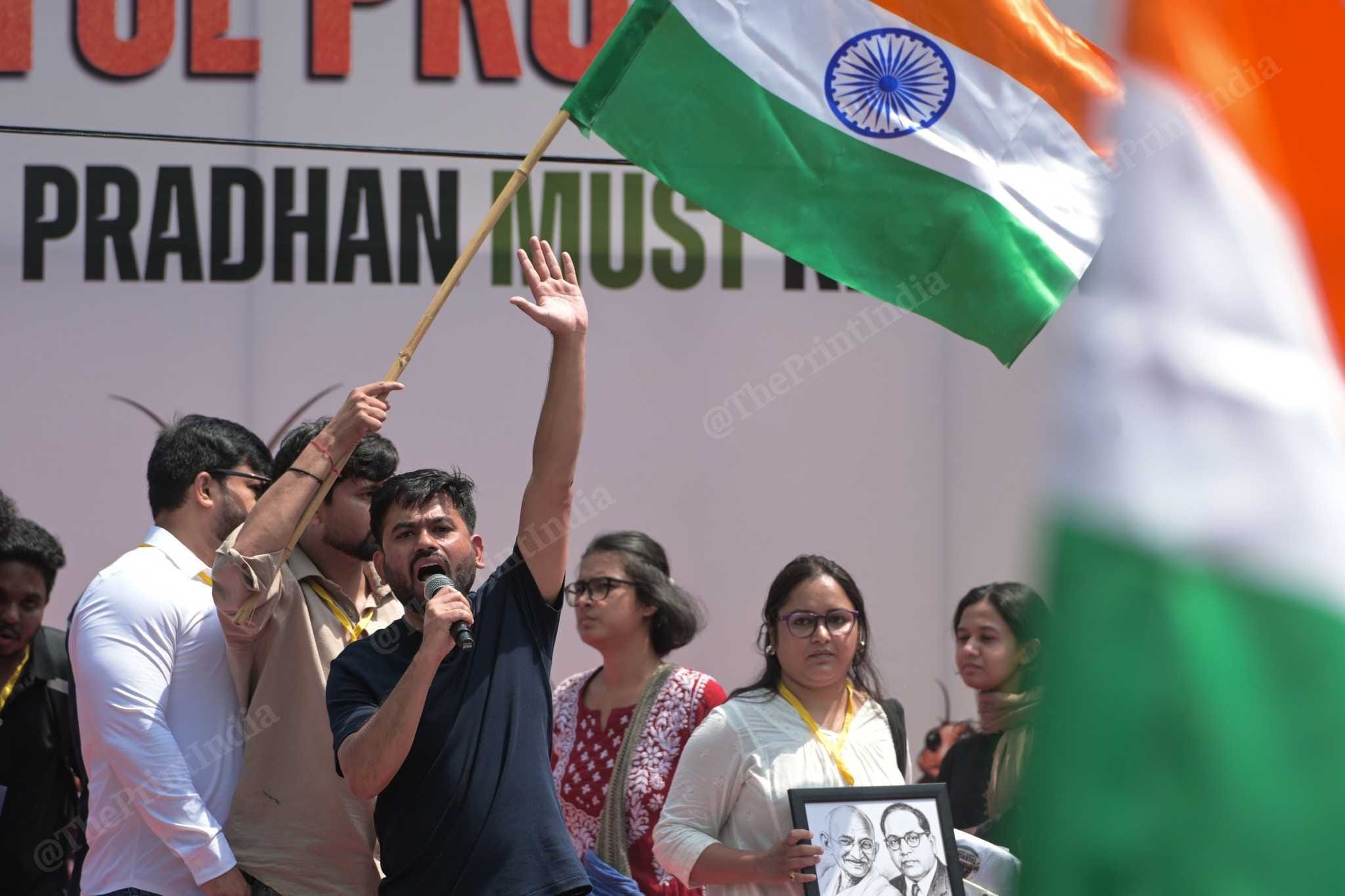
Cockroach Janta Party demands ₹1 crore compensation for paper leak suicide victims
The Cockroach Janta Party (CJP) has penned an open letter to Prime Minister Narendra Modi, demanding ₹1 crore in compensation for the families of students who have died by suicide due to the NEET paper leak crisis. CJP founder Abhijeet Dipke highlighted that 11 NEET aspirants have died by suicide in the past week, with five occurring in the last 48 hours, citing severe financial distress and the compounding effects of systemic failures in the education system. The party also reiterated its demand for the resignation of Union Education Minister Dharmendra Pradhan, emphasizing the need for accountability.
Key Highlights
- CJP demands ₹1 crore compensation for families of students who died by suicide.
- Letter addressed to Prime Minister Narendra Modi citing exam paper leak crisis.
- Reported 11 NEET aspirants' suicides in the past week, five in 48 hours.
- Calls for Union Education Minister Dharmendra Pradhan's resignation.
- Highlights financial ruin faced by families due to educational loans.
- Protests organized at Jantar Mantar to press demands.
The Cockroach Janta Party (CJP), through its founder Abhijeet Dipke, has formally urged Prime Minister Narendra Modi to provide a compensation of ₹1 crore to the families of students who have tragically died by suicide in the wake of the recent paper leak controversies, particularly concerning the NEET (National Eligibility cum Entrance Test) examinations [2, 3, 6, 8, 11]. This demand was articulated in an open letter addressed to the Prime Minister, highlighting the escalating crisis within India's education system and its devastating human toll [7, 13].
Dipke stated that in the past week alone, 11 NEET aspirants have died by suicide, with a particularly alarming five deaths occurring within the last 48 hours preceding the letter's release [2, 7, 8]. He emphasized that these suicides are not isolated incidents but are symptomatic of a "compounding crisis of paper leaks" that has inflicted immense psychological and financial strain on students and their families [6, 13]. The letter also pointed out the severe financial predicament faced by these families, many of whom had taken out substantial educational loans to support their children's aspirations, only to have those dreams shattered by systemic failures [2, 3, 6, 8]. This economic burden is further exacerbated by the uncertainty and stress surrounding potential re-examinations [2, 7].
Beyond the demand for compensation, the CJP has consistently called for accountability from the government, reiterating its demand for the resignation of Union Education Minister Dharmendra Pradhan [2, 3, 4, 6, 7, 8, 13, 17, 24]. Dipke argued that holding leadership accountable is crucial for restoring faith in the educational framework and that failure to act decisively sends a message of acceptance of the status quo [2, 6]. The CJP has been actively protesting across the country, including at Jantar Mantar in New Delhi, to amplify these demands [3, 5, 7, 12]. These protests have garnered significant attention, with reports indicating that the government eventually agreed to consider compensation for the affected families and that Pradhan did resign on July 25, 2026, following sustained pressure [5, 17, 21, 24].
The NEET exam, a critical gateway for medical admissions in India, faced widespread allegations of a paper leak, leading to its cancellation and rescheduling [2, 11]. This decision, while intended to maintain exam integrity, placed immense additional pressure on the 2.27 million students who had already appeared for the test [2]. The controversy has not only led to student suicides but also sparked broader discussions about the fairness, transparency, and systemic issues within India's examination and education system [10, 11, 16, 17].
The "Cockroach Janta Party" itself emerged as a satirical political movement founded by Abhijeet Dipke and others, initially as a response to a Supreme Court Chief Justice's comment likening unemployed youth to "cockroaches." The movement quickly gained traction online, symbolizing youth resistance [5, 9, 10]. The protests, including the 'Chalo Sansad' march towards Parliament, drew national and international media coverage, highlighting issues of police action, governance, and youth frustration [15, 23]. While the government eventually engaged in dialogue and made concessions, the underlying systemic issues in the education sector remain a significant concern [17, 21].
The tragic instances of student suicides linked to examination pressures underscore a critical social and mental health crisis in India. The CJP's demands and protests highlight the urgent need for comprehensive reforms to ensure fairness, reduce academic stress, and provide adequate support systems for students facing high-stakes examinations [10, 16, 17]. The reported resignation of the Union Education Minister and the government's assurance to consider compensation mark a significant development in this ongoing struggle for accountability and reform within India's educational landscape.
Frequently Asked Questions
What is the Cockroach Janta Party (CJP) and what are its main demands?
The Cockroach Janta Party (CJP) is a satirical political movement founded by Abhijeet Dipke and others, which gained prominence for its protests regarding examination irregularities. Its main demands in this context include ₹1 crore in compensation for the families of students who died by suicide due to paper leaks and the resignation of the Union Education Minister, Dharmendra Pradhan.
How many student suicides are linked to the NEET paper leak, according to the CJP?
According to the CJP founder Abhijeet Dipke, 11 NEET aspirants had died by suicide in the week leading up to the open letter, with five of these deaths occurring in the 48 hours prior.
What was the primary reason for the protests at Jantar Mantar mentioned in the article?
The protests at Jantar Mantar were primarily organized to demand accountability from the government regarding alleged paper leaks in national examinations, such as the NEET, and to push for compensation for the families of students who died by suicide as a result of the ensuing stress and systemic failures.
What was the outcome of the CJP's demands and protests?
Following sustained protests and negotiations, the government reportedly agreed to consider compensation for the affected families, and Union Education Minister Dharmendra Pradhan resigned from his post. The CJP declared this a victory for democracy.